Does Toilet Paper Expire?
Toilet paper doesn’t come with a formal expiration date, but it can degrade over time if it’s exposed to moisture, air, and light. This means that even though it might seem like it lasts forever, the quality can change.
You’ll notice expired toilet paper if it feels brittle, discolored, or has mold spots.
Storing your toilet paper properly can help keep it fresh longer. Try to keep it in a cool, dry place, sealed away from dust and humidity.
Using toilet paper that’s been compromised might cause skin irritation and won’t clean as effectively.
Managing your toilet paper supply well helps you avoid these issues. There’s actually more to learn about how to maintain and use your stock effectively, so you can always have fresh, clean paper when you need it.
Understanding the Composition of Toilet Paper
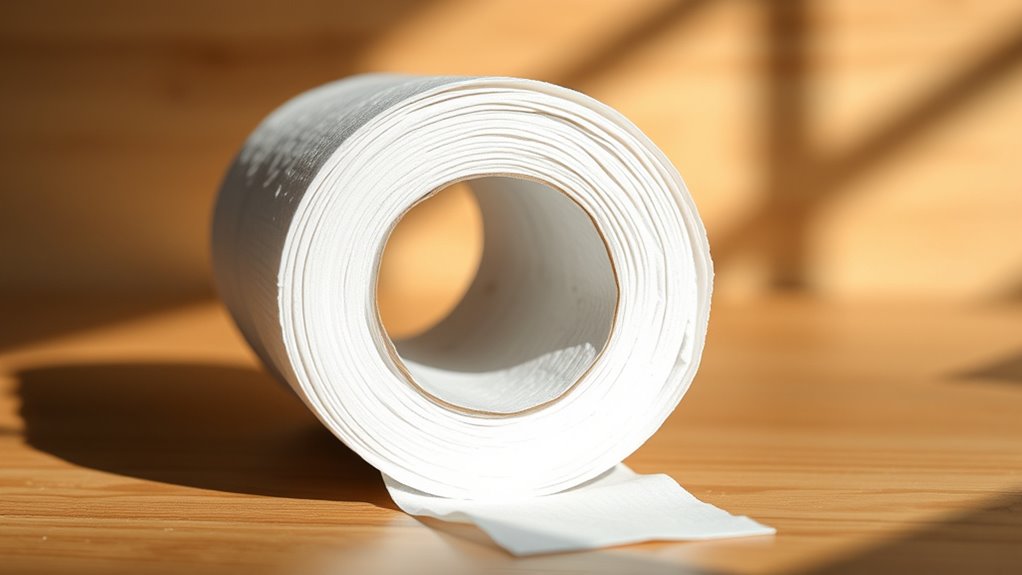
Although toilet paper might seem simple, its composition plays a essential role in its effectiveness and durability. When you pick up a roll, you’re holding layers of paper made primarily from wood pulp, which provides softness and strength.
Some varieties mix recycled fibers, affecting texture and absorbency. The paper’s ply count—usually one to three—determines thickness; more plies mean better durability during use.
Recycled fibers change texture and absorbency, while ply count boosts thickness and durability during use.
Additives like lotions or aloe enhance comfort, while embossing patterns increase softness and help the sheets hold together. You’ll also find that some brands use chemicals to bleach or strengthen the paper.
Understanding these components helps you appreciate why toilet paper feels a certain way and performs as expected, without falling apart or causing discomfort during use. It’s pretty interesting once you think about it!
Factors That Affect Toilet Paper’s Longevity
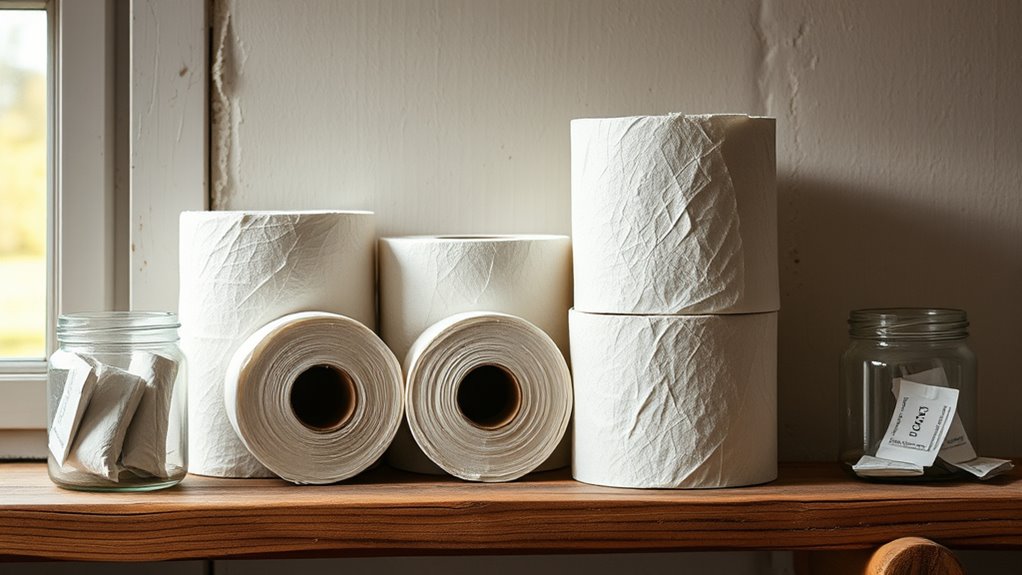
Knowing what makes up your toilet paper gives you a better idea of how long it can last before losing quality. Several factors influence its longevity, and understanding these helps you store and use it wisely.
Here are the key factors:
- Storage Environment: Humidity and moisture can weaken the paper and cause mold. So, keeping it in a dry place really helps.
- Packaging: Sealed packaging protects against dust and moisture, which prolongs shelf life. It’s always a good idea to keep it sealed until you need it.
- Material Quality: Higher-quality fibers tend to maintain strength and softness longer. That means better paper usually lasts longer.
- Exposure to Air and Light: Prolonged exposure can dry out or degrade the fibers, reducing usability. So, try not to leave it out in the open for too long.
How to Identify Expired or Compromised Toilet Paper
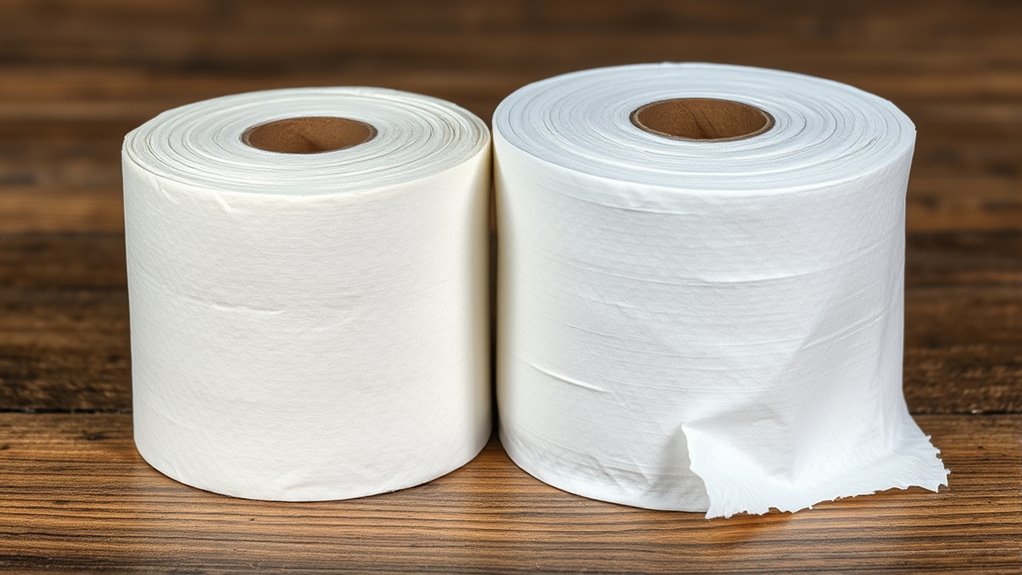
You can spot expired or compromised toilet paper by checking for signs of degradation like discoloration or brittleness. Give it a sniff—any unusual or musty smell indicates it’s no longer good.
Also, feel the texture; if it’s rough or crumbly, it’s time to replace it. Just trust your senses—they’re pretty reliable for this kind of thing!
Signs of Degradation
When toilet paper starts to degrade, you’ll notice changes that affect its texture and effectiveness. It may no longer feel soft or absorbent, making it less comfortable to use.
To spot signs of degradation, watch for these indicators:
- Discoloration – Yellowing or dark spots can signal age or exposure to moisture.
- Fragility – Torn or crumbly sheets break apart too easily.
- Stiffness – The paper feels unusually rigid or brittle instead of pliable.
- Visible mold or mildew – Any fuzzy or black patches mean it’s compromised and unsafe.
If you see any of these signs, it’s best to replace the roll to avoid discomfort or hygiene issues.
Smell and Texture Check
Besides visible signs like discoloration and mold, the smell and texture of toilet paper can reveal if it’s expired or compromised. When you unwrap a roll, take a moment to sniff it. If it has a musty, sour, or chemical odor, it’s a clear indicator that moisture or contamination affected it.
Fresh toilet paper should smell neutral or slightly like paper pulp. Next, feel the texture. It should be soft, smooth, and consistent.
If it feels rough, brittle, or unusually stiff, the fibers might have degraded over time or due to exposure to air and humidity. Avoid using toilet paper with odd smells or textures, as it could irritate your skin or cause discomfort.
Always store your toilet paper in a dry, clean place to keep it fresh.
Recommended Storage Practices for Toilet Paper
You should store toilet paper in a cool, dry place to keep it fresh and usable. Avoid areas with high moisture or humidity, as they can weaken the paper and promote mold growth.
For long-term storage, consider sealed containers to protect your supply from environmental damage. This way, you’ll keep your toilet paper in good shape for when you need it.
Ideal Storage Environment
Although toilet paper doesn’t spoil like food, storing it properly helps maintain its quality and usability. To keep your rolls in top shape, you want to create an ideal storage environment that protects them from damage and ensures they’re ready when you need them.
Here are four key tips:
- Store rolls in a cool, dry place away from direct sunlight.
- Keep toilet paper off the floor to avoid dirt and pests.
- Use airtight containers or plastic bins to shield rolls from dust and airborne particles.
- Avoid stacking heavy items on top of toilet paper to prevent crushing or deformation.
Moisture and Humidity Effects
Protecting your toilet paper from environmental factors doesn’t stop at sunlight and pests; moisture and humidity play a big role in how well your rolls hold up over time. When exposed to dampness, toilet paper can weaken, tear easily, or even develop mold.
To keep your supply fresh, store rolls in a dry, well-ventilated area away from bathrooms or basements prone to humidity.
| Humidity Level | Effect on Toilet Paper | Recommended Action |
|---|---|---|
| Low (<40%) | Stays dry and intact | No special measures |
| Moderate (40-60%) | Generally safe | Use airtight containers |
| High (>60%) | Risk of mold & damage | Avoid storage in damp areas |
Managing moisture helps ensure your toilet paper remains usable and hygienic longer. So, a little care goes a long way in keeping things fresh!
Long-Term Storage Tips
When storing toilet paper for the long term, keeping it dry and clean is essential to maintain its quality. You want to prevent moisture and dirt from compromising the softness and strength of the paper.
Follow these tips to guarantee your toilet paper stays fresh:
- Store rolls in airtight containers or sealed plastic bags to block humidity.
- Keep them in a cool, dry place away from bathrooms or kitchens where steam is common.
- Avoid stacking rolls directly on the floor to prevent contact with dirt or pests.
- Rotate your stock by using older rolls first to maintain freshness.
The Impact of Expired Toilet Paper on Health and Hygiene
Expired toilet paper can compromise your health and hygiene more than you might expect. Over time, it can accumulate dust, moisture, and bacteria, increasing the risk of skin irritation or infections.
Using degraded toilet paper might also reduce its effectiveness, leaving you less clean. Here’s a quick look at potential impacts:
| Issue | Cause | Effect |
|---|---|---|
| Skin Irritation | Bacterial growth | Redness, itching |
| Allergic Reactions | Dust and mold | Sneezing, rashes |
| Reduced Cleanliness | Breakdown of fibers | Inadequate hygiene |
| Unpleasant Odor | Moisture retention | Discomfort, embarrassment |
| Increased Waste | Frequent use of more | Environmental impact |
To keep yourself safe, always check your toilet paper condition before use. It’s a simple habit but can make a big difference.
Tips for Managing and Rotating Toilet Paper Supplies
Keeping your toilet paper fresh and effective means managing your supply wisely. You want to avoid using old, degraded rolls that might be less comfortable or even ineffective.
Properly managing your toilet paper supply helps maintain comfort and effectiveness by avoiding old, degraded rolls.
Here are four tips to help you manage and rotate your toilet paper supplies efficiently:
- Use the oldest stock first: Place new purchases behind older rolls to ensure you use them in order.
- Store in a dry, cool place: Moisture and heat can damage the paper’s quality.
- Check expiration or purchase dates: Label rolls if necessary to track their age.
- Buy in smaller quantities: Avoid overstocking to reduce the risk of your supply sitting unused for too long.
Conclusion
You might think toilet paper never expires, but surprisingly, factors like humidity and storage can quietly degrade it over time. While it doesn’t spoil like food, using compromised toilet paper can affect your comfort and hygiene more than you’d expect.
So, by simply rotating your supply and storing it properly, you’re not just avoiding waste—you’re ensuring a cleaner, healthier routine. It’s funny how something so overlooked can make such a difference.
In conclusion, while toilet paper doesn’t have a strict expiration date, it can lose quality if exposed to moisture or improper storage. Keeping your toilet paper fresh and dry is key to maintaining its effectiveness and comfort. Proper storage and supply rotation help avoid deterioration, ensuring you always have reliable toilet paper on hand. So yes, toilet paper can “expire” in a way, but with some simple care, you can keep your bathroom routine hygienic and pleasant.