What Is Soy Bean Paper and How Do You Use It?
Soy bean paper is made from soybeans, starch, and water, creating thin, tear-resistant sheets with a neutral flavor. It’s a fantastic gluten-free alternative to traditional seaweed wraps, perfect for sushi, spring rolls, or creative veggie and fruit wraps.
Because it’s soft and flexible, it’s easy to handle and roll without breaking.
To use soy bean paper, just soak it briefly in warm water to soften before wrapping your ingredients.
Plus, it’s low-calorie and packed with protein, making it a healthy choice for your meals.
Keep reading to discover how to prepare, store, and use soy bean paper in delicious recipes that will impress your friends and family!
What Is Soy Bean Paper Made Of?
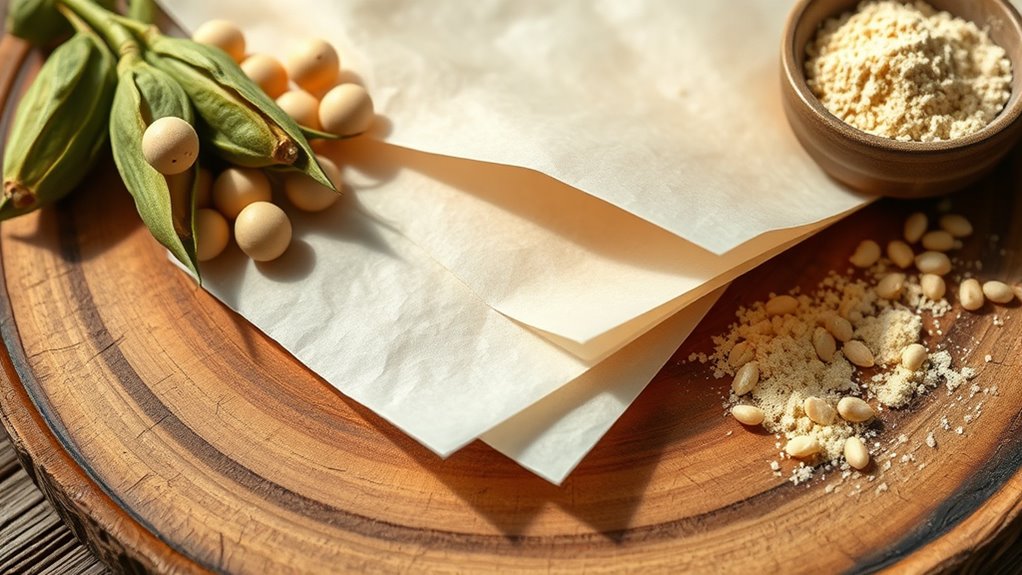
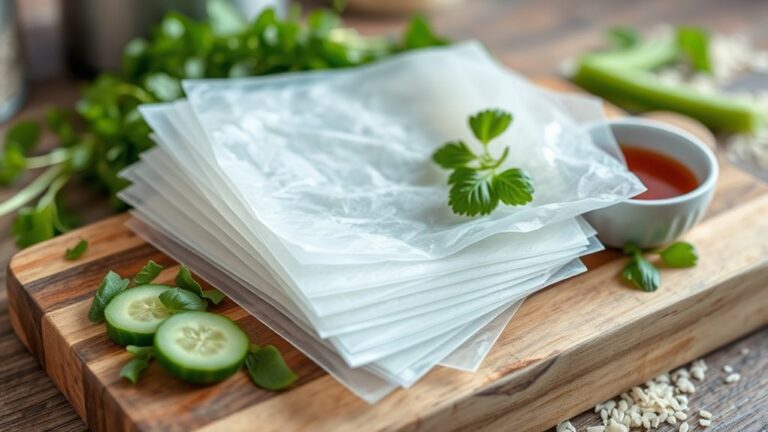
Although it might look like traditional rice paper, soy bean paper is actually made from soybeans, starch, and water. When you handle it, you’ll notice a slightly different texture—softer and more pliable than rice paper.
The soybeans are processed and blended with starch and water to create thin sheets that hold together well without tearing easily. This combination gives the paper a subtle, neutral flavor that won’t overpower your dishes.
Unlike rice paper, which can be brittle or sticky, soy bean paper maintains its shape and flexibility, making it easier for you to wrap ingredients. Whether you’re making sushi rolls or spring rolls, this unique composition lets you work confidently without worrying about your wrapper falling apart.
Nutritional Benefits of Soy Bean Paper
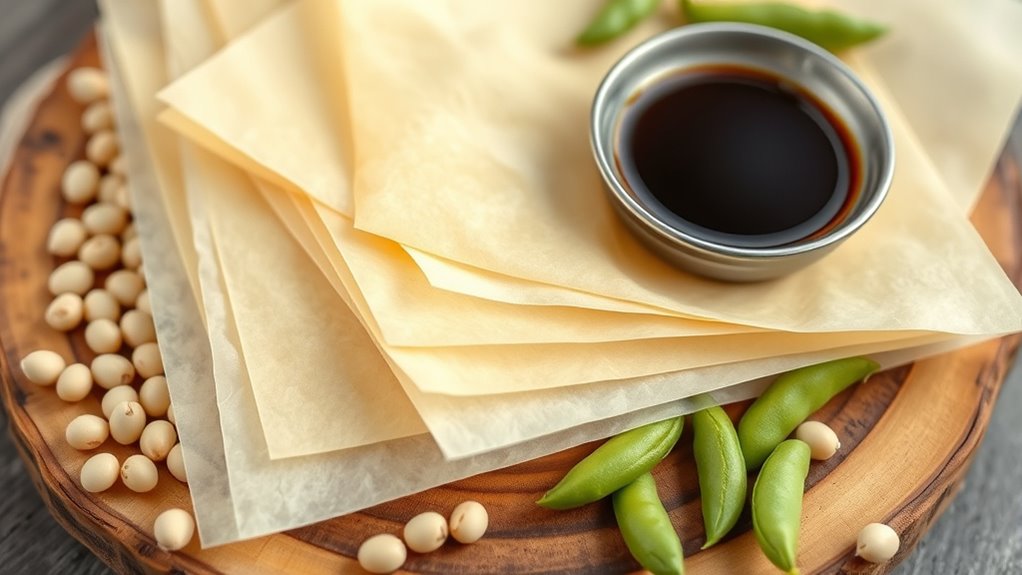
Beyond its practical texture and flavor advantages, soy bean paper also offers notable nutritional benefits that can enhance your meals. It’s low in calories and fat, making it a great option if you’re watching your intake.
Soy bean paper offers low-calorie, low-fat benefits that enhance your meals with great texture and flavor.
You’ll appreciate that it’s rich in protein, providing essential amino acids that support muscle health and repair. Plus, soy bean paper contains fiber, which helps with digestion and keeps you feeling full longer.
It’s also naturally gluten-free, so it fits well into gluten-sensitive diets. Additionally, soy contains isoflavones—plant compounds linked to heart health and antioxidant effects.
Incorporating soy bean paper into your dishes not only adds variety but also boosts their nutritional value, supporting a balanced and health-conscious diet without sacrificing taste or texture.
How to Prepare Soy Bean Paper for Cooking
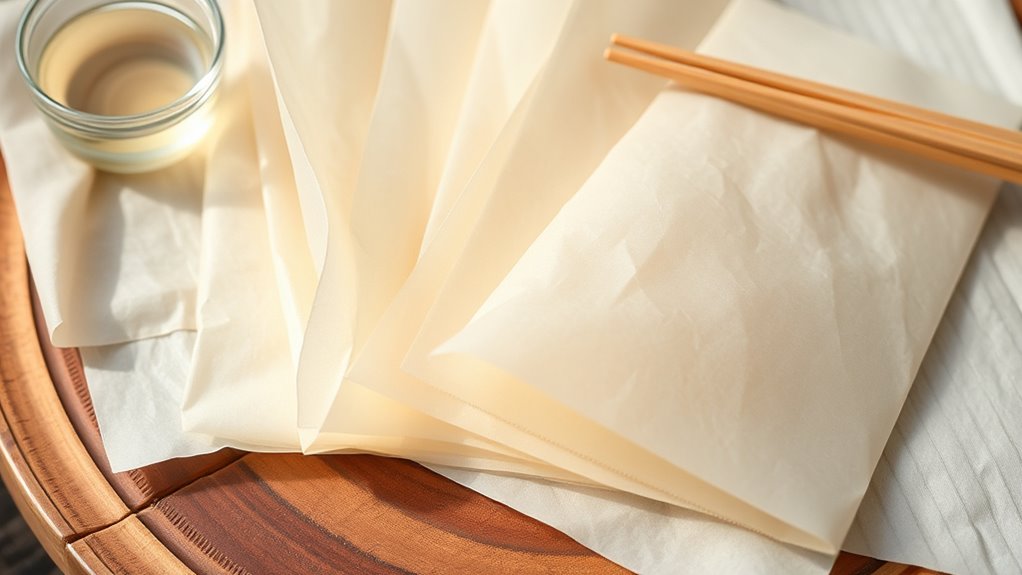
To get your soy bean paper ready for cooking, you’ll want to master soaking and softening it just right.
Knowing how to store it properly also keeps it fresh and easy to use.
Let’s explore the best techniques to guarantee your soy bean paper performs perfectly every time.
Soaking and Softening Techniques
When you’re ready to prepare soy bean paper for cooking, soaking it properly is essential to achieve the right texture. Start by placing the sheets in a shallow dish with warm water.
Let them soak for about 15 to 30 seconds—just enough to soften without making them too fragile. If you soak them too long, they may tear easily, so keep an eye on the timing.
Once softened, gently lift the paper using clean hands or tongs to avoid ripping. You can also lightly mist the sheets with water if you need to soften them quickly.
After soaking, lay the soy bean paper flat on a clean surface to use immediately for rolling or wrapping your ingredients. This simple technique guarantees flexibility and prevents cracking during use.
Optimal Storage Methods
Although soy bean paper is delicate, proper storage keeps it fresh and ready for your recipes. Store it in an airtight container or resealable bag to prevent moisture and air exposure. Keep the package in a cool, dry place away from sunlight.
If you’ve opened it, place parchment paper between sheets to avoid sticking. For longer storage, you can refrigerate it but ensure it’s sealed tightly to prevent drying out.
| Storage Location | Container Type | Tips |
|---|---|---|
| Pantry | Airtight jar or bag | Away from heat and light |
| Refrigerator | Sealed plastic bag | Avoid freezer damage |
| Kitchen drawer | Resealable bag | Use parchment between sheets |
| Countertop | Airtight container | Only short-term storage |
| Freezer | Vacuum-sealed bag | Best for extended storage |
Using Soy Bean Paper in Sushi and Rolls
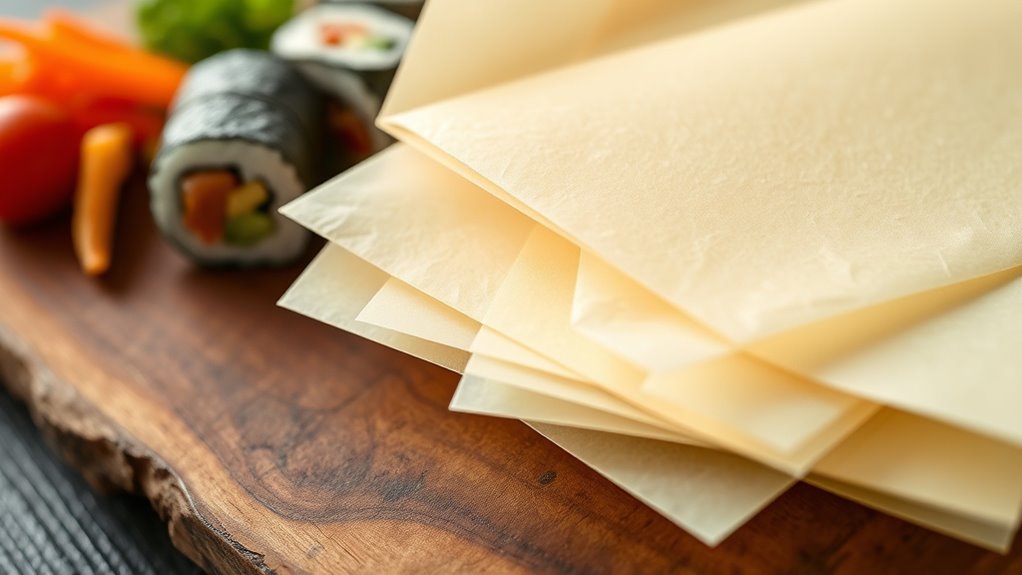
How can you elevate your sushi and rolls with soy bean paper? Using it as a colorful, gluten-free alternative to traditional seaweed wraps instantly boosts presentation and texture.
You’ll find it’s thinner and more delicate, which allows your fillings to shine while adding a subtle soy flavor. When rolling, keep these tips in mind:
- Moisten the soy bean paper slightly to make it pliable.
- Use it to wrap fresh ingredients like cucumber, avocado, and fish.
- Layer it over rice or use it as the outer wrap for a neat finish.
- Combine different colored sheets for a visually striking roll.
- Store unused sheets in a cool, dry place to prevent brittleness.
With soy bean paper, your sushi creations will look and taste uniquely delightful. Give it a try—you might just love the difference!
Creative Recipes With Soy Bean Paper
Beyond sushi, soy bean paper opens up a world of creative culinary possibilities. You can wrap fresh veggies for a light snack, create colorful spring rolls, or even use it as a delicate edible wrapper for desserts.
Its mild flavor and flexibility make it perfect for experimenting in the kitchen. Honestly, it’s super fun to play around with!
Here’s a quick guide to inspire you:
| Recipe Idea | Main Ingredients | Serving Tip |
|---|---|---|
| Veggie Wrap | Cucumber, carrot, avocado | Serve with spicy dipping sauce |
| Fruit Roll | Mango, strawberry, mint | Drizzle with honey or yogurt |
| Dessert Wrap | Chocolate, banana | Add a sprinkle of cinnamon |
| Mini Sandwich | Turkey, lettuce, tomato | Pair with a tangy mustard dip |
Go ahead and try mixing and matching to find your favorite combo! You might discover something totally delicious.
Where to Buy and Store Soy Bean Paper
If you want to get your hands on soy bean paper, specialty Asian grocery stores and online retailers are your best bets. These sources often carry fresh, high-quality sheets perfect for your culinary experiments.
When buying, check the expiration date and packaging integrity to guarantee freshness. It’s always good to be sure you’re getting the best quality.
To store soy bean paper properly, keep it sealed in an airtight container or its original packaging. This helps prevent moisture exposure and keeps the sheets intact.
Store it in a cool, dry place away from direct sunlight. If you don’t plan to use it soon, refrigeration can really help extend its shelf life.
Here are some tips for buying and storing:
- Look for trusted brands with good reviews
- Buy in small quantities to avoid waste
- Store away from heat and humidity
- Use within the expiration date
- Keep it sealed until ready to use
Following these simple tips will make sure your soy bean paper stays fresh and ready for your next cooking adventure!
Conclusion
Soy bean paper is like a blank canvas, ready for you to create culinary art. Just as a painter transforms a simple surface into a masterpiece, you can turn this delicate, nutritious sheet into delicious rolls and creative dishes.
Embrace its versatility and subtle flavor, and let it symbolize your journey toward healthier, more inventive cooking. With soy bean paper, every meal becomes an opportunity to express your unique taste and nourish your body.
Whether you’re making sushi, wraps, or snacks, soy bean paper offers a light, gluten-free alternative that’s easy to work with. Its mild taste complements a variety of fillings, making it perfect for those looking to add a nutritious twist to their meals.
Incorporating soy bean paper into your kitchen repertoire not only boosts your creativity but also supports a balanced diet. So go ahead, experiment with this innovative ingredient and enjoy the delicious, healthy results it brings to your table.