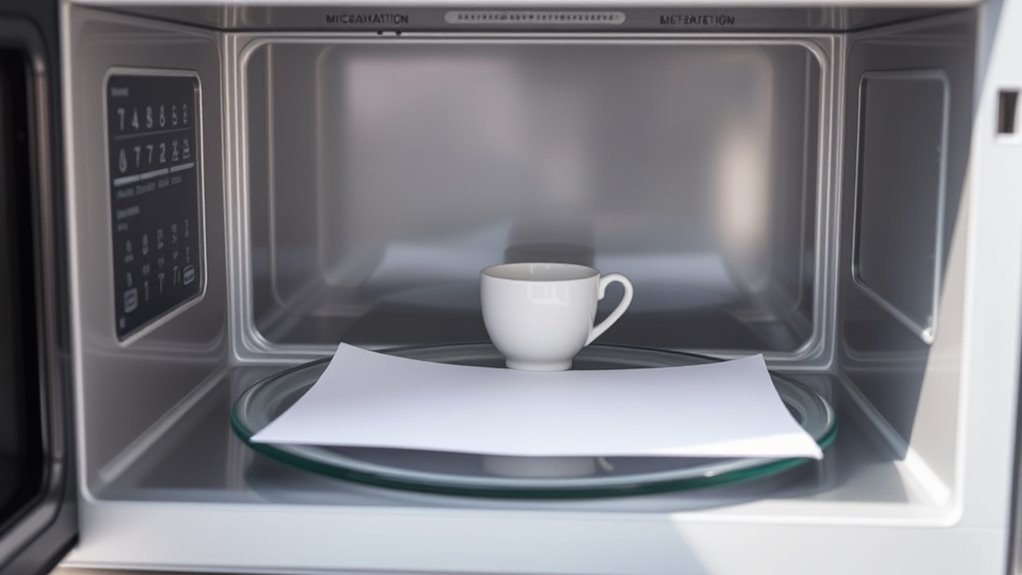
How You Can Microwave Paper Without Damage
You can microwave paper safely by choosing plain, dry sheets like white paper towels or parchment without any metallic inks or foil. It’s important to remove any staples or clips before heating to avoid sparks or damage.
Set your microwave to low power and heat the paper in short 10-15 second bursts. Make sure to check frequently to prevent scorching or burning.
Keep the paper flat and avoid folds to guarantee even heating throughout. Following these simple steps helps you avoid damage while microwaving paper.
If you keep going, you’ll discover tips for handling tricky papers and avoiding common mistakes. It’s all about being careful and attentive when microwaving paper!
Understanding Which Types of Paper Are Microwave-Safe
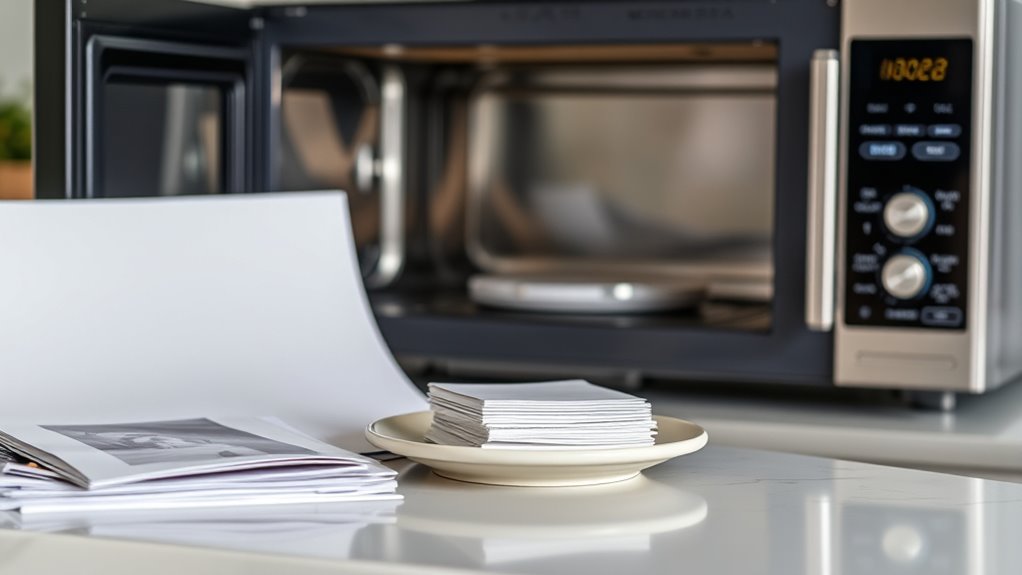
How can you tell if a type of paper is safe to microwave? First, check the label or packaging for microwave-safe symbols or instructions.
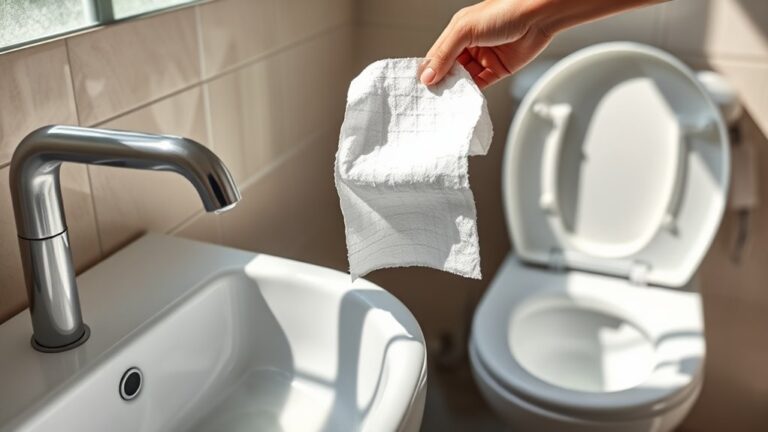
Plain white paper towels, parchment paper, and wax paper usually work well because they don’t contain metal or harmful coatings.
Avoid paper with printed ink, glossy finishes, or metallic elements, as these can spark or release toxins. Newspaper and recycled paper often have inks and chemicals that aren’t microwave-friendly.
You can also test a small piece by microwaving it for 10 seconds to see if it heats up or smokes—if it does, don’t use it.
Preparing Paper Properly Before Microwaving
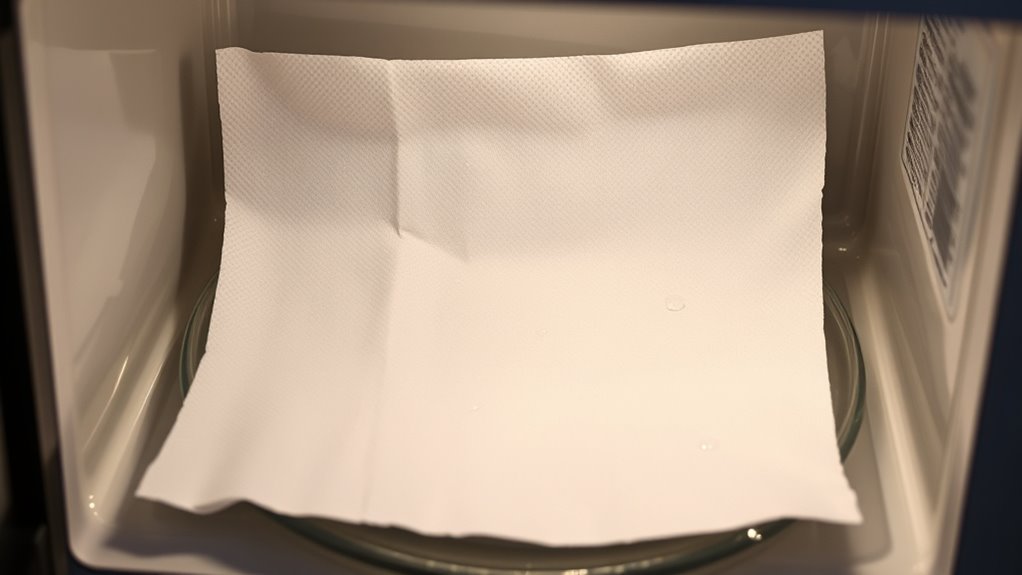
Before you microwave paper, make sure you pick the right type that’s safe for heat. Always remove any metal clips or staples to avoid sparks.
It also helps to moisten the paper slightly to prevent it from burning. Just a little bit of dampness can make a big difference.
Choosing the Right Paper
When selecting paper for microwaving, you need to contemplate its composition and safety. Choose plain, uncoated paper without glossy finishes, as coatings often contain chemicals that can release harmful fumes or catch fire.
Avoid recycled paper with unknown additives or heavily printed designs, since inks might not be microwave-safe. Opt for natural fibers like plain white paper towels, parchment paper, or plain paper napkins, which generally withstand microwave heat without damage.
Make sure the paper is dry; damp paper can cause uneven heating or steam buildup. Also, steer clear of thick cardboard or paper with synthetic blends that might melt or smolder.
Removing Metal Elements
Why do you need to remove metal elements from paper before microwaving? Metal can cause sparks or even fires inside the microwave. Staples, paper clips, foil accents, or metallic inks all pose risks.
Before you heat up any paper, carefully check for and eliminate these items. Use tweezers for staples or clips to avoid tearing the paper. Even small metal flecks can create dangerous arcing.
If the paper has metallic ink or foil, it’s best not to microwave it at all. Removing metal elements ensures your microwave stays safe and your paper doesn’t get damaged by burning or scorching.
Taking this simple step helps you avoid accidents and keeps your materials intact during the microwaving process. So, a little extra care goes a long way!
Moistening Paper Slightly
Although microwaving dry paper might seem harmless, adding a slight amount of moisture helps prevent it from catching fire or becoming brittle.
Before placing paper in the microwave, lightly mist it with water using a spray bottle or dab it gently with a damp cloth. This moisture stabilizes the fibers and reduces the risk of sparks or damage.
Here’s a quick guide to moistening paper properly:
| Method | Result |
|---|---|
| Light spray | Even moisture, prevents burns |
| Damp cloth dab | Controlled wetness, less soggy |
| Avoid soaking | Prevents tearing and sogginess |
Recommended Microwave Settings for Heating Paper
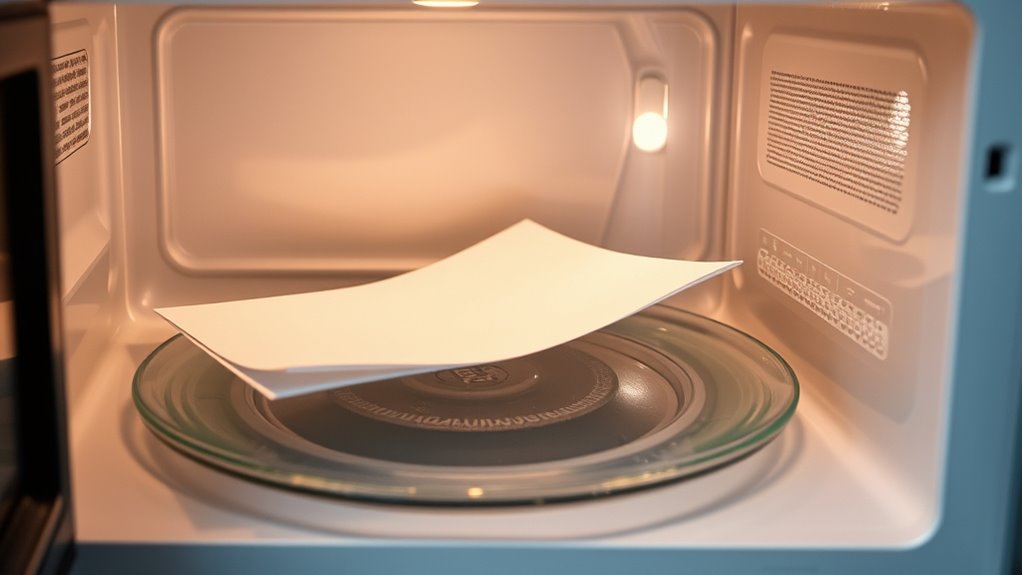
Since paper can easily scorch or catch fire, you’ll need to use low power settings and short heating intervals when microwaving it. Set your microwave to 30% power or use the defrost setting to prevent overheating.
Heat the paper in 10 to 15-second bursts, checking after each to ensure it’s not getting too hot. If your microwave doesn’t allow precise power adjustments, keep the heating time very brief, around 5 to 7 seconds.
Always place the paper flat and avoid folding it, which can create hot spots. Using these settings helps distribute heat evenly and minimizes the risk of damage.
Common Mistakes to Avoid When Microwaving Paper
When microwaving paper, you’ll want to avoid common mistakes that can lead to scorching or even fire. One key error is overheating—microwaving paper for too long causes it to dry out and ignite.
Another is using printed paper with metallic ink or foil, which sparks and damages your microwave. Finally, don’t microwave paper that’s wet or contains adhesives, as moisture and chemicals can cause uneven heating or fumes.
Here are three mistakes to avoid:
- Overheating paper beyond recommended times
- Microwaving paper with metallic elements or foil
- Using damp or adhesive-laden paper in the microwave
Safe Uses of Microwaved Paper in Everyday Tasks
If you want to refresh dried herbs or soften stiff paper, microwaving paper can be a handy method. You can place a damp paper towel over herbs wrapped in paper to help revive their aroma without burning them.
When dealing with old or brittle documents, microwaving them briefly with a slightly damp paper can make the fibers more pliable for easier handling or folding.
You might also use microwaved paper towels to speed up the drying process for small craft projects. Just be sure to keep the paper lightly moist and monitor the time closely to avoid scorching.
Troubleshooting Issues When Heating Paper in the Microwave
Although microwaving paper is generally straightforward, you might encounter issues like uneven heating, sparks, or burning. To avoid these problems, start by paying close attention to the microwave settings and the type of paper you use.
Here are some quick tips to troubleshoot common issues:
- Uneven Heating: Place the paper flat and avoid folding it. Rotate or reposition the paper halfway through heating.
- Sparks or Arcing: Remove any metallic elements like staples or foil from the paper before microwaving.
- Burning or Smoking: Use short intervals (10-15 seconds) and check frequently to prevent overheating.
Conclusion
Now that you know how to microwave paper safely, you can avoid damage and make the most of your heating tasks.
Did you know that about 60% of household microwave accidents involve improper use of materials like paper? By choosing the right type and preparing it properly, you’re already a step ahead.
Following recommended settings is key to keeping your paper intact and your microwave safe. Just remember to avoid common mistakes like overheating or using glossy, coated papers that can catch fire.
With these tips, you’ll handle microwaving paper with confidence every time. Microwaving paper doesn’t have to be risky if you use the right techniques. Stay safe, follow guidelines, and enjoy the convenience without damage or worry.