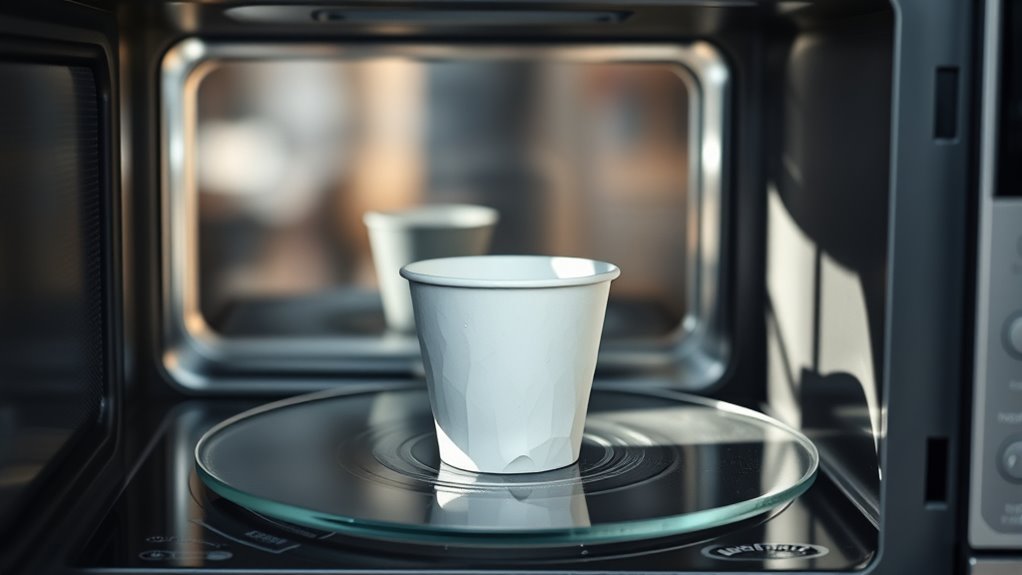
Can You Put Paper Cups in the Microwave?
You shouldn’t put most paper cups in the microwave because the plastic linings can melt and release harmful chemicals when heated.
Paper cups may also weaken, leak, or catch fire, especially if they have metallic decorations.
Only use cups labeled microwave-safe, and always follow instructions to avoid accidents.
If you want to reheat your drink safely or find alternatives, there are better options and tips to keep in mind for safe microwaving.
Understanding the Materials Used in Paper Cups
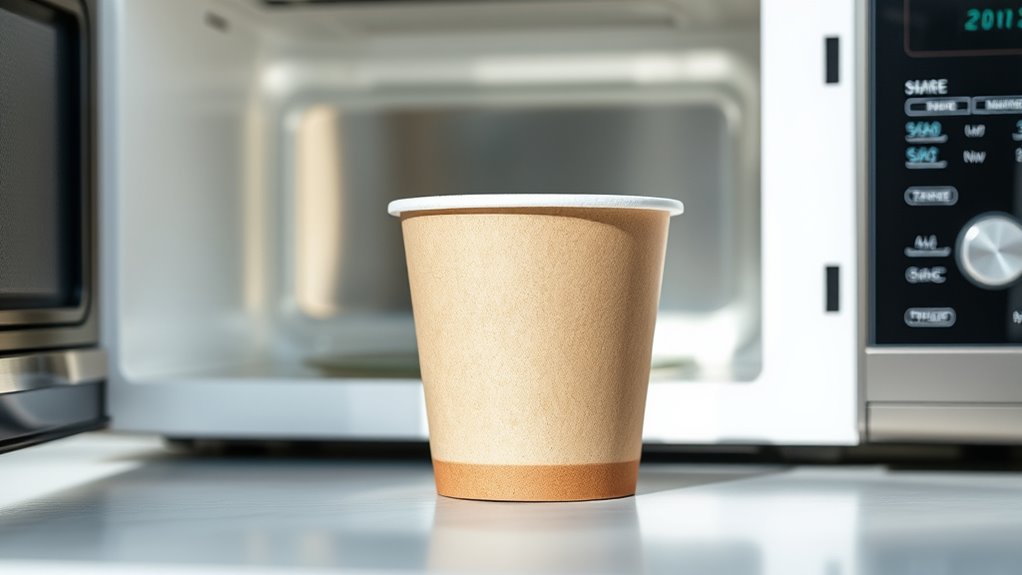
Although paper cups might seem simple, their materials are carefully chosen to balance durability and convenience. You’ll find that most paper cups are made from paperboard coated with a thin layer of plastic, usually polyethylene.
Most paper cups are crafted from paperboard with a thin polyethylene coating for durability and convenience.
This coating makes the cup waterproof and able to hold liquids without leaking. Sometimes, cups use a biodegradable lining like polylactic acid (PLA) instead of plastic, which is better for the environment.
The paper itself provides strength and structure, while the coating prevents sogginess. You might also notice a wax coating on some cups, which offers similar protection.
Understanding these materials helps you realize why paper cups work well for hot or cold drinks—and why their composition matters when you consider heating them in a microwave. Makes sense, right?
Risks of Microwaving Paper Cups
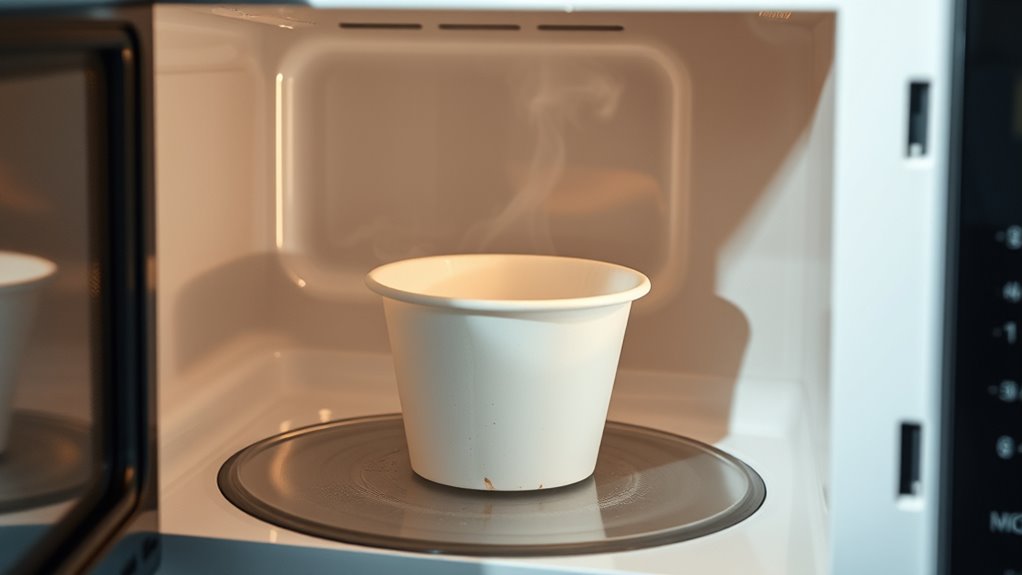
Knowing what’s inside your paper cup helps you understand why microwaving it can be risky. Many paper cups have a thin plastic lining to prevent leaks, and when heated, this lining can melt or release harmful chemicals into your drink.
Also, the paper itself can weaken, causing the cup to lose its shape or even leak hot liquid, which can burn you. Some cups contain inks or adhesives that aren’t designed to withstand microwave heat, potentially contaminating your beverage.
You also risk starting a fire if the cup has any metallic elements like foil rims. So, to avoid these dangers, it’s best not to microwave standard paper cups unless you’re sure they’re designed for it.
Prioritizing safety helps prevent accidents and keeps your drinks safe. It’s always better to be cautious than sorry!
Identifying Microwave-Safe Paper Cups
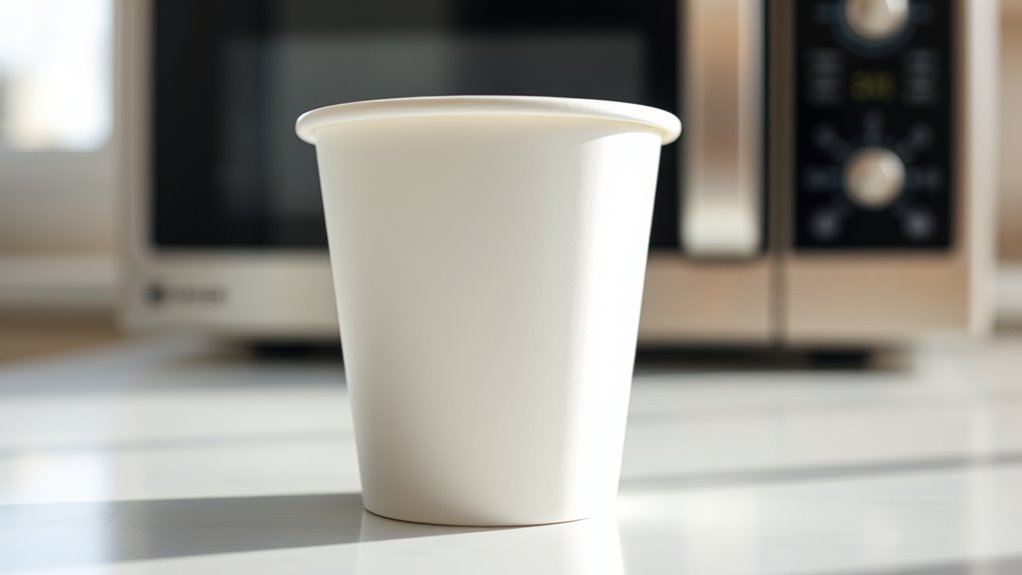
You should first check the material composition of your paper cup to see if it contains any plastic or wax coatings. These might not be microwave-safe.
Look for microwave-safe labeling or symbols on the cup. They indicate it’s designed for microwave use.
If there’s no clear indication, it’s best to avoid microwaving the cup altogether. Better safe than sorry!
Material Composition Check
When checking if a paper cup is microwave-safe, you’ll need to examine its material composition closely. Many paper cups have a thin plastic lining, usually polyethylene, to prevent leaks. This lining can sometimes melt or release harmful chemicals when microwaved.
Cups made from uncoated paper or those lined with microwave-safe materials like certain biodegradable coatings are generally safer. Avoid cups with metallic finishes or prints, as metal sparks in microwaves. Also, some paper cups contain wax coatings, which might not hold up well under heat.
If you can’t find clear information on the cup’s materials or if it seems to have multiple layers or additives, it’s best not to microwave it. Understanding the materials helps you avoid damaging the cup or risking contamination of your food or drink. So, when in doubt, play it safe and skip the microwave!
Microwave-Safe Labeling
Identifying whether a paper cup is safe for microwave use often comes down to checking its labeling. Look for clear markings such as “microwave-safe” or a microwave symbol on the cup or its packaging.
These indicators mean the cup has been tested to withstand microwave heat without melting, warping, or releasing harmful chemicals. If you don’t see any labeling, it’s best to avoid microwaving the cup altogether.
Some manufacturers include instructions or warnings against microwave use, which you should always follow. Remember, just because a cup is made of paper doesn’t guarantee it’s microwave-safe.
Always rely on the label to guide you, ensuring you heat your drinks safely without damaging the cup or risking your health.
How to Safely Reheat Drinks in the Microwave
When reheating drinks, make sure your cup is made from microwave-safe materials to avoid any risks. Don’t overheat your drink, as it can cause burns or damage the cup.
If you’re unsure, try alternative methods like using a microwave-safe mug or warming on the stove. It’s always better to be safe than sorry!
Microwave-Safe Cup Materials
Although some paper cups might seem convenient for reheating drinks, not all materials handle microwave heat safely. You need to pick the right cup to avoid melting or chemical leaching.
Here are three key materials to look for:
- Microwave-safe paper cups – These are specially designed with a thin, microwave-friendly lining that won’t melt or catch fire.
- Ceramic cups – They distribute heat evenly and are generally safe unless decorated with metallic paint.
- Glass cups – Heat-resistant glass like borosilicate is ideal, as it doesn’t absorb heat and won’t warp.
Avoid cups with plastic coatings or metallic elements. Always check for a microwave-safe label before reheating to keep your drink safe and your microwave intact.
Avoiding Overheating Hazards
To safely reheat your drink in the microwave, you need to control the temperature and time carefully to prevent overheating. Start by heating your beverage in short intervals—about 15 to 30 seconds—stirring in between to distribute the heat evenly.
Avoid microwaving for too long at once, as this can cause the liquid to boil over or the cup to weaken. Keep an eye on the cup’s condition; if you notice any softening or warping, stop immediately to prevent spills or burns.
Also, avoid sealing the cup with a lid or plastic wrap, as trapped steam may build pressure and cause accidents. By monitoring heat levels and duration closely, you’ll protect yourself and your paper cup from microwave hazards.
Alternative Reheating Methods
Controlling heat and timing helps prevent common microwave hazards, but you might prefer other ways to reheat your drink safely.
Here are three alternative methods you can try:
1. Stovetop warming: Pour your drink into a microwave-safe pot and gently heat it over low to medium heat. Stir frequently to avoid scorching and ensure even warmth.
It’s pretty simple and gives you more control over the temperature.
2. Hot water bath: Place your drink container in a bowl of hot water for several minutes. This indirect heat method warms your drink without risking uneven heating or damaging the container.
It’s an easy way to warm up your drink without any hassle.
3. Electric kettle: If your drink is water-based, use an electric kettle to boil water and then mix it with instant coffee, tea, or other powdered drinks.
This method is quick and avoids microwave risks altogether.
These alternatives help you enjoy your beverage safely without relying solely on the microwave. Give them a try and see which one works best for you!
Alternatives to Using Paper Cups for Microwaving
When you need to heat something quickly, choosing the right container is key to avoiding mishaps with paper cups. Instead of paper, opt for microwave-safe glass or ceramic mugs and bowls—they withstand heat without melting or leaching chemicals.
Silicone containers are another great choice since they’re flexible, durable, and designed for microwave use. If you want something disposable, look for microwave-safe plastic containers labeled as such, but avoid any with metal parts or coatings.
Using these alternatives helps you heat your food or drinks safely and evenly without worrying about leaks, burns, or harmful fumes. By selecting the appropriate container, you’ll protect both your microwave and your food, making your reheating process smoother and safer every time.
Tips for Avoiding Microwave Accidents With Disposable Cups
While using microwave-safe alternatives is ideal, you might still need to heat something in a disposable paper cup occasionally. To avoid microwave accidents, follow these tips closely:
First, check the cup’s label. Only microwave cups marked as microwave-safe. Cups with a plastic lining can melt or release harmful chemicals, so it’s best to be cautious.
Also, avoid overheating. Heat in short intervals (15–30 seconds), stirring in between. This helps prevent the cup from getting too hot or even catching fire.
Finally, use a microwave-safe plate. Place the cup on it to catch any spills and provide stability. This reduces the risk of tipping or burning.
Conclusion
While some paper cups might seem microwave-safe, many contain coatings or materials that can melt or release harmful chemicals when heated. You might think reheating your drink in a paper cup is convenient, but the risk of spills, burns, or damage is real.
Instead of risking an accident, choose microwave-safe containers designed for reheating. Convenience shouldn’t come at the cost of safety—always prioritize containers made for the microwave over disposable paper cups.
So, can you put paper cups in the microwave? It’s generally not a good idea. To keep things safe and avoid any unwanted mess or health risks, stick with microwave-safe containers. Your safety and your drink’s quality are worth the extra step.