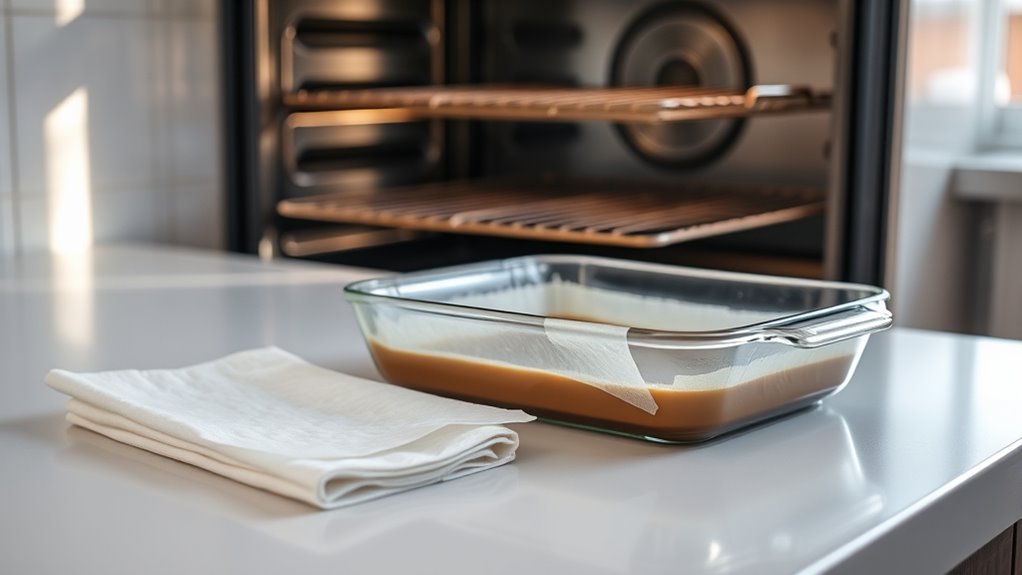
How You Can Put Wax Paper in the Oven Safely
You can put wax paper in the oven safely only if you keep the temperature below 200°F to avoid melting or fire risks. Wax paper is coated with a thin layer of wax, which can ignite if exposed to direct heat or open flames.
So, it’s important to ensure it doesn’t touch heating elements or flames.
Use wax paper mostly for lining trays during low-heat tasks or covering food while baking gently. It’s great for preventing sticking and keeping things tidy when baking at lower temperatures.
If you want to avoid problems and use wax paper effectively, knowing its limits and alternatives will help you bake smarter and safer.
Understanding the Properties of Wax Paper
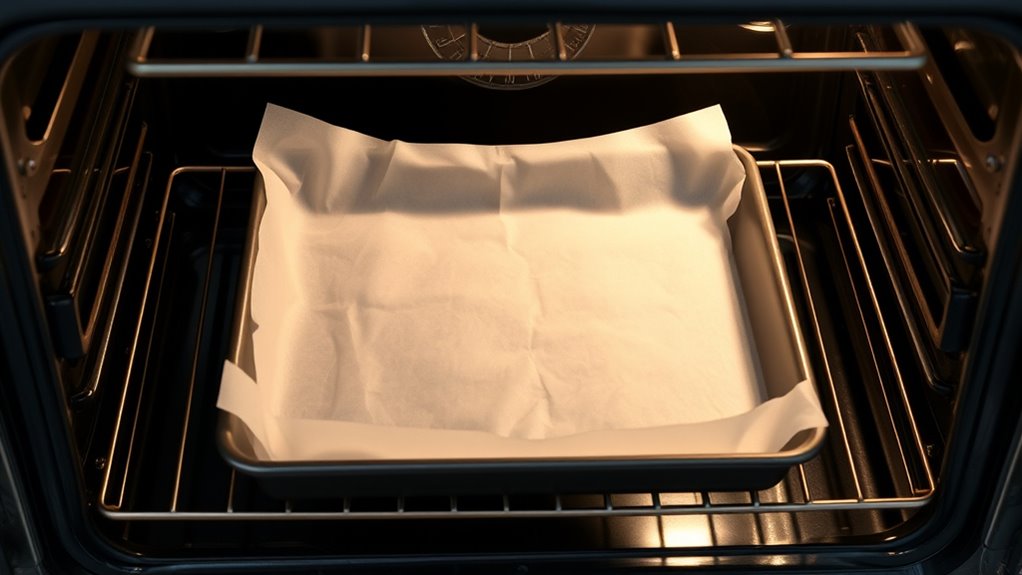
Although wax paper is a handy kitchen tool, you need to understand its properties before using it in the oven. Wax paper is coated with a thin layer of wax, making it moisture-resistant and non-stick. This coating helps you prevent food from sticking during prep or wrapping.
However, wax paper isn’t heatproof. When exposed to high temperatures, the wax can melt, smoke, or even catch fire. You’ll want to avoid using it at temperatures exceeding 200°F (93°C).
Also, wax paper isn’t designed to withstand direct heat, so placing it near open flames or heating elements is risky. Knowing this helps you use wax paper safely in the kitchen, ensuring you don’t accidentally damage your food or cause a fire hazard while cooking or baking.
Differences Between Wax Paper and Parchment Paper
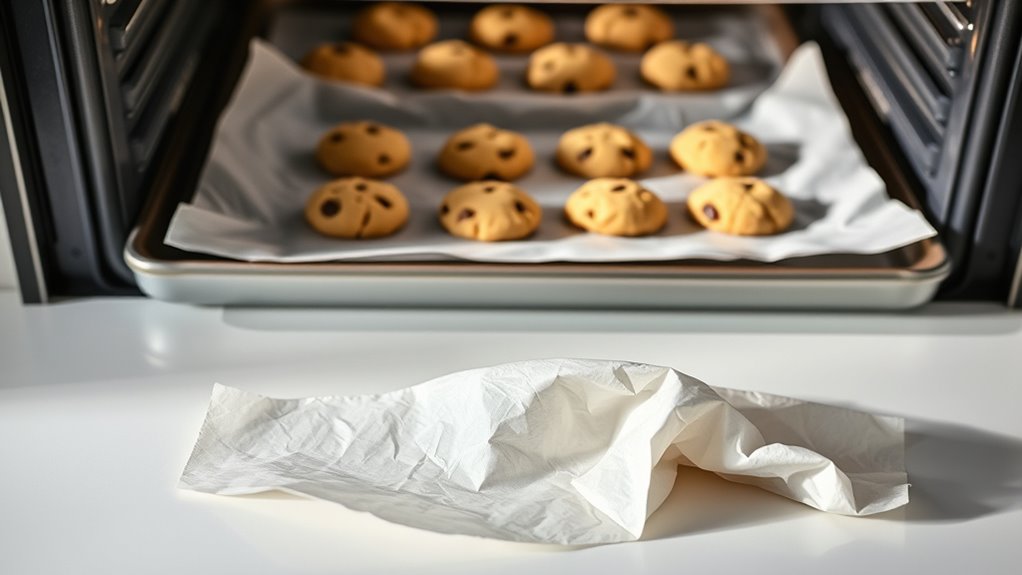
You’ll notice wax paper and parchment paper look similar but differ in material and heat tolerance. Wax paper is coated with a thin layer of wax, while parchment paper has a silicone coating that handles higher oven temperatures.
Understanding these differences helps you choose the right one for tasks like wrapping foods or baking. So, it’s pretty handy to know which to grab when you’re in the kitchen!
Material Composition Differences
Because wax paper and parchment paper are made from different materials, they behave differently when exposed to heat. Wax paper is coated with a thin layer of wax, usually paraffin or soybean-based, which makes it moisture-resistant but also highly flammable.
Parchment paper, on the other hand, is treated with silicone, giving it a heat-resistant, non-stick surface. This silicone coating allows parchment paper to withstand higher temperatures without burning or melting.
When you use wax paper in the oven, the wax can melt and smoke, or even catch fire, while parchment paper remains stable. So, it’s really important to understand these material differences.
That way, you can pick the right paper for your cooking needs and avoid any kitchen mishaps. Always check the packaging to confirm the paper’s intended use before heating.
Heat Resistance Levels
Understanding the materials’ behavior under heat naturally leads to examining their heat resistance levels. When you’re deciding between wax paper and parchment paper for oven use, these differences matter a lot.
Wax Paper: It can generally withstand temperatures up to about 200°F (93°C). But the wax coating can melt or even catch fire at higher temperatures, making it unsafe for baking or roasting.
Parchment Paper: Designed for oven use, it resists heat up to 420°F (215°C) or higher without burning or melting. That’s thanks to its silicone coating.
Practical Tip: Always check the packaging for specific temperature limits. And remember, never use wax paper in the oven beyond low heat settings. Meanwhile, parchment paper offers safe versatility for most baking needs.
Typical Kitchen Uses
While wax paper and parchment paper might seem interchangeable at first glance, they actually serve distinct purposes in the kitchen. Wax paper is great for wrapping food, covering countertops during messy prep, or lining trays for no-bake treats.
But here’s the thing — you shouldn’t use wax paper in the oven. Its wax coating can melt or even catch fire under high heat, which is definitely not what you want.
Parchment paper, on the other hand, is heat-resistant and perfect for baking. You can line your baking sheets, wrap foods for roasting, or use it to make cooking pouches.
Safe Temperature Limits for Using Wax Paper in the Oven
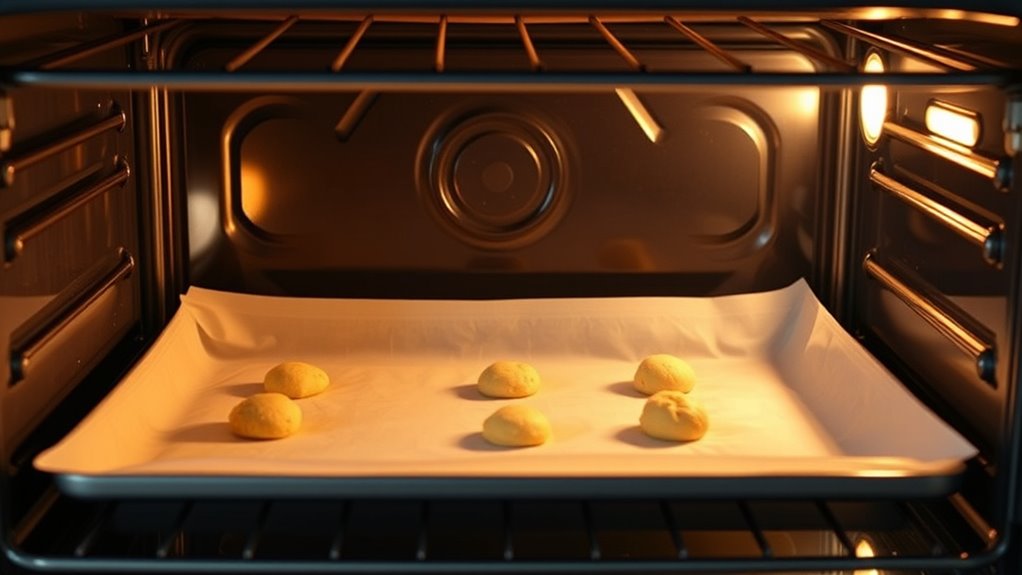
When you use wax paper in the oven, you need to keep the temperature below 420°F to prevent it from melting or catching fire. Wax paper is coated with a thin layer of wax, which has a low melting point.
Keep oven temps under 420°F when using wax paper to avoid melting or fire hazards.
Exceeding this temperature risks smoke, unpleasant odors, or even flames. So, it’s definitely something to watch out for.
To stay safe, follow these guidelines:
- Always check your oven’s temperature before placing wax paper inside.
- Avoid using wax paper for roasting or broiling, where temperatures exceed 420°F.
- Use wax paper only for tasks like covering food or lining pans at low heat. It’s best to keep things simple and safe!
Best Practices for Lining Baking Trays With Wax Paper
Keeping your oven temperature below 420°F is key to using wax paper safely, but knowing how to properly line your baking trays guarantees you get the best results.
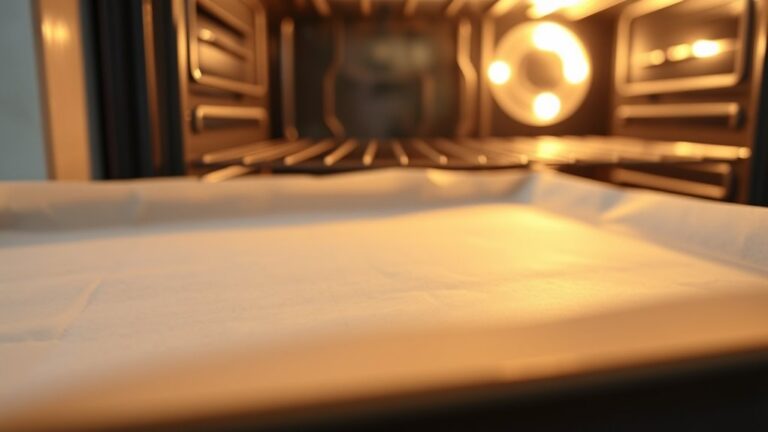
First, cut the wax paper to fit your tray without overlapping the edges; this prevents paper from curling up or touching heating elements.
Place the wax paper smoothly to avoid wrinkles, which can cause uneven cooking or sticking.
Avoid using wax paper for foods that will be in direct contact with the baking tray’s surface for extended periods, as the wax coating can melt.
Instead, use it as a liner for light tasks like roasting vegetables or baking cookies at lower temperatures.
Always monitor your baking closely to ensure the paper remains intact and doesn’t scorch.
Alternative Uses for Wax Paper When Baking
Although wax paper isn’t suitable for all oven tasks, you can use it creatively in your baking routine to simplify preparation and cleanup.
Wax paper may not go in the oven, but it’s a kitchen helper for prep and cleanup.
Here are three alternative ways to use wax paper when baking:
- Rolling Out Dough: Place wax paper on your counter to roll out sticky dough easily without extra flour. It helps prevent sticking and mess.
- Separating Layers: Use wax paper sheets between cookie dough balls or layers of baked goods. This keeps them from sticking together during storage.
- Covering Surfaces: Lay wax paper over countertops or baking trays when decorating or glazing. It’ll catch drips and crumbs, making cleanup faster and easier.
These simple tricks help you work smarter in the kitchen without risking wax paper melting in the oven.
Tips to Prevent Wax Paper From Melting or Burning in the Oven
Using wax paper creatively in your baking routine can save you time and effort, but you need to handle it carefully around heat. To prevent wax paper from melting or burning in the oven, always keep it away from direct heat sources like open flames or heating elements.
Use wax paper only for tasks like covering food or lining pans at low oven temperatures—ideally below 420°F. Avoid placing wax paper directly under the broiler or on baking sheets where it can touch hot surfaces.
Instead, consider parchment paper for high-heat baking. If you must use wax paper, trim excess edges to prevent curling and ensure it doesn’t flap into heating elements.
Following these tips helps you enjoy wax paper’s benefits without risking a mess or fire hazard.
Conclusion
Using wax paper in the oven is like walking a tightrope—you’ve got to know your limits to stay safe. Remember, wax paper can’t handle high heat like parchment paper, so keep it below 420°F and avoid direct contact with heating elements.
When you line your trays carefully, you’ll prevent melting or burning. Stick to these tips, and wax paper can be your helpful kitchen sidekick, not a fiery foe.
In summary, if you want to use wax paper in the oven safely, always monitor the temperature and avoid placing it near open flames or heating coils. Wax paper is great for certain low-heat uses like covering dishes or wrapping food, but it’s not designed for baking at high temperatures. For best results, use wax paper below 420°F, and never let it touch heating elements directly. Following these simple guidelines lets you enjoy the convenience of wax paper in your cooking without the risk of fire or damage.