
How You Can Use Acrylic Paint on Watercolor Paper Step by Step
To use acrylic paint on watercolor paper, start by choosing heavyweight, cold-pressed paper. This type of paper helps prevent warping when you apply wet paint.
It’s important to prime the surface with gesso or an acrylic medium before you begin; this step improves paint adhesion and protects the paper.
Apply acrylic paint in thin layers, allowing each layer to dry fully before adding the next. This approach helps you build depth and avoid cracking.
You can use brushes or palette knives to create different textures, making your artwork more dynamic.
Work from light to dark colors for better blending and smoother transitions.
Once your painting is complete, finish by sealing it with a clear varnish to protect your artwork.
With these careful steps, you’ll discover even more tips to enhance your technique and achieve beautiful results.
Choosing the Right Watercolor Paper for Acrylics
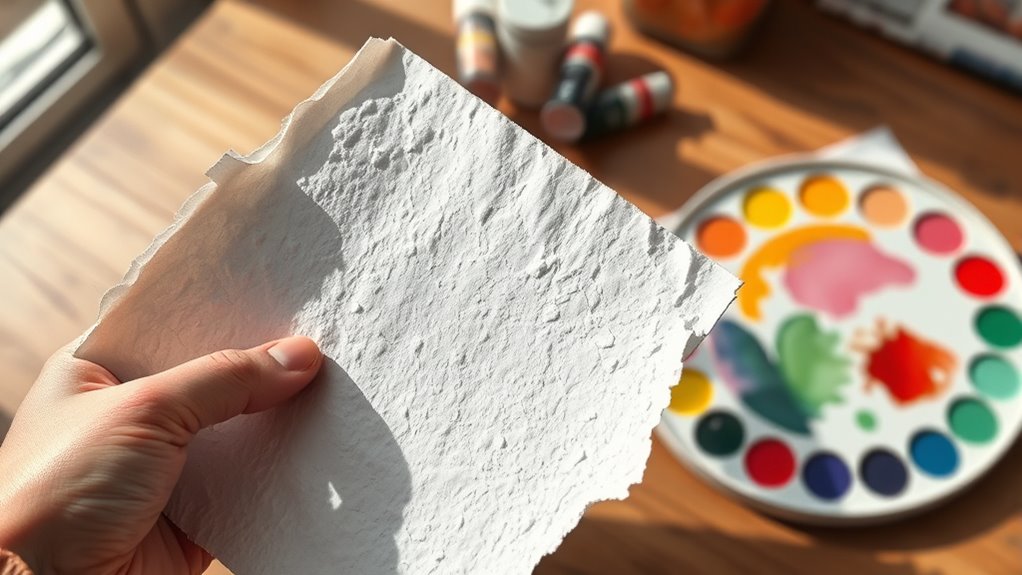
Although watercolor paper is designed for wet media, not all types handle acrylic paint equally well. When choosing your paper, opt for heavyweight options—preferably 140 lb (300 gsm) or more—to prevent warping as acrylics are thicker and dry differently than watercolors.
Cold-pressed paper offers a good texture that grips acrylic paint effectively without being too rough. Avoid hot-pressed paper since its smoothness can cause acrylics to slide around, making layering tricky.
You’ll also want to select 100% cotton paper if possible; it’s more durable and absorbs paint better than cellulose blends. By picking the right paper, you’ll ensure your acrylic layers adhere properly and your artwork maintains its integrity without buckling or peeling.
Preparing Watercolor Paper Before Painting
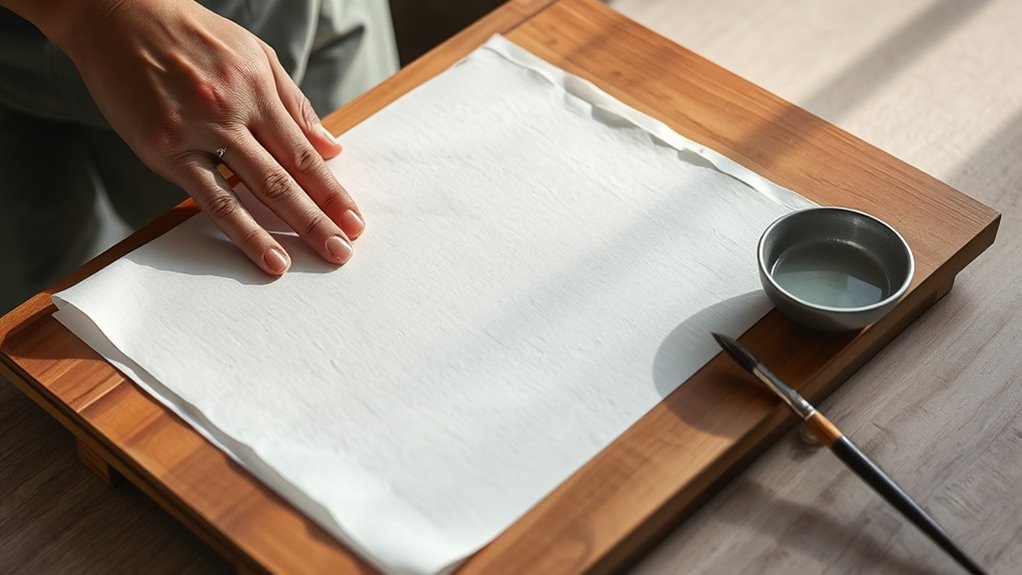
Before you start painting, make sure you pick the right paper weight to handle acrylics without warping. You’ll also want to prime the surface properly, whether with gesso or another option, to improve paint adhesion.
Finally, preparing the paper’s moisture level can help you control how the paint interacts with the surface. It’s all about setting yourself up for success before you even touch your brush!
Selecting Paper Weight
When selecting paper weight for acrylic paint on watercolor paper, you’ll want to contemplate how much moisture the paper can handle without warping. Heavier paper—usually 300 gsm or more—stands up better to wet acrylic layers and repeated brushwork.
If you choose lighter weights, like 190 gsm, expect more buckling unless you stretch the paper first. Thicker paper also offers a sturdy surface, which helps when applying textured acrylic techniques.
Priming Surface Options
Since watercolor paper wasn’t originally designed for acrylics, you’ll want to prime the surface to improve adhesion and prevent excessive absorbency. One common option is applying gesso, a white acrylic primer that creates a smooth, slightly textured base.
It seals the paper, preventing paint from soaking in too quickly and allowing vibrant colors to stand out. You can use a brush or roller to spread an even layer, then let it dry thoroughly before painting.
Another option is clear acrylic medium, which offers a less opaque primer if you want to preserve the paper’s texture and appearance. Both choices prepare your paper effectively, so pick one based on the finish you prefer.
Proper priming ensures your acrylic paint adheres well and lasts longer on watercolor paper. It’s a simple step that really makes a difference!
Moisture Preparation Methods
Although acrylic paint behaves differently than watercolor, you’ll want to manage the moisture on your watercolor paper carefully to control how the paint interacts with the surface.
Too much moisture can cause acrylics to lift or bleed, while too little might lead to uneven application.
Here are some moisture preparation methods to try before you start painting:
- Lightly mist the paper with water using a spray bottle.
- Use a damp sponge to evenly moisten the surface.
- Wet your brush and apply water selectively to areas you want to blend.
- Let the paper absorb water for a few minutes, then blot excess moisture.
- Paint directly on dry paper for sharper edges and thicker paint layers.
Give these methods a go and see what works best for you. Finding the right balance with acrylics on watercolor paper can really make a difference!
Selecting Acrylic Paints Suitable for Watercolor Paper
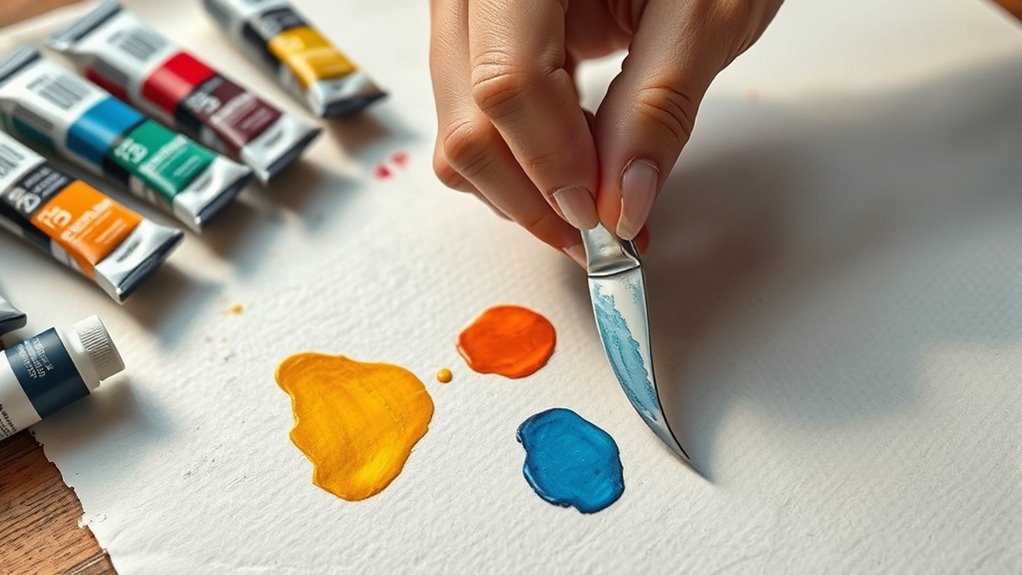
When choosing acrylic paints for watercolor paper, consider the paint’s consistency to guarantee it adheres well without damaging the surface. You’ll want to think about opacity and pigment strength to get the desired vibrancy and layering effects.
Also, decide between fast-drying and slow-drying formulas based on how much working time you need. This way, you can manage your painting process better and avoid frustration.
Paint Consistency Choices
Choosing the right paint consistency can make a big difference when working with acrylics on watercolor paper. You’ll want to adjust your paint to suit the paper’s absorbency and texture. This helps ensure smooth application without warping or cracking.
Here’s what to contemplate: use thicker paint for bold, textured strokes that hold shape well. Or, thin your paint with water or acrylic medium to avoid stiffness. Just be careful not to go too watery, or the paper might buckle.
You could also experiment with glaze-like consistencies for layering effects. And keep in mind, the paint’s drying time changes depending on how thick it is. So, try a few options and see what works best for you!
Opacity and Pigment Strength
Acrylic paints come in various levels of opacity and pigment strength, and selecting the right one can greatly impact your artwork on watercolor paper. When you choose opaque paints, you’ll cover previous layers completely, which is great for layering and corrections.
Transparent or semi-transparent paints, on the other hand, allow the paper’s texture and earlier washes to show through, adding depth and subtlety.
Pigment strength matters too; high-quality paints with intense pigments give you richer colors that require fewer layers. Keep in mind that watercolor paper is absorbent, so stronger pigments help maintain vibrancy as the paint soaks in.
Fast-Drying vs. Slow-Drying
Understanding how opacity and pigment strength affect your painting sets the stage for considering drying times. When choosing acrylic paints for watercolor paper, you’ll find that drying speed influences your workflow and the final look.
Fast-drying acrylics let you layer quickly but may dry unevenly on absorbent paper. On the other hand, slow-drying paints give you more time to blend and work wet-on-wet but risk buckling the paper if applied thickly.
Consider these factors:
- Fast-drying acrylics are ideal for quick layering.
- Slow-drying acrylics allow smooth blending and gradients.
- Watercolor paper absorbs paint differently, affecting drying.
- Thicker slow-drying layers can cause paper warping.
- Use retarders or additives to control drying time.
Techniques for Applying Acrylic Paint on Watercolor Paper
When you apply paint on watercolor paper, you’ll find that the texture and absorbency influence how the acrylic behaves. To get started, use a flat or round brush to lay down paint smoothly, adjusting pressure for varied strokes.
You can also try dry brushing to highlight the paper’s grain, creating interesting texture. If you want sharper edges, use masking tape before painting.
For broader coverage, a palette knife works well, spreading paint thickly or thinly. Remember to work quickly on wet paint to avoid unwanted streaks.
Using diluted acrylics lets you mimic watercolor effects while maintaining opacity. Experiment with these techniques to discover which best suits your style and the specific paper you’re working with.
Tips for Layering and Blending Acrylics on Watercolor Paper
Although watercolor paper absorbs paint differently than traditional canvas, you can still achieve smooth layering and seamless blending with acrylics by working in thin, controlled coats. Start by letting each layer dry completely to avoid lifting previous paint.
Use a soft brush to gently blend colors while they’re still wet for smooth gradations. Here are some tips to help you layer and blend acrylics effectively on watercolor paper:
- Apply thin layers to prevent paper warping or buckling
- Use glazing medium to extend drying time and enhance blending
- Work from light to dark colors for better control
- Avoid overworking the paint to maintain texture
- Experiment with dry brushing for subtle blending effects
These techniques will help you create depth and richness in your acrylic artwork on watercolor paper. Give them a try—you might be surprised at how much your work improves!
Sealing and Protecting Your Acrylic Artwork on Watercolor Paper
Since watercolor paper is more delicate than canvas, sealing your acrylic artwork is essential to protect it from moisture, dust, and fading. You want to preserve the vibrancy and texture you’ve worked hard to create.
Use a clear acrylic spray sealer or varnish designed for paper to ensure even coverage without warping. Apply thin, light coats, allowing each to dry fully.
Handle your sealed artwork gently and store it away from direct sunlight. This way, your masterpiece stays looking fresh and beautiful for years to come.
| Feeling | Reason |
|---|---|
| Proud | Your art stays vibrant and fresh |
| Confident | Protection against damage is solid |
| Relieved | No more worrying about moisture stains |
| Inspired | Ready to display or gift your masterpiece |
Conclusion
You might worry that acrylic paint won’t hold up well on watercolor paper, but with the right preparation, it actually works beautifully. By choosing heavier, high-quality paper and sealing your finished piece, you’ll prevent warping and guarantee durability.
Don’t be afraid to experiment—acrylics offer vibrant colors and versatile techniques that bring your artwork to life. Just follow these steps, and you’ll create stunning, long-lasting pieces on watercolor paper with confidence.
Using acrylic paint on watercolor paper opens up new possibilities for your artwork. With the right approach, your paintings can have rich textures and brilliant hues. So, grab your brushes and give it a try—you’ll be amazed at how well acrylics perform on watercolor paper!