How Many Calories Are in Rice Paper
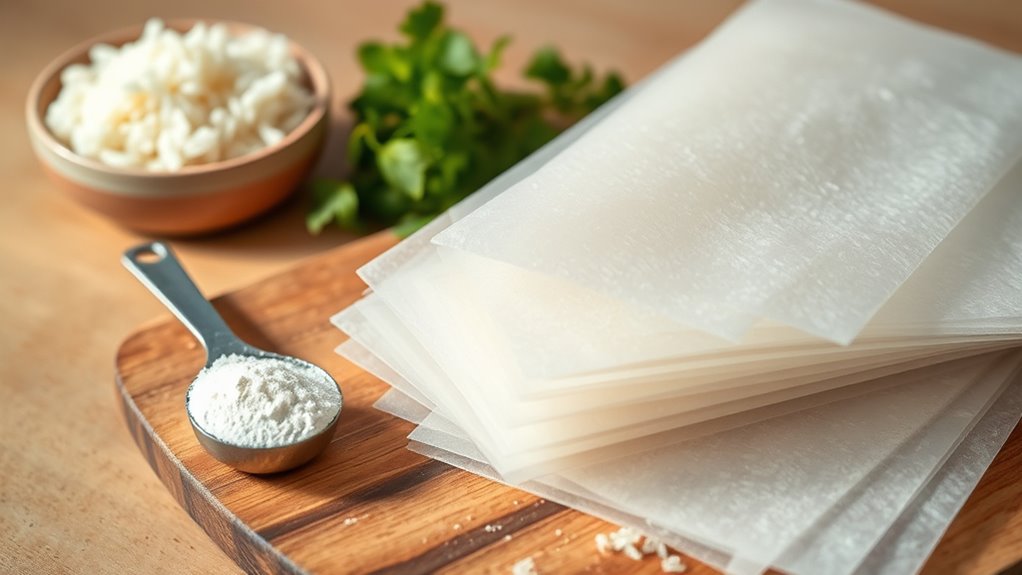
You’ll find that a standard 8-inch rice paper sheet has about 30 to 40 calories, making it a light choice for wraps and rolls. Rice paper is a popular ingredient in many Asian dishes because it’s low in calories yet versatile.
If you’re watching your calorie intake but still want something tasty, rice paper is a great option.
Smaller or larger sizes change the count slightly, with smaller sheets around 20-25 calories and bigger ones over 50. Rice paper is low in fat and protein but has some carbs, and it’s gluten-free.
This makes it a good choice for people with gluten sensitivities.
If you want to keep meals low-calorie and flavorful, there are smart ways to use rice paper that you might want to explore. It’s perfect for fresh spring rolls, light appetizers, or even creative snacks.
Give it a try and see how it fits into your healthy eating plan!
Understanding Rice Paper and Its Uses
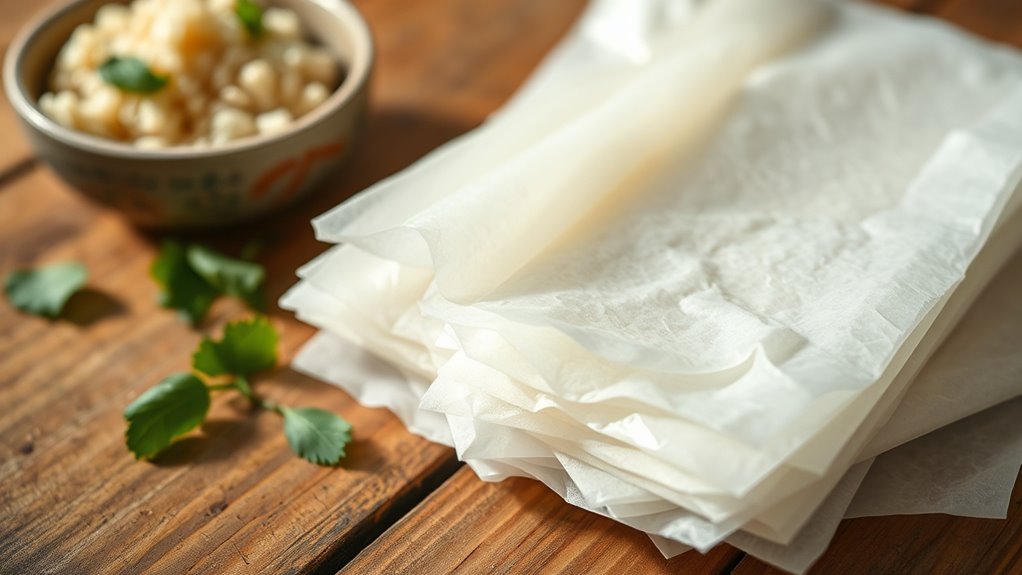
Although rice paper might seem simple, it plays a versatile role in cooking and crafting. When you use rice paper in the kitchen, you’ll find it’s perfect for wrapping fresh spring rolls, giving dishes a delicate, translucent touch without adding much flavor.
Rice paper is a versatile staple, ideal for fresh spring rolls and adding a delicate, translucent touch to dishes.
It’s naturally gluten-free and light, making it ideal for healthy meals. You’ll also see it used in frying, where it crisps up wonderfully.
Beyond food, you can use rice paper for artistic projects like decoupage or calligraphy because of its thin, smooth texture. Whether you’re rolling up veggies or creating decorative crafts, rice paper adapts well.
Understanding these uses helps you appreciate why it’s so popular and how it enhances both your culinary creations and artistic endeavors.
Calorie Content in Different Sizes of Rice Paper
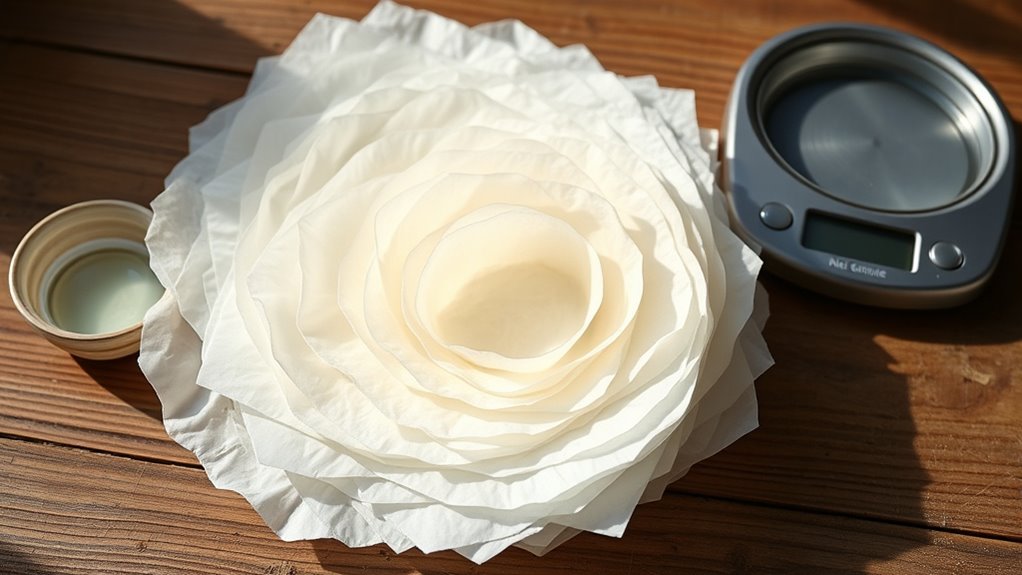
When you choose rice paper for your recipes, understanding the calorie content based on its size can help you manage your intake more effectively. Typically, a standard rice paper sheet measuring about 8 inches in diameter contains roughly 30 to 40 calories.
If you opt for smaller sheets, like those around 6 inches, expect the calorie count to drop to approximately 20 to 25 calories per sheet. Conversely, larger rice papers, such as 10-inch variants, can have upwards of 50 calories each.
These differences occur because calorie content correlates directly with the sheet’s surface area and thickness. By selecting the size that fits your dietary needs, you can better control how many calories you consume while still enjoying rice paper in your meals.
Nutritional Breakdown Beyond Calories
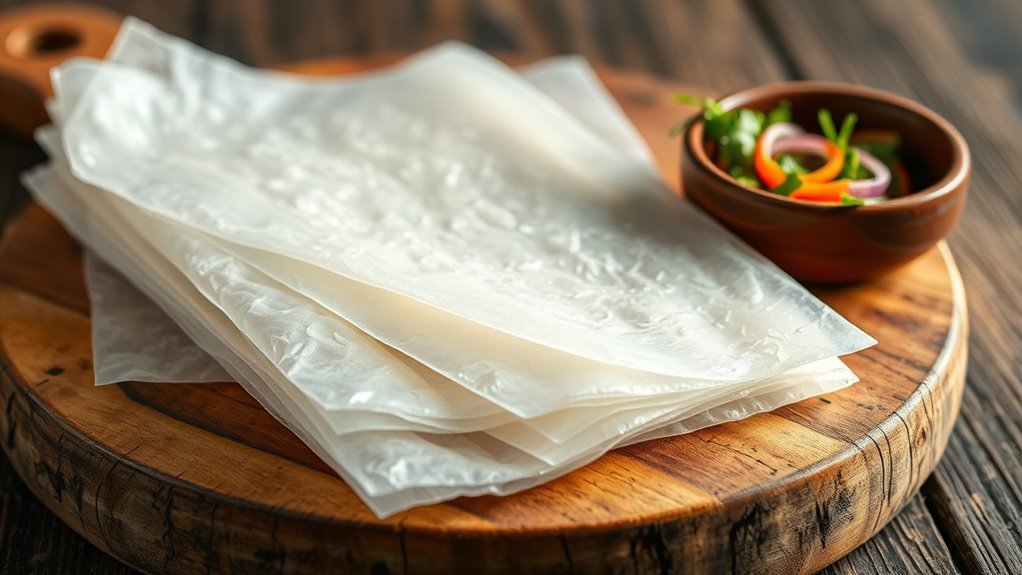
While calories give you a quick idea of energy intake, understanding the full nutritional profile of rice paper helps you make smarter food choices.
Rice paper is low in fat and protein but provides a small amount of carbohydrates. It’s also gluten-free, making it suitable for those with gluten intolerance.
Keep in mind, rice paper offers minimal vitamins and minerals, so you’ll want to pair it with nutrient-rich fillings.
| Nutrient | Amount per sheet (approx.) |
|---|---|
| Calories | 30-40 |
| Carbohydrates | 7-9 grams |
| Protein | 0.3-0.5 grams |
| Fat | 0 grams |
This breakdown helps you see rice paper’s role as a light, versatile wrap rather than a significant nutrient source.
Comparing Rice Paper to Other Wrap Alternatives
Since you want a light and versatile option, rice paper stands out compared to other wraps like flour tortillas, lettuce leaves, or nori sheets.
Flour tortillas tend to pack more calories and carbs, which might not fit your low-calorie goals. Lettuce leaves offer minimal calories but can tear easily and lack that satisfying chewiness.
Nori sheets bring a unique umami flavor and are low in calories, but their taste might not suit every filling you choose. Rice paper strikes a balance with its mild flavor, pliability, and low calorie count—usually around 30 calories per sheet.
This makes it an excellent choice if you want something that won’t overpower your ingredients or add unnecessary calories. It’s your go-to when seeking a light, adaptable wrap.
Tips for Using Rice Paper in Low-Calorie Meals
Rice paper’s low calorie count and flexible texture make it a perfect base for creating light meals without sacrificing flavor or satisfaction. To keep your meals low-calorie, load your rice paper wraps with plenty of fresh vegetables like lettuce, cucumber, and carrots.
Lean proteins such as shrimp, chicken breast, or tofu add substance without extra fat. Skip heavy sauces and opt for light dips like a squeeze of lime, low-sodium soy sauce, or a small amount of chili sauce.
When soaking rice papers, avoid over-soaking to prevent sogginess, which can lead you to add more filling to compensate. Roll tightly to maintain structure and portion control.
Common Mistakes That Increase Rice Paper Calories
You might be packing too much filling into your rice paper rolls without realizing the extra calories it adds.
Using calorie-dense dips can also sneak in more calories than you expect.
Let’s look at how these common mistakes can affect your meal’s total calorie count.
Overstuffing Fillings Added
When you overfill your rice paper rolls, you inadvertently pack in extra calories that can quickly add up. It’s tempting to add more fillings like noodles, meats, or sauces to make your rolls heartier, but each addition increases the calorie count.
Even healthy ingredients like avocado or nuts are calorie-dense, so loading up on them can turn a light snack into a calorie-heavy meal. To keep your rice paper rolls light and nutritious, measure your fillings carefully and avoid piling them too high.
Focus on a balanced mix of veggies and lean protein without going overboard. This way, you enjoy flavorful rolls without unintentionally consuming excess calories that undermine your health goals.
Using Calorie-Dense Dips
Although the rolls themselves might be light, the dips you choose can quickly add unexpected calories. Many popular dips like peanut sauce, hoisin, or creamy dressings are calorie-dense due to added oils, sugars, and nuts.
When you dunk your rice paper rolls generously, those calories add up fast. To keep your snack lighter, measure out your dip portions instead of free-dipping.
You can also swap heavy sauces for lighter alternatives such as a simple soy sauce with lime or a homemade chili-lime dressing with minimal oil. Being mindful of your dip choices and quantities helps you enjoy your rice paper rolls without sabotaging your calorie goals.
Conclusion
Now that you know rice paper is a low-calorie option, why settle for heavier wraps? It’s not just about calories—you get a light, versatile base that fits your healthy meals perfectly.
Just watch out for added fillings or sauces that can boost calories quickly. With a little care, you can enjoy delicious, guilt-free dishes using rice paper every time.
So, are you ready to wrap up your meals the smarter way? Rice paper offers a simple, tasty way to keep your calorie intake in check while still enjoying flavorful dishes. Whether you’re making fresh spring rolls or light snacks, choosing rice paper helps you stay on track with your health goals. Give it a try and discover how easy and satisfying low-calorie eating can be!