Is Wax Paper Compostable?
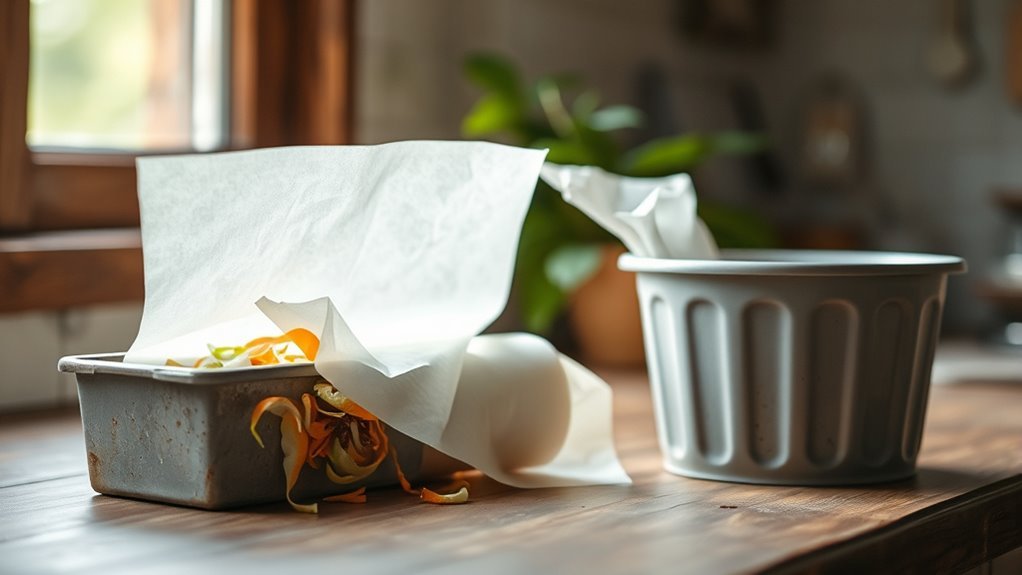
You can compost wax paper, but it really depends on the type of wax coating it has. If it’s coated with natural wax like soybean or beeswax, it breaks down more easily and is much more eco-friendly.
On the other hand, paraffin wax, which is petroleum-based, takes a lot longer to decompose and can stick around in your compost pile. To help speed up the process, make sure to tear the wax paper into small pieces before composting.
Also, try to avoid using sheets that are heavily contaminated with food residue.
If you’re curious about how wax paper stacks up against parchment paper or want to know the best composting options, keep exploring. There’s a lot to learn about what’s best for your garden and the environment!
What Is Wax Paper Made Of?
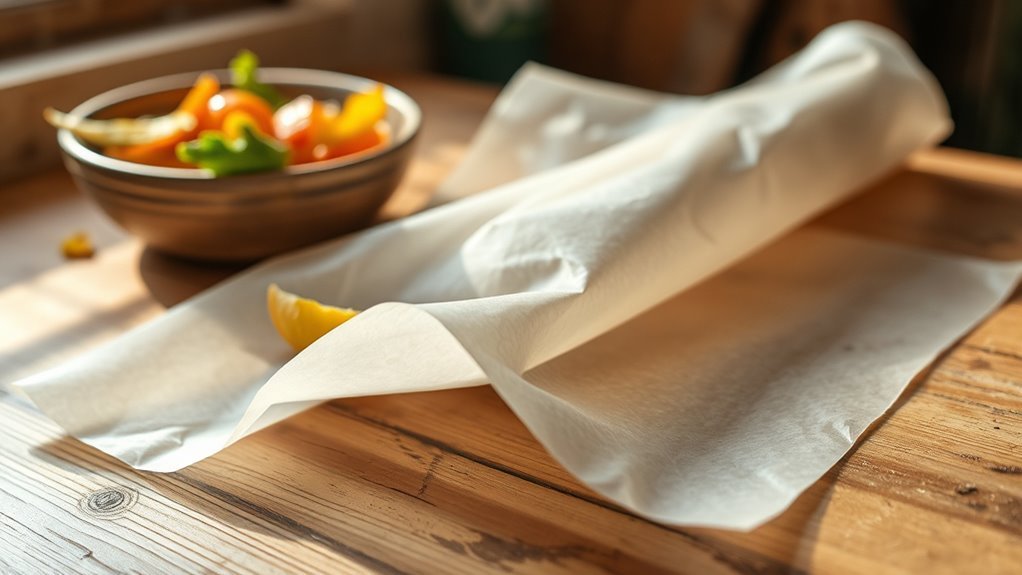
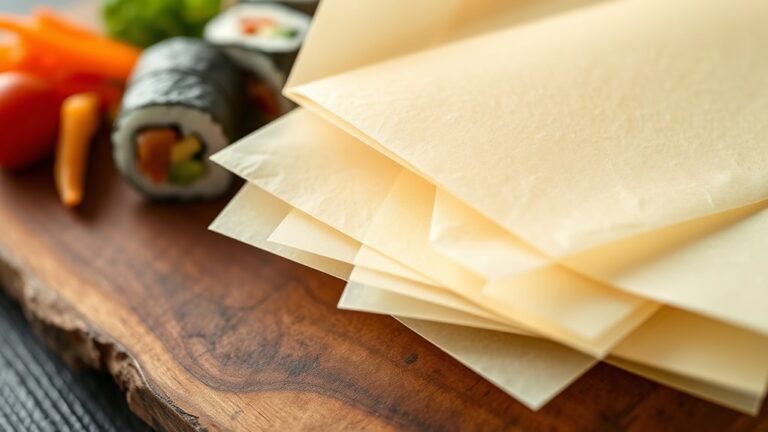
Although wax paper looks simple, it’s made by coating regular paper with a thin layer of wax, usually paraffin or soybean-based. When you use wax paper, you’re relying on this wax coating to provide moisture resistance and prevent sticking.
The paper itself comes from wood pulp, like most paper products, but it’s the wax that sets it apart. Paraffin wax, derived from petroleum, is common and creates a smooth, water-resistant barrier.
Soybean-based wax, a plant-derived alternative, offers a more eco-friendly option. This wax layer is what makes wax paper useful in kitchens, from wrapping food to lining surfaces.
However, because of this coating, the paper behaves differently than plain paper, especially when it comes to disposal and composting.
Differences Between Wax Paper and Parchment Paper
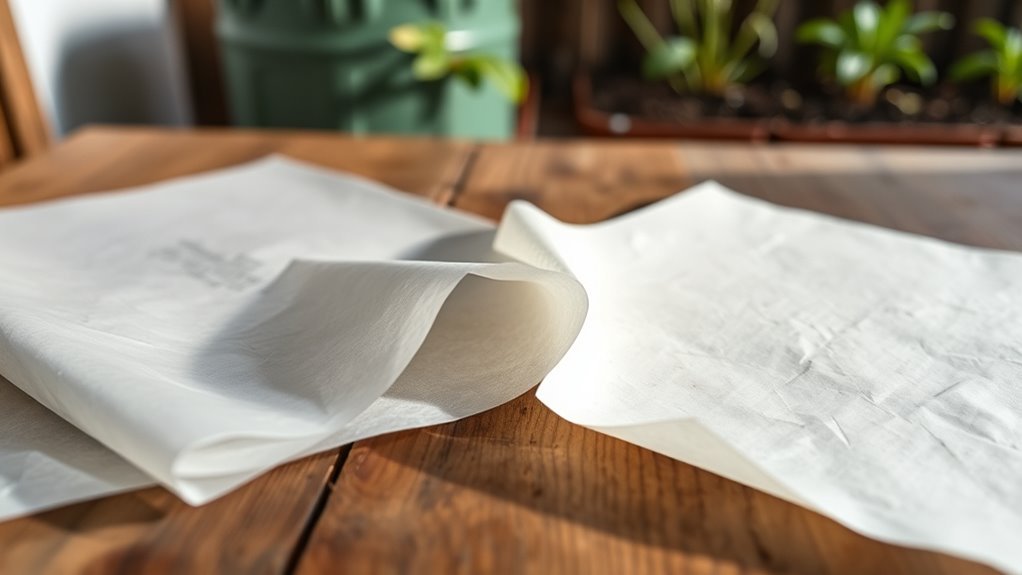
You’ll notice that wax paper and parchment paper differ mainly in their coatings and how they handle heat. Wax paper is coated with a thin layer of wax, while parchment paper is treated with silicone.
This difference means you can’t use wax paper in the oven like parchment paper without it melting or smoking. So, if you’re baking, parchment paper is the way to go!
Composition and Coating Differences
Because wax paper and parchment paper serve different purposes in the kitchen, their compositions and coatings vary considerably. Wax paper is usually made from regular paper coated with a thin layer of paraffin wax or soybean wax, which makes it moisture-resistant but not heat-resistant.
You’ll notice it feels slightly greasy and isn’t designed to withstand high temperatures. Parchment paper, on the other hand, is treated with a silicone coating that provides excellent non-stick properties and heat resistance.
This silicone layer allows parchment paper to handle baking and cooking without burning or melting. When you’re choosing between the two, understanding these composition and coating differences helps you pick the right paper for your task and avoid issues like melting or sticking.
Heat Resistance Comparison
How much heat can wax paper and parchment paper actually handle? Wax paper is coated with paraffin wax, which melts at around 120°F to 140°F. This means it’s not safe to use in the oven or near direct heat because the wax can melt or even catch fire.
On the other hand, parchment paper is treated with silicone, allowing it to withstand much higher temperatures—usually up to 420°F or more. So, if you’re baking cookies or roasting vegetables, parchment paper is your best bet.
Wax paper works well for wrapping food or lining surfaces for cold prep, but avoid using it in any situation involving heat. Knowing these heat resistance differences helps you choose the right paper for your cooking and composting needs.
How Does Wax Paper Break Down in Compost?
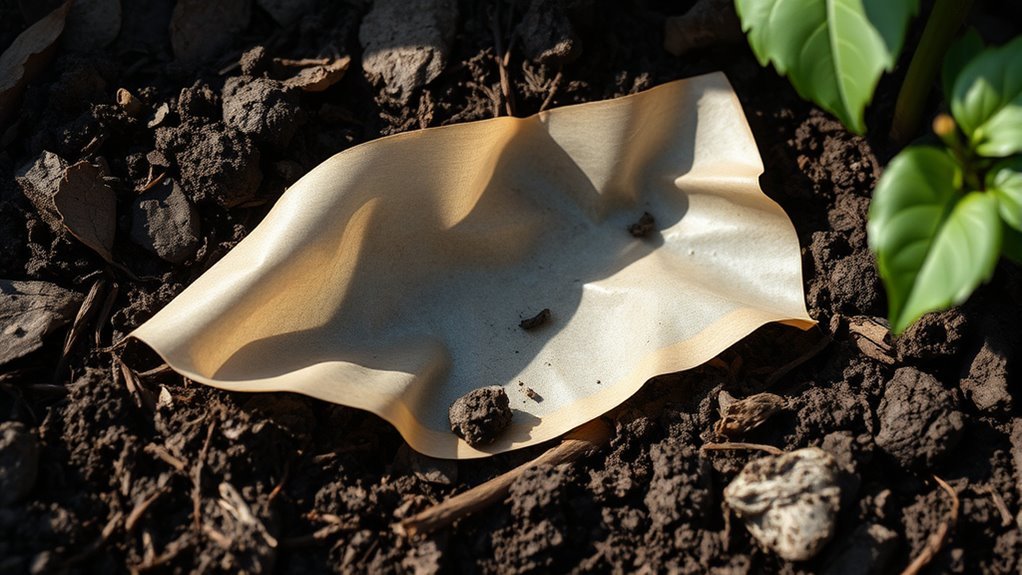
When you toss wax paper into your compost, its wax coating can slow down how quickly it breaks down. The type of wax used plays a big role in the decomposition timeline.
Understanding this helps you manage your compost more effectively. So, it’s good to know what kind of wax paper you’re dealing with!
Wax Coating Impact
Although wax paper looks simple, its wax coating substantially influences how it breaks down in compost. When you toss wax paper into your compost bin, the type of wax matters.
Natural waxes like beeswax or soy wax tend to break down more easily because microbes can digest them. However, paraffin wax, a petroleum-based product, resists decomposition and can slow the process.
This means you might find bits of wax paper lingering longer than other organic materials. To help the wax paper break down, you can tear it into smaller pieces, increasing its surface area for microbes to work on.
Keep in mind that the wax coating acts as a barrier, so even if the paper fibers decompose, the wax might persist. Understanding this impact helps you manage your compost effectively.
Decomposition Timeline
The wax coating on wax paper directly affects how quickly it breaks down in your compost. Natural waxes like beeswax decompose faster than synthetic waxes, which can take longer or resist breakdown.
Your compost conditions—temperature, moisture, and microbial activity—also play key roles. Typically, wax paper with natural wax may take a few weeks, while synthetic wax paper could linger for months.
| Wax Type | Estimated Decomposition Time | Notes |
|---|---|---|
| Beeswax | 2-4 weeks | Breaks down quickly, eco-friendly |
| Soy Wax | 3-6 weeks | Biodegradable, compostable |
| Paraffin Wax | 2-6 months | Petroleum-based, slower decay |
| No Wax (plain) | 1-2 weeks | Breaks down very fast |
Knowing this helps you manage your compost effectively. So, if you want faster composting, natural wax is the way to go!
Composting Wax Paper: What You Need to Know
Since wax paper often contains a coating that resists moisture, you might wonder if it breaks down easily in your compost pile. The answer depends on the type of wax used.
Traditional wax paper coated with paraffin wax, a petroleum byproduct, is not fully compostable because it doesn’t break down quickly and can leave residues. However, wax paper coated with natural waxes like soybean or beeswax is more compost-friendly and will decompose over time.
Wax paper with paraffin wax isn’t fully compostable, but natural wax coatings like beeswax break down more easily.
When composting wax paper, tear it into small pieces to speed up decomposition. Avoid composting wax paper contaminated with heavy food residues or synthetic coatings, as these can harm your compost quality.
Always check product labels and local composting guidelines to ensure you’re composting wax paper responsibly. It’s a simple step that helps keep your compost healthy and effective.
Alternatives to Wax Paper for Eco-Friendly Composting
If you want to reduce your environmental impact, choosing alternatives to wax paper can make a big difference in your composting efforts. Wax paper often contains coatings that complicate composting, so opting for more eco-friendly options helps your waste break down naturally.
Here are some great alternatives to contemplate:
- Parchment Paper: Usually uncoated and compostable, ideal for baking and wrapping food.
- Reusable Silicone Mats: Durable and washable, they eliminate single-use waste completely.
- Beeswax Wraps: Natural, compostable, and perfect for wrapping sandwiches or covering bowls.
- Unbleached Paper Towels: Biodegradable and compostable, useful for light food wrapping.
Try these out and see which one fits your lifestyle best! They’re simple swaps that can really help out the planet.
Tips for Reducing Waste in the Kitchen
When you start paying attention to how much food and packaging you toss, you’ll find plenty of opportunities to cut waste in your kitchen. First, plan your meals to buy only what you need.
Store leftovers properly to extend their life and avoid spoilage. Swap single-use items like paper towels and plastic wrap for reusable alternatives—think cloth towels and silicone lids.
Compost food scraps to reduce landfill waste and enrich your garden soil. Use containers to store bulk items and bring your own bags to the store to cut packaging waste.
Finally, get creative with scraps—turn vegetable peels into broth or stale bread into croutons. These small changes add up, saving you money and helping the environment one meal at a time.
Conclusion
Just like leaves returning to the earth, wax paper’s fate in your compost depends on its coating. While natural wax paper can gently break down, the paraffin-coated kind resists, lingering like a stubborn shadow.
To keep your compost thriving like a forest floor, choose eco-friendly alternatives and be mindful of what you toss in. By doing so, you’ll help your kitchen waste become a part of nature’s endless cycle, not a lasting footprint.
So, is wax paper compostable? It really hinges on the type you use. Natural wax paper is compost-friendly and will break down over time, enriching your soil. However, paraffin-coated wax paper isn’t compostable and can contaminate your compost pile. For a healthier compost system, opt for biodegradable or natural wax paper, and always check the packaging. This small step makes a big difference in reducing waste and promoting sustainable living.