
How to Dispose of Shredded Paper Properly
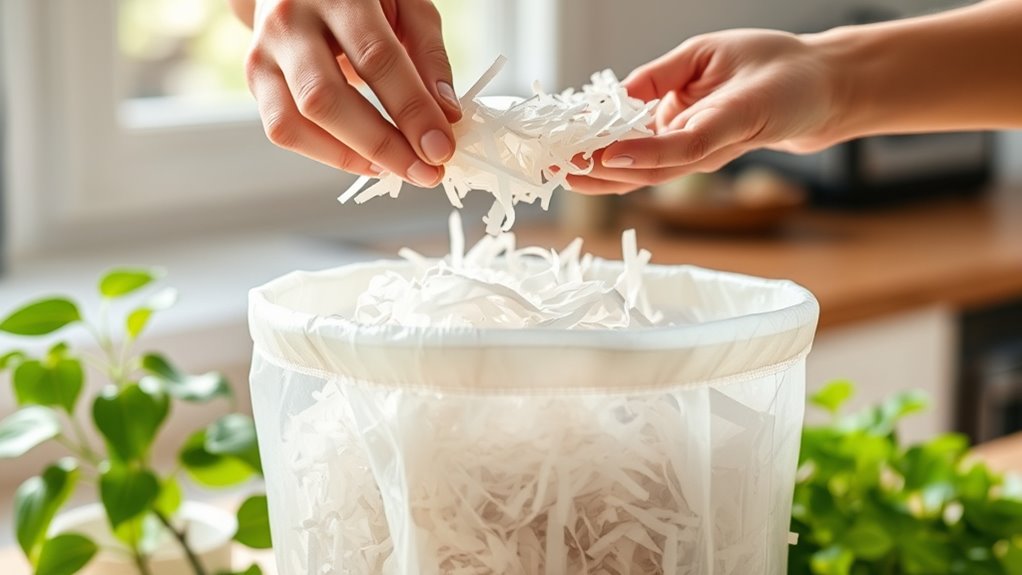
You should keep shredded paper dry and separate from other recyclables to prevent contamination and machine clogs. Bag it securely in clear or biodegradable bags without mixing in plastics or metals. This helps ensure that your shredded paper can be recycled properly without causing issues at the facility.
If recycling isn’t accepted in your area, consider composting shredded paper with green waste. It breaks down nicely and adds valuable carbon to your compost pile. Or you can reuse shredded paper as packing material to protect fragile items during shipping.
For sensitive documents, use cross-cut shredders and seal shredded paper tightly to protect your privacy. There are also creative and secure ways to manage shredded paper you might find helpful, like using it for pet bedding or craft projects. It’s all about handling shredded paper responsibly while keeping your information safe.
Understanding the Challenges of Shredded Paper Disposal
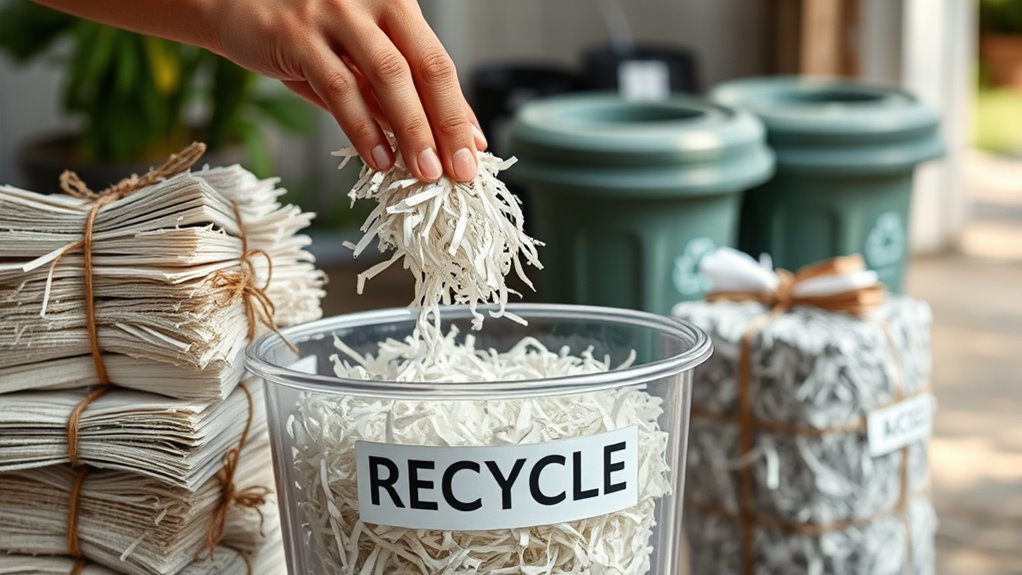
Although shredded paper looks harmless, it poses unique challenges when it comes to disposal. You might think tossing it in your regular recycling bin is fine, but shredded paper’s small pieces can clog sorting machines or slip through the recycling process, ending up as contamination.
Its lightweight nature means it can easily scatter, creating litter during collection or transport. Plus, when shredded paper mixes with other recyclables, it’s harder to separate and recycle efficiently.
You also need to contemplate that shredded paper tends to absorb moisture quickly, which reduces its recyclability. Understanding these challenges helps you realize why shredded paper requires special handling to ensure it doesn’t undermine recycling efforts or cause environmental issues.
Preparing Shredded Paper for Recycling
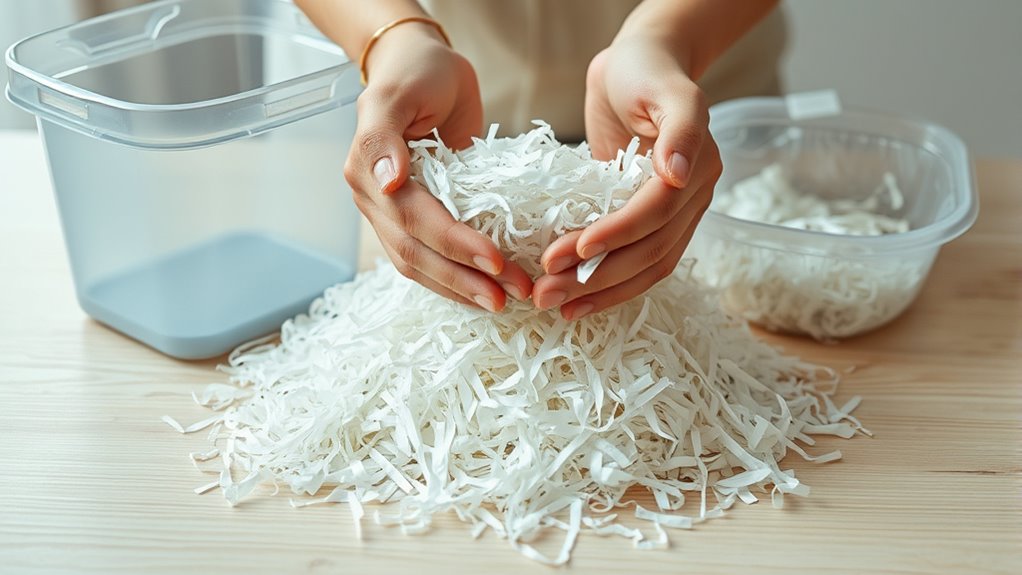
To get your shredded paper ready for recycling, you’ll want to sort it carefully, keeping it free from contaminants like plastic or metal.
Next, bundle the shredded paper or place it in a paper bag to prevent it from scattering during collection. These simple steps help guarantee your shredded paper is recycled efficiently.
Sorting Shredded Paper
When you prepare shredded paper for recycling, sorting it correctly guarantees it gets processed efficiently. First, separate shredded paper from other recyclables like plastics, metals, or glass. Mixing materials can contaminate the batch, causing your shredded paper to be rejected.
Next, check for non-paper items such as staples, paper clips, or plastic windows, and remove them. These small contaminants can disrupt recycling machinery. Also, avoid including shredded paper that’s coated with wax or plastic, as it’s not recyclable with standard paper.
If you have colored shredded paper, it’s best to keep it separate from white or natural paper since some recycling centers prefer sorting by color. Sorting your shredded paper carefully ensures it can be recycled smoothly, reducing waste and supporting environmental efforts. Easy, right? Just a little sorting goes a long way!
Bundling and Bagging
After sorting your shredded paper properly, the next step is bundling and bagging it for recycling. This helps keep the paper contained, preventing it from scattering and making collection easier.
Use biodegradable bags or clear plastic bags if your local recycling program permits. Just be sure not to overfill the bags so they seal well.
Here’s a quick guide:
| Step | Material Needed | Tip |
|---|---|---|
| Gather Paper | Shredded Paper | Keep it dry |
| Choose Bag | Biodegradable/Plastic | Check local recycling rules |
| Bundle & Seal | Twist ties or tape | Don’t overfill bag |
Following these steps guarantees your shredded paper stays manageable and recyclable. It really makes the whole process smoother!
Alternative Recycling Options for Shredded Paper
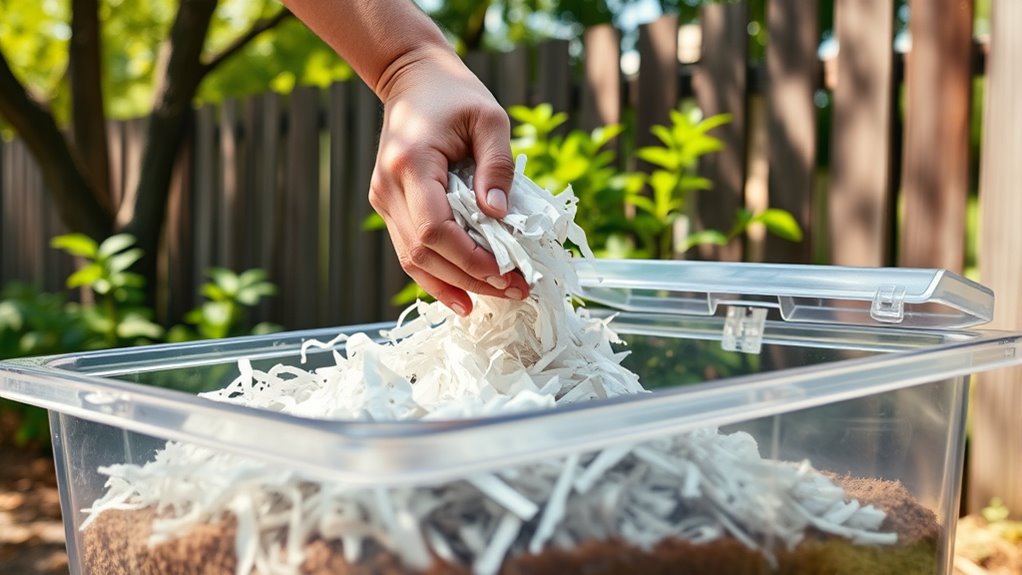
You can give shredded paper a new life by adding it to your compost pile. It breaks down nicely and serves as a great source of carbon.
If composting isn’t your thing, no worries! Try using the shreds for creative crafts like homemade paper or decorative fillers.
These options are a fun way to reduce waste and put shredded paper to good use. Why not give them a shot?
Composting Shredded Paper
A great way to handle shredded paper is by adding it to your compost pile. Shredded paper acts as a brown material, providing carbon that balances the nitrogen from green materials like food scraps and grass clippings.
To compost shredded paper effectively, mix it thoroughly with moist green waste to prevent it from clumping and slowing decomposition. Avoid glossy or colored paper, as inks and coatings may contain harmful chemicals.
Tear or shred the paper into small pieces to speed up breakdown. Keep your compost pile aerated by turning it regularly, ensuring shredded paper integrates well.
Over time, the paper will decompose into nutrient-rich compost, reducing waste and enriching your garden soil naturally. Composting shredded paper is an eco-friendly, practical alternative to disposal.
Crafting With Shreds
While shredding paper usually signals its end as waste, you can give those shreds new life through creative crafting projects. You might use shredded paper as colorful filler for gift boxes or as texture in homemade paper mache.
It’s an eco-friendly way to recycle while adding a personal touch to your crafts. Here’s a quick guide to inspire your crafting with shreds:
| Craft Idea | Materials Needed | Benefits |
|---|---|---|
| Gift Box Filler | Shredded paper, boxes | Adds cushioning, decorative |
| Paper Mache Art | Shreds, glue, paint | Recycles, creates texture |
| Handmade Cards | Paper shreds, glue | Unique designs, eco-friendly |
Try these ideas to turn shredded paper into something beautiful and useful! Give it a go—you might just surprise yourself with what you create.
Creative Ways to Reuse Shredded Paper
Although shredded paper is often seen as waste, it actually offers lots of chances for creative reuse that can benefit both you and the environment.
Instead of just tossing it out, why not try some simple ideas to give shredded paper a second life?
- Packing Material – Use shredded paper as cushioning for fragile packages. It’s a great way to reduce the need for plastic fillers.
- Pet Bedding – Line small animal cages or bird nests with shredded paper. This keeps them cozy and dry.
- Fire Starter – Combine shredded paper with wax to make easy-to-light fire starters. Perfect for your fireplace or campfire.
- Seedling Pots – Mix shredded paper with water to mold biodegradable pots for starting seedlings. You can plant these pots directly in the soil.
Composting Shredded Paper Safely
If you want to compost shredded paper effectively, you’ll need to balance it properly with other materials. Shredded paper is rich in carbon, so pair it with nitrogen-rich items like food scraps or grass clippings to maintain a healthy compost mix.
Avoid glossy or colored paper, as inks can be harmful.
Here’s a quick guide to compost shredded paper safely:
| Material Type | Role in Compost |
|---|---|
| Shredded Paper | Carbon (browns) |
| Food Scraps | Nitrogen (greens) |
| Dry Leaves | Additional Carbon |
Mix shredded paper well with moist materials to prevent matting, which blocks air flow. Turn your compost regularly to speed decomposition and keep it odor-free.
This approach guarantees your shredded paper enriches the soil safely and efficiently. Give it a try!
Secure Disposal Methods to Protect Personal Information
Because shredded paper often contains sensitive information, you need to dispose of it securely to prevent identity theft or data breaches.
Here are four effective methods to protect your personal data:
- Use a cross-cut shredder to make reconstruction nearly impossible.
- Mix shredded paper with other waste before disposal to add an extra layer of confusion.
- Seal shredded paper in a sturdy bag or box to prevent it from spilling during transport.
- Utilize secure shredding services that guarantee proper destruction and recycling.
Following these steps ensures your sensitive information stays safe while you responsibly dispose of shredded paper.
Don’t overlook secure disposal—it’s a simple way to protect your privacy.
Conclusion
Disposing of shredded paper doesn’t have to feel like a formidable puzzle. By preparing it properly, exploring recycling or creative reuse, and composting safely, you’re turning what seems like a mess into a resource.
Remember, protecting your personal information is the final lock on this eco-friendly journey. So, next time you shred, think of it as planting seeds—small actions that grow into a greener, safer world for you and everyone around you.
Proper disposal of shredded paper is all about being thoughtful. Whether you’re tossing it in the recycling bin, using it for packing material, or adding it to a compost pile, each step helps reduce waste and supports sustainability. And don’t forget, shredding protects your privacy, making sure your personal data stays safe.
So, keep shredding but do it smartly. Embrace recycling, reuse creatively, and compost when you can. These simple steps not only keep shredded paper out of landfills but also contribute to a healthier planet. It’s a small effort with a big impact—helping you dispose of shredded paper properly while caring for the environment and your privacy.