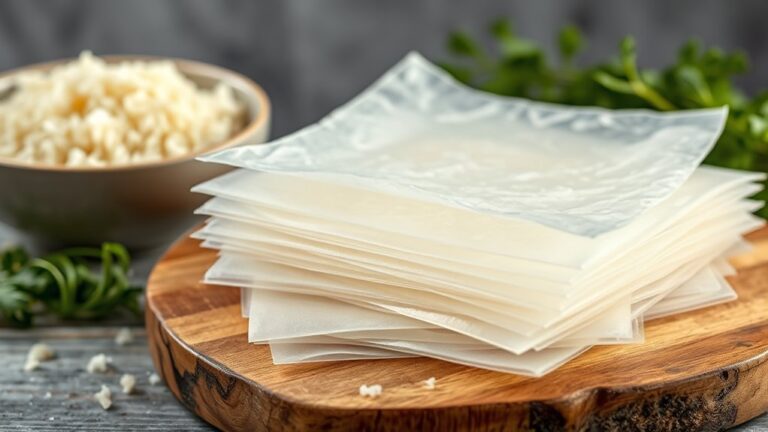
What Is Papad and How Is It Made?
You’ll find papad is a thin, crispy Indian flatbread made mainly from urad dal flour mixed with spices like cumin or black pepper.
This popular snack or accompaniment adds a delightful crunch to any meal.
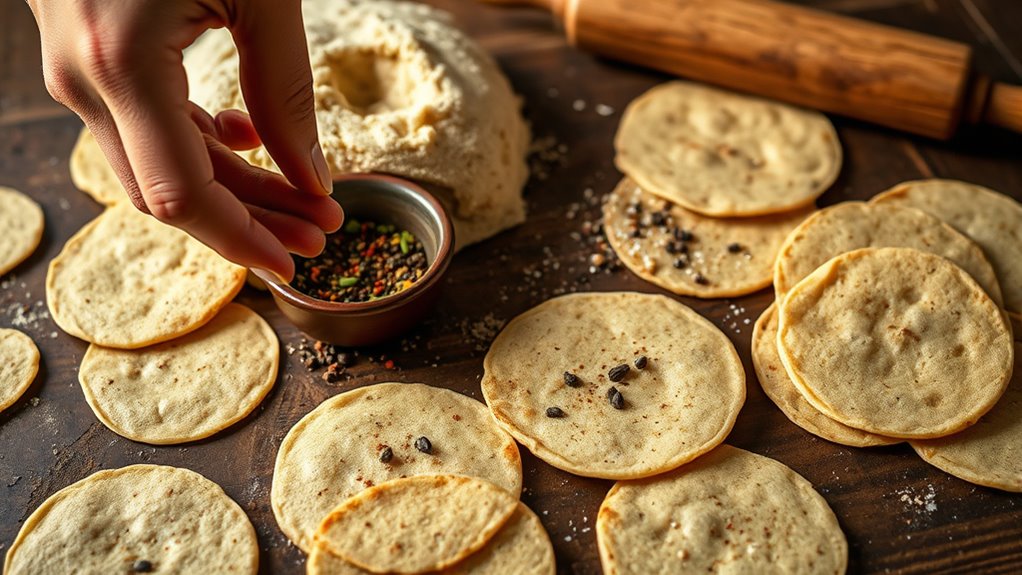
You start by soaking lentils, grinding them into a paste, then rolling out thin discs that are sun-dried until brittle.
Once dried, they store well and can be quickly cooked by roasting or frying.
Curious about its rich history, varied ingredients, and different regional styles? There’s plenty more to explore when it comes to this versatile and flavorful treat.
Origins and Cultural Significance of Papad
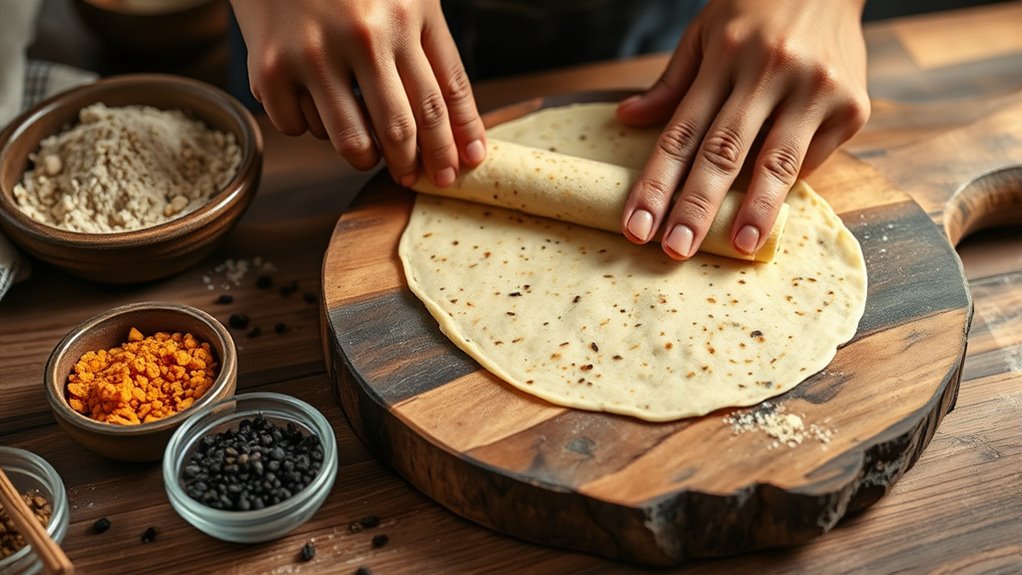
Although papad might seem like a simple snack, it carries a rich history deeply rooted in Indian culture. When you enjoy papad, you’re tasting a tradition that dates back centuries, believed to have originated in the Indian subcontinent.
It’s more than just food; it’s a symbol of hospitality and celebration. Families pass down recipes through generations, each adding their unique touch.
You’ll find papad served during festive meals, weddings, and everyday dinners across India, reflecting regional diversity. This crunchy delight connects you to the past and showcases centuries of culinary evolution.
Key Ingredients Used in Making Papad
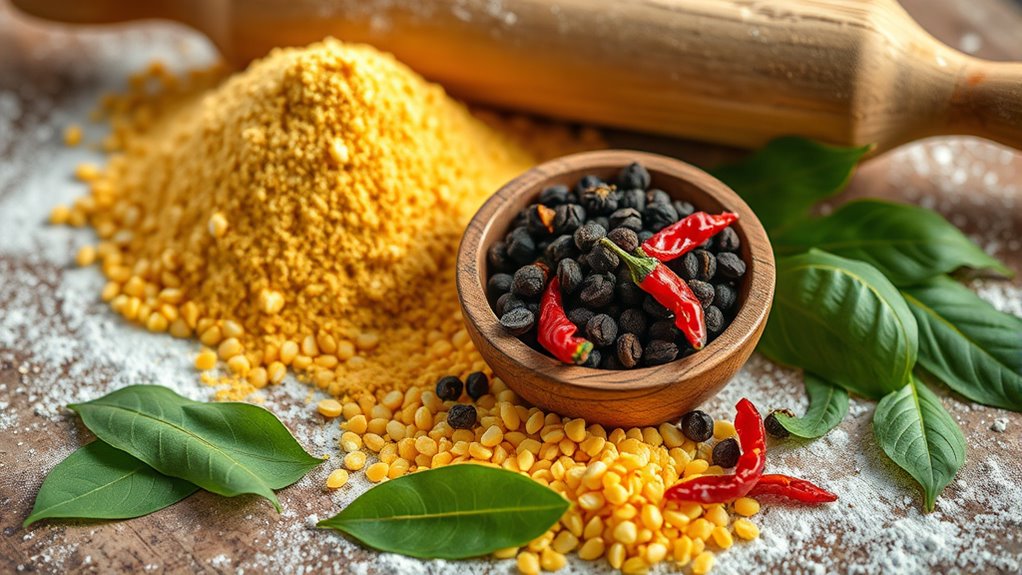
What makes papad so uniquely flavorful? It’s all about the key ingredients that come together in a simple yet effective mix. You’ll find urad dal flour as the main base, providing a smooth texture.
To add zing, salt and black pepper or red chili powder are commonly included, giving that subtle heat and taste. You can also expect cumin or asafoetida for a deeper aroma, making each bite more complex. Some recipes call for a bit of baking soda to help with crispiness.
Don’t forget a touch of oil or ghee to bind everything. These ingredients create a perfect balance of flavor and texture, turning basic pulses and spices into the beloved papad you enjoy as a crunchy snack or accompaniment.
Traditional Preparation Methods
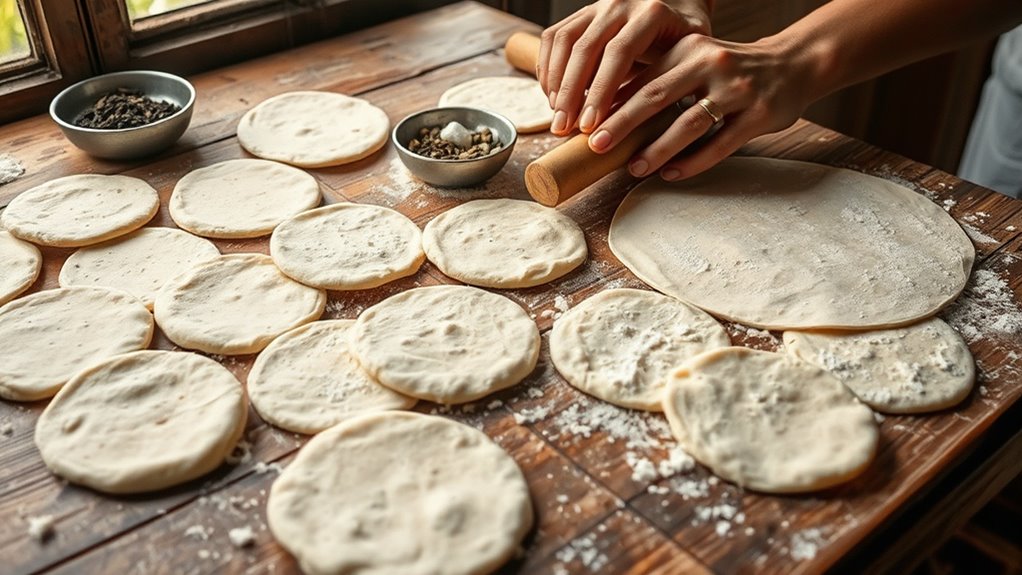
You’ll start by soaking and grinding the ingredients into a smooth batter. Then, you shape the mixture into thin discs before letting them dry under the sun.
These traditional steps are key to achieving the right texture and flavor in papad. It’s all about following the process carefully to get that perfect result.
Soaking and Grinding Process
How long you soak the lentils can greatly affect the texture of the papad. Typically, you soak urad dal or other lentils in water for several hours until they soften. This step is vital because it makes the lentils easier to grind and guarantees a smooth batter.
Once soaked, you drain the lentils and grind them into a fine paste using a traditional stone grinder or a modern blender. While grinding, you add minimal water to maintain a thick consistency, which helps the papad hold its shape later.
The grinding process also releases natural starches, contributing to the papad’s crispiness when cooked. Getting this step right sets the foundation for a perfectly textured papad.
Shaping and Drying Techniques
Although the batter is ready, shaping and drying papad demand careful attention to detail. You start by dividing the dough into small balls, then roll each ball out into thin, round discs.
This step requires a smooth surface and even pressure to achieve uniform thickness. That way, you get consistent crispiness after cooking.
Once shaped, you place the discs under direct sunlight or in a warm, ventilated area to dry. Proper drying is key because it prevents moisture retention, which could spoil the papad or mess up the cooking.
| Step | Key Point |
|---|---|
| Shaping | Roll evenly thin |
| Drying Time | 1-2 days in sunlight |
| Drying Place | Clean, dust-free area |
| Final Check | Crisp, brittle feel |
Master these techniques, and you’ll have perfect papad every time.
Drying and Preservation Techniques
Since papad is traditionally made from a dough that contains moisture, drying plays a crucial role in ensuring its crisp texture and long shelf life. You’ll want to spread the shaped papads under direct sunlight on clean mats or trays, turning them occasionally to achieve even drying.
This process can take several hours to a couple of days, depending on the weather. If you don’t have enough sunlight, you can use dehydrators or low-heat ovens to dry them gently.
Once fully dried, papads become brittle and can be stored for months without spoiling. Keep them in airtight containers away from humidity to preserve their crunch and flavor.
Proper drying and storage prevent mold growth, ensuring your papads stay fresh until you’re ready to cook or serve them. Easy, right? Just a little patience and care will do the trick!
Popular Variations and Regional Differences
You’ll find papad varies widely depending on the region, with different ingredients shaping its unique flavors. Some areas stick to traditional recipes, while others experiment with modern twists.
Exploring these differences helps you appreciate how papad reflects local tastes and customs. It’s pretty cool to see how one snack can have so many versions, right?
Regional Ingredient Variations
Papad recipes change considerably across different regions, reflecting local tastes and available ingredients. When you explore papad from northern India, you’ll notice they often use urad dal flour mixed with black pepper or cumin seeds for a robust flavor.
In contrast, southern varieties might incorporate rice flour and asafoetida, giving a lighter, crisper bite with a unique aroma. If you head to western India, chickpea flour is a common base, sometimes blended with chili powder to add heat.
Eastern versions may feature lentils combined with mustard seeds or sesame for a nutty undertone. These regional ingredient swaps not only affect taste but also texture, so you get a variety of papad experiences depending on where you’re enjoying them.
Traditional vs. Modern Styles
How do traditional and modern styles of papad differ across regions? Traditional papads rely on time-honored recipes using local ingredients like urad dal or black gram flour. They are often hand-rolled and sun-dried, which gives them a unique texture and flavor.
In regions like Rajasthan, you’ll find spicier papads with chili and asafoetida. Meanwhile, South Indian varieties often include rice flour to add extra crispiness.
Modern styles, however, embrace innovations such as machine-rolling and use diverse flours like lentils or chickpeas. They also feature added flavors like garlic or herbs to cater to changing tastes.
You might notice mass-produced papads use preservatives to extend shelf life, which contrasts with traditional fresh versions. Whether you prefer the rustic charm of handmade papads or the convenience of modern ones, both celebrate regional diversity while evolving to fit today’s culinary landscape.
Cooking and Serving Suggestions
Although cooking methods vary, you’ll find that roasting, frying, and microwaving are the most popular ways to prepare papad. To roast, hold the papad over an open flame or on a hot griddle, turning it quickly to avoid burning.
Frying gives papad a crispy texture and richer flavor, but watch the oil temperature to prevent sogginess. Microwaving is the fastest method—place the papad on a microwave-safe plate and heat for 30-60 seconds until crisp.
When serving, pair papad with chutneys, yogurt, or pickles to enhance its taste. You can also crumble papad over salads or rice dishes for added crunch.
Enjoy papad as a snack or alongside meals to experience its versatile, flavorful appeal.
Conclusion
Now that you know what papad is and how it’s made, you can appreciate the simple magic behind this crispy delight. From humble lentils to sun-dried perfection, every step tells a story.
You’ll find yourself craving that satisfying crunch, whether spiced or plain, roasted or fried. So, why not bring a little tradition to your table?
After all, papad isn’t just food—it’s a celebration you can taste, touch, and share. This beloved Indian snack captures the essence of culture and flavor in every bite. Whether served as an appetizer or a side, papad adds that perfect crunch and a burst of taste to any meal. Embrace the tradition and enjoy the crispy, flavorful experience that papad brings to your dining table.