Is Shredded Paper Recyclable?
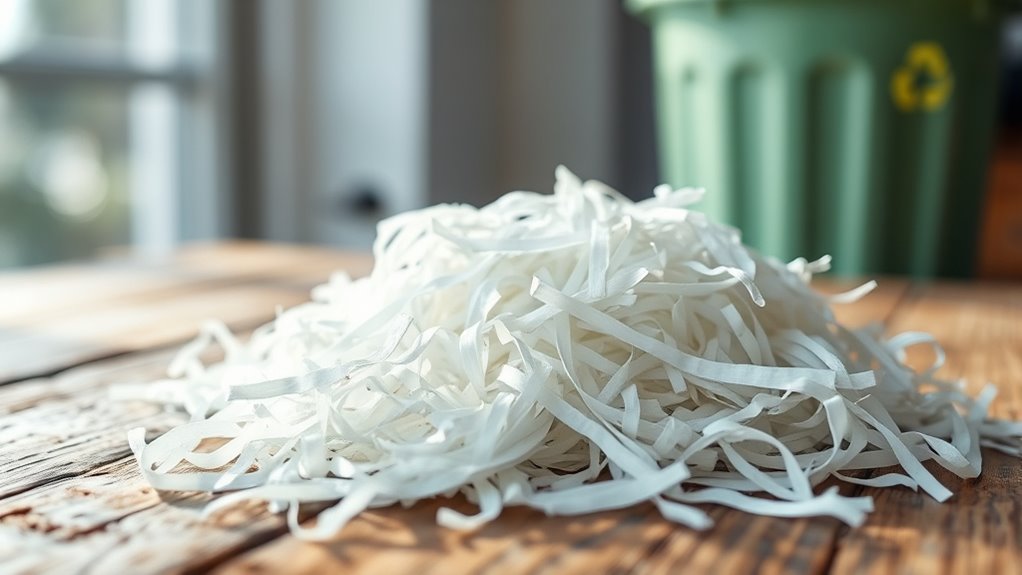
You can recycle shredded paper, but you’ll need to handle it carefully to avoid recycling issues. Shredded paper’s small pieces and shorter fibers can cause sorting problems and contamination. Because of this, many local recycling programs ask you to bag it separately or drop it off at special centers.
Keeping shredded paper dry and clean helps too. Proper disposal benefits the environment, saves resources, and reduces waste.
If you want, there’s more to discover about handling and reusing shredded paper effectively. It’s worth learning how to make the most of shredded paper, whether through recycling or creative reuse.
Understanding the Recycling Process for Paper
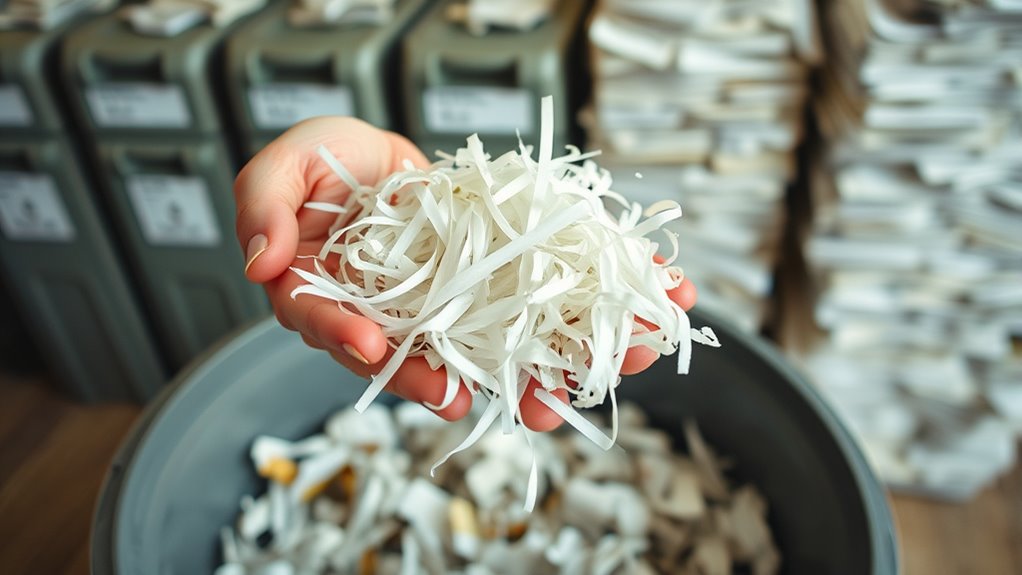
Although recycling paper might seem straightforward, understanding the process helps you make better choices. When you recycle paper, it’s collected, sorted, and cleaned to remove inks, adhesives, and contaminants.
It’s then mixed with water to create a slurry, breaking down the fibers. This slurry is screened to remove any remaining impurities before being pressed and dried into new sheets of paper.
Knowing this, you realize that paper quality and contamination levels impact recyclability and the final product. For instance, heavily inked or coated papers may not recycle well.
Challenges of Recycling Shredded Paper
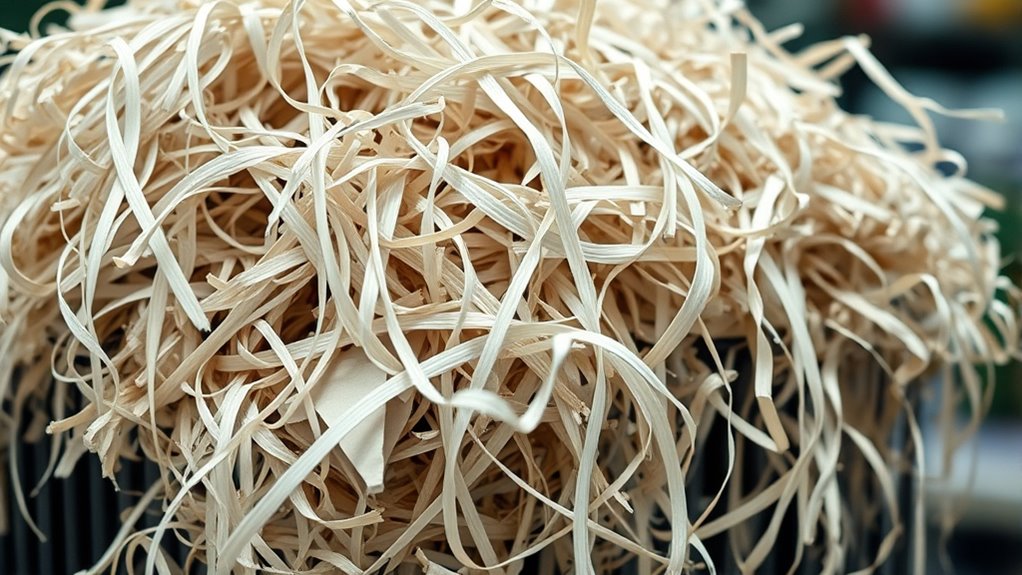
You’ll find that shredded paper is harder to sort because the small pieces mix with other materials easily. It’s also more likely to be contaminated, which can ruin the recycling batch.
Plus, many recycling machines aren’t designed to handle shredded paper efficiently. This means it can slow down the whole process and cause problems for recycling facilities.
Sorting Difficulties
When you try to recycle shredded paper, you’ll quickly notice how sorting becomes a major hurdle. Shredded paper’s small size makes it hard for sorting machines to identify and separate it from other recyclables.
Unlike whole sheets, these tiny pieces can slip through screens and belts, mixing with non-paper materials or falling into the wrong bins. This increases the chance that shredded paper ends up contaminating other recycling streams.
Plus, the shredding process breaks down the fibers, making it tougher to detect in automated systems. Because of this, many recycling facilities ask you to bag shredded paper separately or avoid putting it in curbside bins altogether.
Understanding these sorting difficulties helps you handle shredded paper properly and improve the effectiveness of recycling programs. So, it’s really important to know the best way to recycle shredded paper and keep everything running smoothly.
Contamination Risks
Since shredded paper consists of tiny, loose pieces, it easily mixes with other materials and increases the chance of contamination in recycling batches. When shredded paper gets mixed with food waste, plastics, or other non-paper items, it compromises the entire recycling load.
You might not realize that even small amounts of contaminants can lower the quality of recycled paper or cause machinery issues at recycling facilities. Plus, shredded paper often contains ink, staples, or adhesives, which add to contamination risks.
If you don’t separate shredded paper properly or dispose of it in the right recycling stream, you risk ruining recyclable materials. To minimize contamination, it’s best to keep shredded paper clean, dry, and free from non-paper residues before recycling.
Or, you might consider composting shredded paper as an alternative. This way, you reduce contamination and make the most of your recycling efforts.
Processing Limitations
Beyond contamination concerns, shredded paper presents unique challenges during the recycling process. When you toss shredded paper into recycling bins, it can easily slip through sorting machines, causing operational issues at facilities. Its small size complicates handling and increases the risk of clogging equipment.
Plus, shredded paper fibers are shorter and weaker, which reduces the quality of recycled pulp. This means recyclers often struggle to produce high-quality materials from shredded paper alone.
To summarize, here are key processing limitations you should know:
- Difficulties in automated sorting due to small particle size
- Increased risk of machinery jams and blockages
- Shorter fiber length lowers recycled paper strength
- Challenges in separating shredded paper from other recyclables
- Higher contamination risk when mixed with non-paper materials
Understanding these helps you recycle shredded paper more effectively.
How Local Recycling Programs Handle Shredded Paper
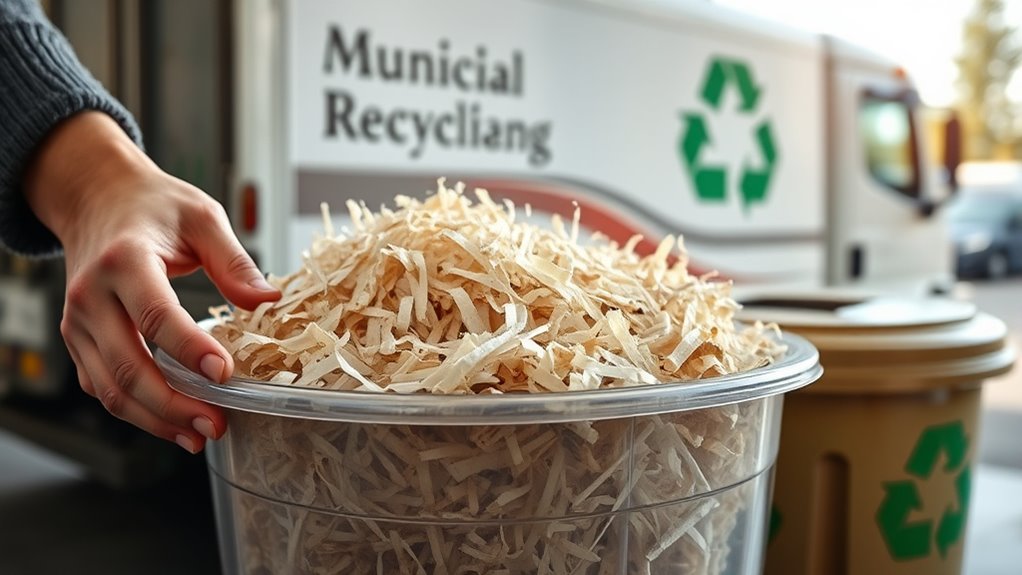
How does your local recycling program handle shredded paper? Many programs treat shredded paper differently than whole sheets. Because shredded paper’s small size can jam sorting machines and contaminate other materials, some facilities ask you to bag it separately or avoid placing it in curbside bins altogether.
Instead, they might direct you to drop it off at specific recycling centers or composting sites. Others accept shredded paper only if it’s contained in a clear, labeled bag to prevent scattering during collection.
Since policies vary widely, you should check your municipality’s guidelines before recycling shredded paper. Following your local rules helps ensure shredded paper is processed correctly and doesn’t disrupt recycling operations, improving the chances that your shredded paper is effectively recycled.
Best Practices for Recycling Shredded Paper
Understanding your local recycling program’s rules is just the start when it comes to handling shredded paper. To recycle it effectively, you need to follow some best practices that help prevent contamination and make the process smoother.
Keep shredded paper dry to avoid mold and clumping. Store it in a clear plastic bag or paper envelope to contain loose pieces.
Avoid mixing shredded paper with food waste or other recyclables. It’s a good idea to check if your facility requires shredded paper to be dropped off separately.
Also, try to limit the amount you recycle at once. This helps prevent overwhelming sorting machines and keeps the process running smoothly.
Creative Ways to Reuse Shredded Paper
You can turn shredded paper into nutrient-rich compost that helps your garden thrive. It also works great for craft projects, adding texture and creativity to your DIY ideas.
Let’s explore how these simple uses can give shredded paper a second life. You might be surprised at how versatile it can be!
Composting With Shredded Paper
Although shredded paper might seem like waste, it can play a valuable role in your compost pile. It acts as a great source of carbon, balancing the nitrogen-rich materials like kitchen scraps.
When you add shredded paper to your compost, it helps improve aeration and moisture control, speeding up the decomposition process. Just make sure the paper is free from glossy ink or heavy chemicals.
Here’s how shredded paper benefits your compost:
- Adds essential carbon for microbial activity
- Enhances airflow to prevent odors
- Absorbs excess moisture
- Breaks down quickly, enriching soil
- Reduces landfill waste by repurposing paper
Craft Projects Ideas
When you want to add a personal touch to your home or gifts, shredded paper offers endless possibilities for creative craft projects. You can use it as colorful filler for gift baskets or homemade packaging, giving presents a unique and eco-friendly look.
Try making papier-mâché decorations by mixing shredded paper with glue or flour paste, then molding it into fun shapes. You can also create textured wall art by gluing shredded paper onto canvases, painting over it for interesting effects.
For a cozy touch, stuff small pillows or pet beds with shredded paper. Even bird nests in your garden benefit from shredded paper as natural nesting material.
These easy projects help you reuse shredded paper while adding charm and sustainability to your crafts. Pretty cool, right?
Environmental Benefits of Proper Shredded Paper Disposal
Because shredded paper can be easily recycled when disposed of properly, you help reduce landfill waste and conserve natural resources.
When you recycle shredded paper, you lower the demand for virgin paper, saving trees and reducing energy use. Proper disposal also cuts down on greenhouse gas emissions from decomposing paper in landfills.
Plus, recycling shredded paper supports a circular economy, turning waste into valuable new products.
Here’s how you benefit the environment by recycling shredded paper:
- Saves trees and preserves habitats
- Reduces energy consumption in paper production
- Decreases landfill volume and pollution
- Lowers greenhouse gas emissions
- Promotes sustainable manufacturing practices
Conclusion
Think of shredded paper like puzzle pieces scattered by the wind—recycling centers find it tricky to reassemble them into something new. But by knowing how your local program handles shredded paper and following best practices, you become the guiding hand that helps those pieces find their place again.
When you recycle or reuse shredded paper thoughtfully, you’re not just tossing scraps—you’re planting seeds for a greener tomorrow. Understanding whether shredded paper is recyclable in your area and how to prepare it properly can make a big difference. So, always check local guidelines and consider options like composting or using shredded paper for packing material.
By taking these simple steps, you help reduce waste and support sustainable recycling efforts. Shredded paper recycling might be a bit tricky, but with the right approach, it’s definitely possible to give those tiny pieces a new life.