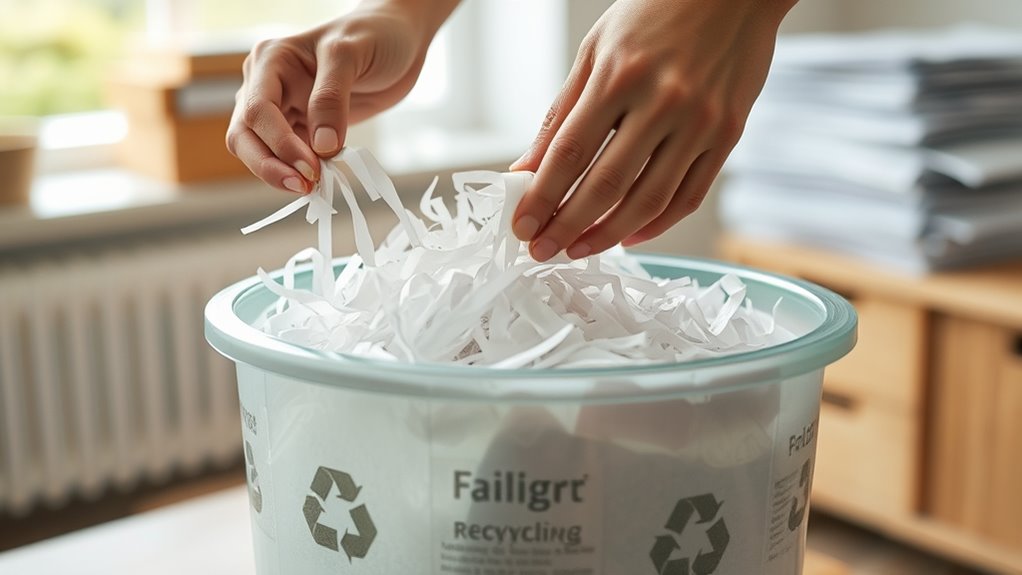
How Do I Recycle Shredded Paper Step by Step
To recycle shredded paper properly, start by checking your local recycling guidelines. Some places only accept shredded paper if it’s placed in paper bags, while others might not accept it at all. Knowing these rules helps you avoid mistakes and ensures your shredded paper gets recycled correctly.
Next, keep your shredded paper dry and contained. Use a paper bag or a sturdy box—never loose or in plastic bags. This prevents messes and stops shredded paper from causing problems in recycling machines.
Also, be sure to keep shredded paper separate from other recyclables.
Once you’re ready, drop off your shredded paper at designated recycling centers that accept it. If recycling options are limited, consider alternative uses for shredded paper, like composting or packing material. These ideas help reduce waste and give shredded paper a second life beyond traditional recycling.
Check Local Recycling Guidelines
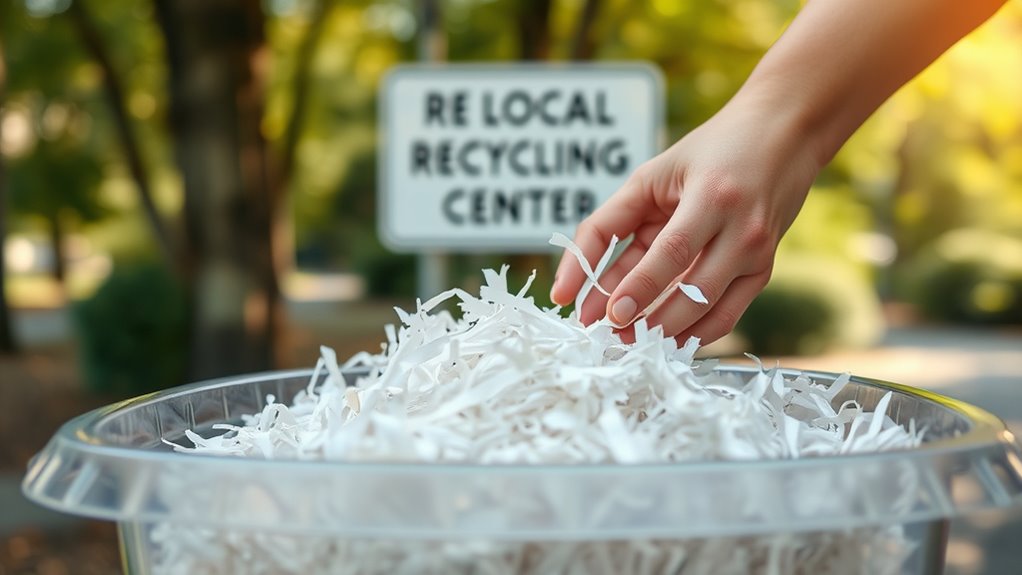
Before you recycle shredded paper, make sure you check your local recycling guidelines. Different areas handle shredded paper differently, so understanding your community’s rules saves you time and effort.
Some recycling programs accept shredded paper only if it’s contained in a paper bag or cardboard box to prevent it from scattering. Others might not accept shredded paper at all because its small size can cause issues in sorting machines.
Many programs require shredded paper bagged or boxed to avoid scattering; some don’t accept it due to sorting machine issues.
You can usually find these guidelines on your city or waste management website. If you’re unsure, it’s a good idea to contact your local recycling center directly for clarification.
Following these rules helps keep the recycling process efficient and prevents contamination. That way, your shredded paper gets properly recycled instead of ending up in the landfill.
Collect and Store Shredded Paper Properly
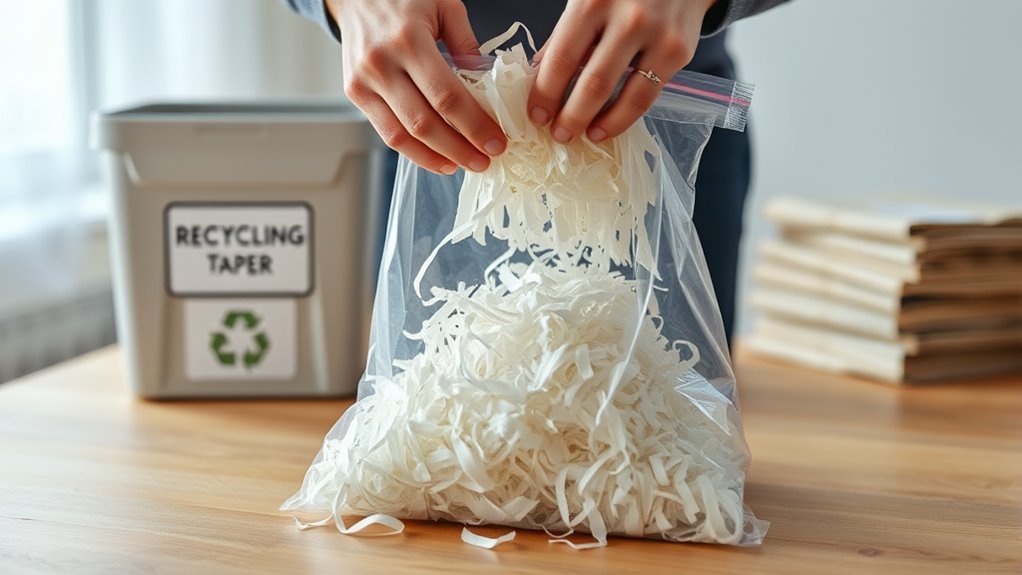
Make sure you collect your shredded paper in airtight containers to keep it from scattering everywhere.
You’ll also want to keep it dry and clean to prevent mold and contamination. Proper storage makes recycling easier and more effective.
Use Airtight Containers
When you collect shredded paper, storing it in airtight containers helps keep it clean and dry. This prevents damage and makes recycling easier.
Choose containers made of plastic or metal with tight-fitting lids to create a sealed environment. This keeps moisture, dust, and pests from contaminating your shredded paper.
You can use storage bins, jars, or specialized recycling bags designed to close securely. Just make sure to label the containers clearly so you don’t mix shredded paper with other recyclables.
Also, keep containers in a cool, dry place to maintain the paper’s quality. By using airtight containers, you make sure your shredded paper stays organized and ready for recycling without extra sorting or cleaning.
It’s a simple step that saves time and supports efficient recycling processes.
Keep Dry and Clean
How do you guarantee shredded paper stays in good condition for recycling? The key is to keep it dry and clean. Moisture can cause shredded paper to clump together, making it harder to process and less valuable for recycling centers.
Always store shredded paper in a dry place, away from leaks or humidity. Avoid mixing in food scraps, dirt, or other contaminants that could spoil the batch.
Use sealed, airtight containers or sturdy bags to protect your shredded paper from dust and moisture. If you collect shredded paper over time, check regularly for any dampness or dirt buildup and replace containers as needed.
Use Paper Bags or Containers for Shredded Paper
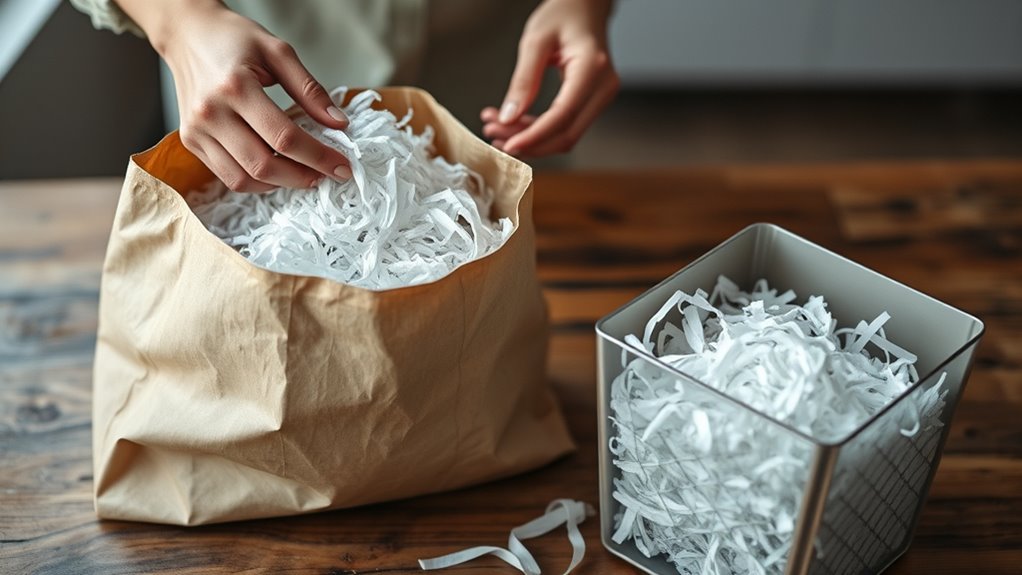
Since shredded paper can easily scatter and create a mess, you should store it in paper bags or sturdy containers before recycling. This keeps everything neat and prevents stray bits from blowing away or clogging recycling machines.
When choosing your storage option, consider these tips:
- Use brown paper bags or cardboard boxes to contain the shreds securely.
- Avoid plastic bags, as many recycling facilities don’t accept shredded paper in plastic.
- Label the container clearly to indicate it holds shredded paper for easy sorting.
Avoid Mixing Shredded Paper With Other Recyclables
You shouldn’t mix shredded paper with other recyclables because it can contaminate the entire batch. Keep shredded paper separate to guarantee it gets properly processed.
Using designated containers or bags helps with effective collection and recycling. It just makes the whole process smoother and ensures your shredded paper is recycled the right way.
Shredded Paper Contamination Risks
Although shredded paper might seem easy to recycle, it can cause contamination when mixed with other recyclables. When you toss shredded paper into your recycling bin alongside bottles or cans, it often slips through sorting machines.
This leads to several problems: it clogs machinery, causing delays and costly repairs. Also, small paper pieces mix with other materials, reducing the quality of the recycled batch.
Plus, contaminants like ink or adhesives on shredded paper can spread to clean recyclables, making them unusable. So, to keep your recycling effective, handle shredded paper carefully.
Avoid mixing it with other items to prevent contamination and ensure your efforts actually contribute to recycling success. Being mindful helps recycling facilities process materials efficiently, supporting environmental sustainability.
Separate Collection Methods
When handling shredded paper, keeping it separate from other recyclables is crucial to prevent contamination and guarantee smooth processing. You should use dedicated containers or bags specifically for shredded paper.
Avoid mixing it with plastics, metals, or glass because shredded paper’s small size can clog machinery and reduce recycling efficiency. Label your containers clearly to avoid confusion.
Many recycling centers require shredded paper to be bagged in paper bags or clear plastic bags to contain the pieces securely.
| Step | Action |
|---|---|
| 1 | Use a separate container |
| 2 | Label it clearly |
| 3 | Bag shredded paper securely |
| 4 | Avoid mixing with other waste |
| 5 | Deliver to designated center |
Following these steps helps maintain recycling quality and supports environmental efforts. It’s pretty straightforward, and every bit helps!
Drop Off Shredded Paper at Designated Recycling Centers
Since shredded paper can be tricky to process through regular curbside recycling, many communities have designated recycling centers where you can drop it off safely.
Shredded paper often requires special recycling centers because it’s difficult to process through curbside programs.
To take advantage of this, start by finding a nearby center that accepts shredded paper. Then, make sure you prepare your shredded paper properly so it’s accepted without any issues.
Finally, be sure to follow any specific drop-off guidelines the center provides.
Here’s what you should do:
- Bag shredded paper in clear, sealed plastic bags to keep it from scattering.
- Check the center’s hours and what materials they accept before you go.
- Keep shredded paper separate from other recyclables to avoid contamination.
Explore Alternative Uses for Shredded Paper
If you’re looking for ways to reduce waste, shredded paper can serve many practical purposes beyond recycling. You can use it as packing material to protect fragile items during shipping or moving.
It’s also great for composting; shredded paper adds carbon to your compost pile, balancing out nitrogen-rich materials like food scraps. In your garden, it works as mulch to retain moisture and suppress weeds.
You might even use shredded paper as bedding for small pets, like hamsters or guinea pigs. Additionally, it can serve as firestarter material when combined with wax.
Conclusion
Recycling shredded paper might seem like a tiny task, but it can make a world of difference for the planet. By following your local guidelines, storing it properly, and dropping it off at the right place, you’re taking a huge step toward reducing waste.
Don’t let shredded paper pile up like a mountain—turn it into something useful or recyclable today. Small actions like these add up, creating an unstoppable wave of positive change for our environment.
Remember, when you recycle shredded paper correctly, you help conserve resources and reduce landfill waste. So, gather your shredded paper, check your community’s recycling rules, and take that simple step. Together, we can make recycling shredded paper an easy, impactful habit that benefits the planet!