How Is Toilet Paper Made Step by Step
You start making toilet paper by sourcing wood or recycled pulp, then pulping and cleaning it into a smooth slurry. This is the very first step where raw materials are turned into a usable form.
Next, you bleach the pulp to brighten it, making sure the paper looks clean and fresh.
After bleaching, the pulp is pressed and dried into thin sheets. This process helps shape the paper’s strength and softness, the qualities you notice every day.
Finally, the sheets are rolled and cut into neat, soft rolls that you find in stores. Each step plays a vital role in guaranteeing the comfort and quality of the toilet paper you use.
If you want to understand how every stage works together, there’s definitely more to explore!
Sourcing Raw Materials
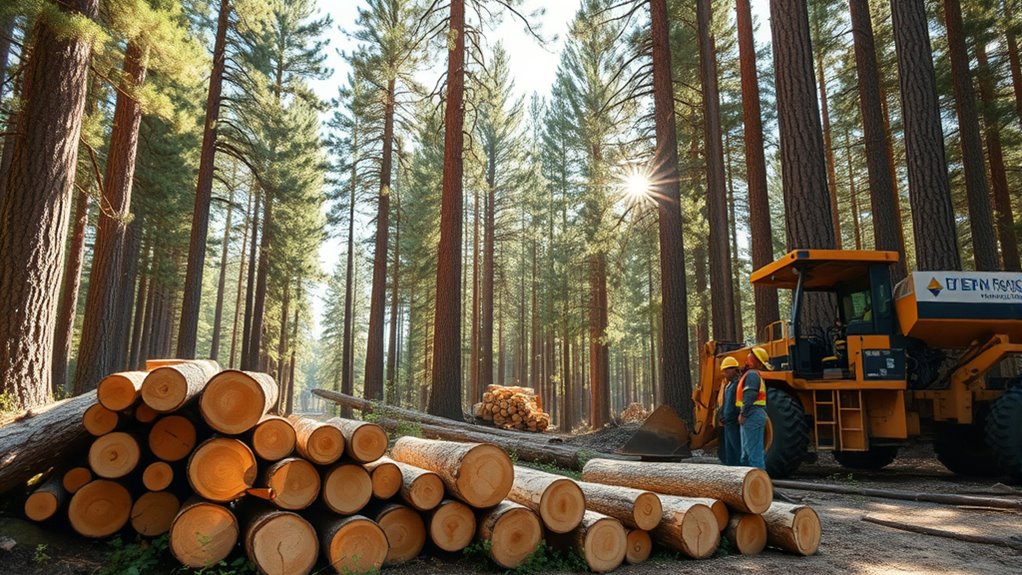
Before toilet paper can reach your bathroom, manufacturers have to source the raw materials that form its base.
You’ll find that most toilet paper starts with wood pulp, primarily harvested from softwood and hardwood trees like pine, spruce, and eucalyptus. These trees provide the cellulose fibers necessary for creating a strong yet soft product.
In some cases, recycled paper materials, such as old newspapers or office paper, are also used to reduce environmental impact.
You might be surprised that manufacturers carefully select these raw materials to balance quality, cost, and sustainability. They often work closely with forestry suppliers who manage tree plantations responsibly, ensuring a renewable supply.
This initial sourcing step is essential because the fibers’ quality will directly affect the toilet paper’s softness and strength.
Pulping and Cleaning
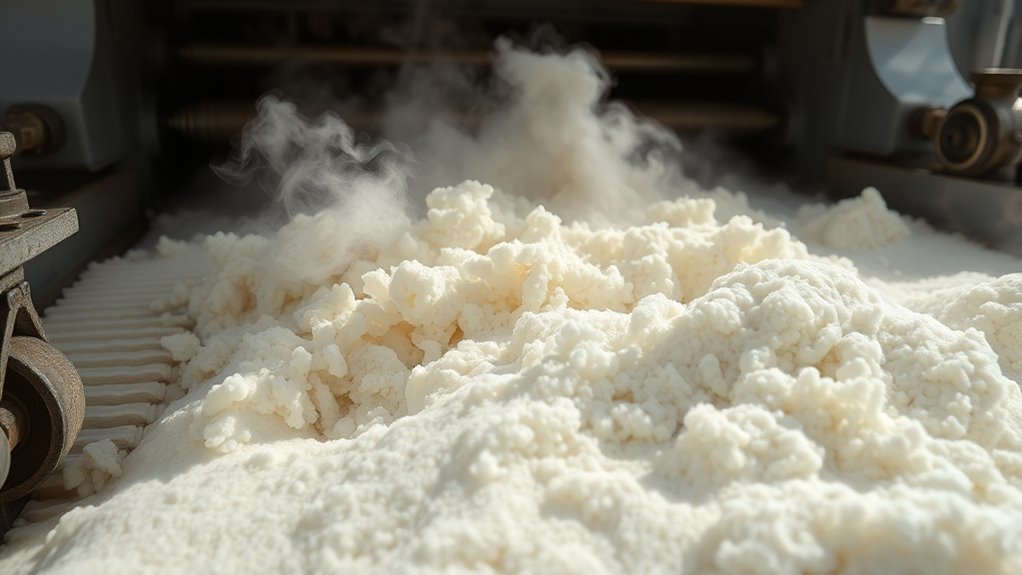
Once the raw materials arrive at the mill, they undergo pulping to break down the fibers into a slurry. You’ll see the wood chips or recycled paper mixed with water and chemicals in large pulping machines.
These machines use mechanical or chemical processes to separate the fibers efficiently. After pulping, the slurry contains impurities like dirt, bark, or glue, which you need to eliminate.
You’ll pass the slurry through screens and centrifugal cleaners that filter out these contaminants. This cleaning stage ensures the pulp is pure and consistent, ready for the next steps.
Bleaching the Pulp
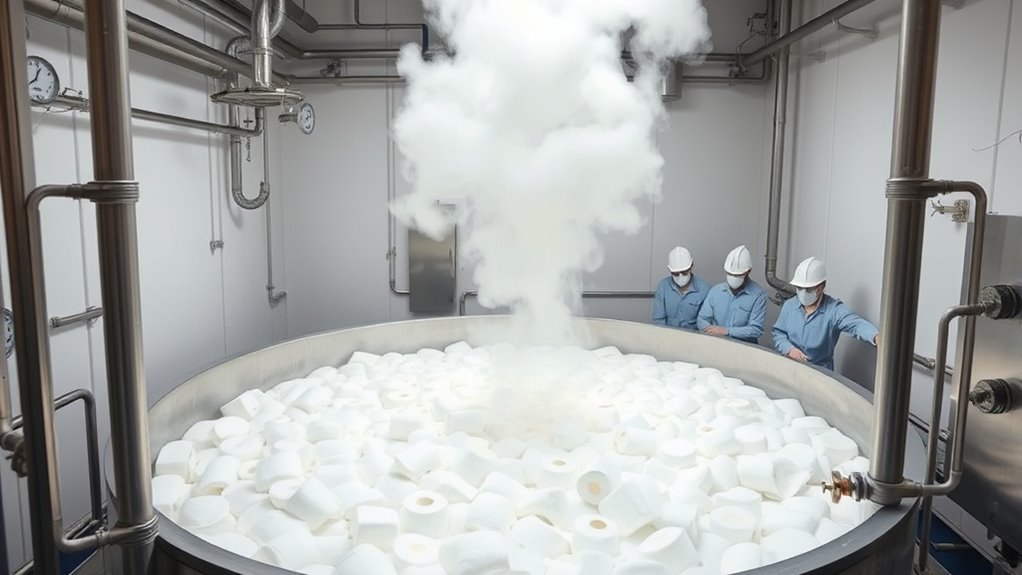
How do manufacturers transform the dull, brown pulp into the bright white material you expect for toilet paper? They bleach the pulp to remove lignin, the natural wood component that causes discoloration.
You’ll find that the process involves applying chemicals like chlorine dioxide or oxygen-based agents to the wet pulp. These chemicals break down the lignin without damaging the fibers, ensuring the paper remains soft and strong.
You’ll notice the pulp gradually lightens with each bleaching stage, moving closer to that clean white color. The process is carefully controlled so the fibers retain their integrity while achieving the desired brightness.
Once bleaching is complete, the pulp is ready for the next steps in making your everyday toilet paper.
Pressing and Drying
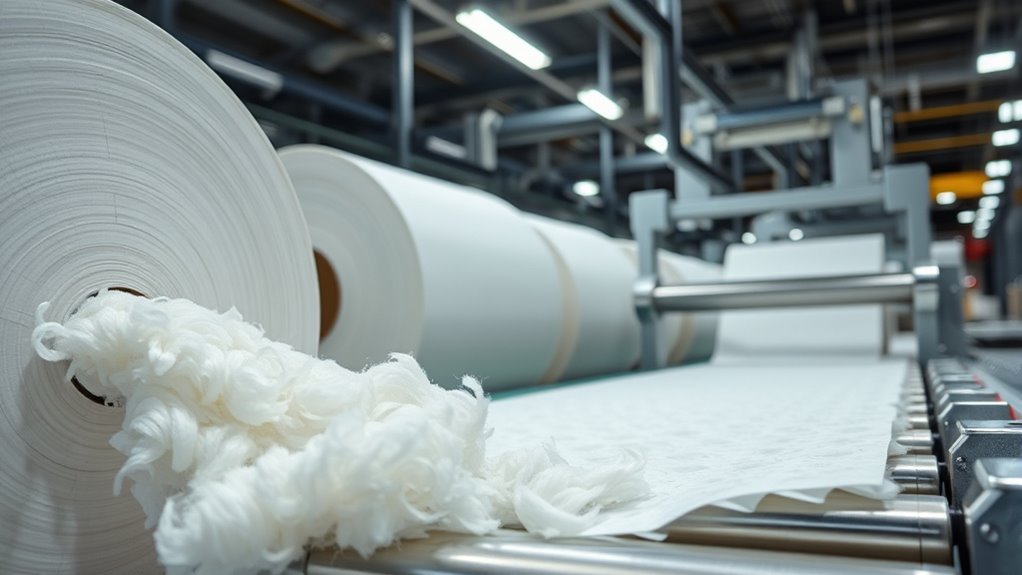
After bleaching, the pulp still holds a lot of moisture that needs to be removed to create usable toilet paper. You’ll first pass the wet pulp through a series of press rollers. These rollers squeeze out excess water, making the pulp denser and easier to handle.
Next, you move the pressed pulp onto large heated drying cylinders. As the pulp travels over these cylinders, the heat evaporates the remaining water, gradually drying the sheet. This step is essential because it transforms the pulp into a thin, dry paper web.
Throughout pressing and drying, you carefully control pressure and temperature to maintain softness and strength. By the end, the paper reaches the right dryness and texture, ready for the final steps before it becomes the toilet paper you use every day.
Rolling and Cutting
Now that the paper is dry, you’ll see it winding onto large rolls with careful precision. These rolls are then sized to fit your needs and trimmed to guarantee clean edges.
This process sets the stage for the final steps before the paper reaches your bathroom. It’s all about making sure everything is just right!
Paper Sheet Winding
Where does the continuous sheet of paper go once it leaves the drying section? It heads straight to the paper sheet winding area. Here, you’ll see the sheet rolled tightly onto large cores, forming big parent rolls.
This step helps keep the paper compact and ready for further processing. As you watch, the winding machine keeps tension consistent to avoid wrinkles or breaks.
Here’s a quick glance at what happens during paper sheet winding:
| Step | Action | Purpose |
|---|---|---|
| 1 | Paper sheet feeds in | Maintain flow |
| 2 | Sheet wraps core | Form large roll |
| 3 | Tension adjusts | Prevent wrinkles |
| 4 | Roll diameter grows | Prepare for next steps |
| 5 | Finished roll exits | Ready for cutting stage |
Roll Sizing and Trimming
Once the large parent rolls leave the winding area, they move to the roll sizing and trimming section. Here, they get cut down to manageable sizes.
Here’s what you’ll see happening next:
- Roll Sizing: The big rolls are measured and adjusted to fit the dimensions needed for consumer use.
- Trimming: Excess edges are neatly trimmed off to guarantee the roll looks clean and uniform.
- Cutting: The parent rolls are sliced into smaller, individual rolls ready for packaging.
You’ll notice the machines work precisely. This guarantees each toilet paper roll is consistent in size and quality.
This step is really important because it transforms the large industrial rolls into the convenient sizes you’re familiar with at home. Once trimmed and cut, the rolls move on to packaging for shipment.
Packaging and Distribution
How does toilet paper go from large rolls in the factory to the packages you find on store shelves? Once trimmed, the rolls are wrapped tightly in plastic or paper, labeled, and grouped into packs. Automated machines handle this quickly to keep up with demand.
After packaging, the products are boxed for shipping. Distribution centers then send these boxes to stores or warehouses, making sure the paper arrives intact and ready for you.
| Step | Description |
|---|---|
| Wrapping | Rolls get sealed in protective wrap |
| Labeling | Packs receive brand and info labels |
| Packing | Multiple rolls bundled together |
| Boxing | Packs placed in shipping containers |
| Shipping | Distribution to stores and warehouses |
Conclusion
Now that you’ve walked through each step, making toilet paper is like weaving a soft, strong fabric from nature’s threads. From sourcing raw materials to packaging, every stage shapes the final product you rely on daily.
Understanding this process lets you appreciate the care and precision behind something so simple yet essential. So next time you reach for a roll, remember the journey it took to bring comfort right to your fingertips.
Toilet paper making involves careful selection of fibers, pulping, pressing, drying, and rolling. Each step ensures the final product is soft, strong, and absorbent—qualities we all count on. This insight into how toilet paper is made shows just how much effort goes into something we often take for granted every day.