How to Put Paper in the Microwave Safely Without Damage
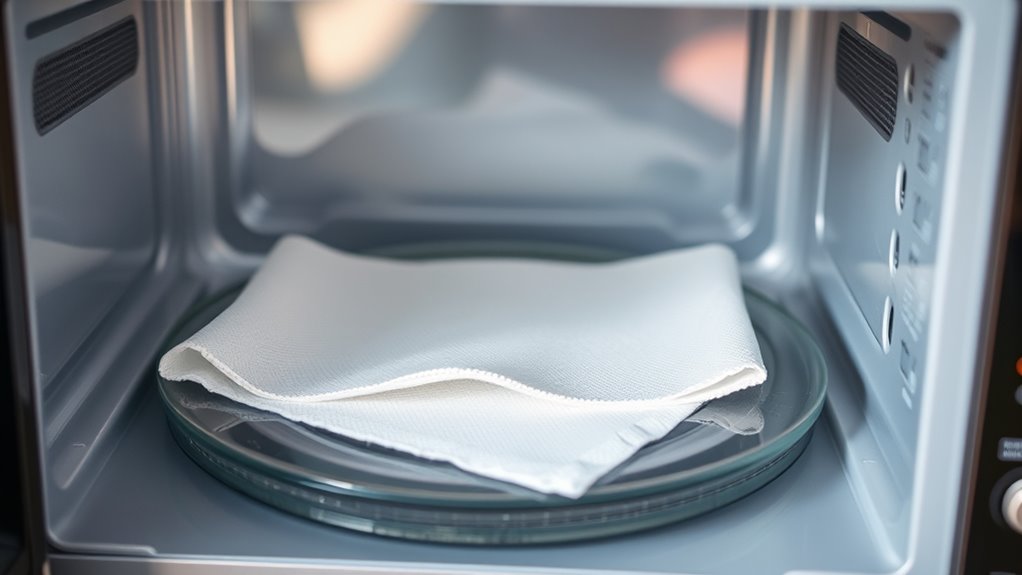
To put paper in the microwave safely, it’s important to choose the right kind of paper. Use plain, uncoated types like parchment or white paper towels that are labeled microwave-safe. These materials handle heat better and reduce the risk of damage or fire.
Make sure the paper is laid flat and free of wrinkles, staples, or inks. Place it away from the microwave walls to prevent sparks or overheating.
Heating on low to medium power in short intervals is best, so you can watch closely and stop if you see any signs of scorching or fire.
Avoid using printed, glossy, or metallic papers altogether. These can cause sparks or damage your microwave.
If you want to keep your microwave safe and avoid damage, knowing these precautions will help you a lot. It’s all about being careful and paying attention while heating.
Identifying Microwave-Safe Paper Types
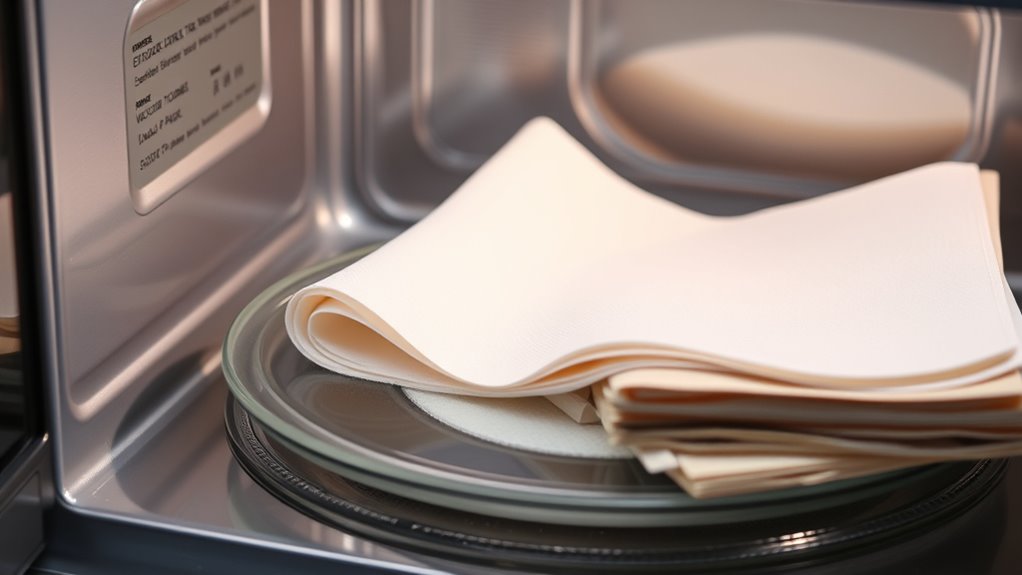
Before you put any paper in the microwave, you need to know which types are safe to use. Plain white paper towels, parchment paper, and wax paper are generally safe because they don’t contain metal or plastic coatings that could spark or melt.
Use plain white paper towels, parchment, or wax paper in the microwave to avoid sparks or melting.
Avoid newspaper, as the ink can release harmful fumes. Cardboard is usually okay if it doesn’t have any shiny or plastic layers, but always check for labels or coatings.
Paper plates marked “microwave-safe” are designed for this use. Stay away from printed or glossy papers since their inks and coatings might catch fire or release toxins.
When in doubt, test a small piece first or use alternative microwave-safe containers to ensure you’re heating your food safely without damaging your microwave or risking a fire.
Preparing Paper for Microwave Use
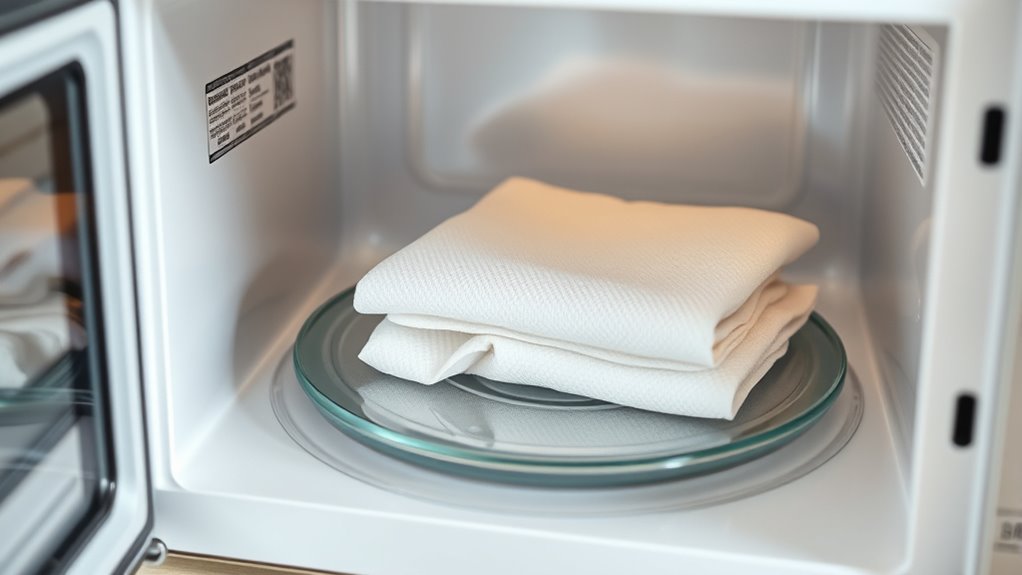
When you’re ready to use paper in the microwave, make sure it’s clean and free of any metal staples, clips, or adhesive labels that could cause sparks. You’ll want to smooth out any wrinkles or folds to prevent uneven heating.
If you’re using paper towels, choose plain, unprinted ones without dyes or inks. Avoid glossy or heavily printed paper as these can contain chemicals that might not be microwave-safe.
Before placing the paper in the microwave, consider using a single sheet to avoid overheating. Keep the paper dry unless you intend to moisten the food.
Also, tear the paper to fit the container size precisely. And check for any signs of wear or damage that could ignite.
These steps help ensure safe and effective microwave use with paper. It’s a simple way to keep things working smoothly.
Positioning Paper in the Microwave
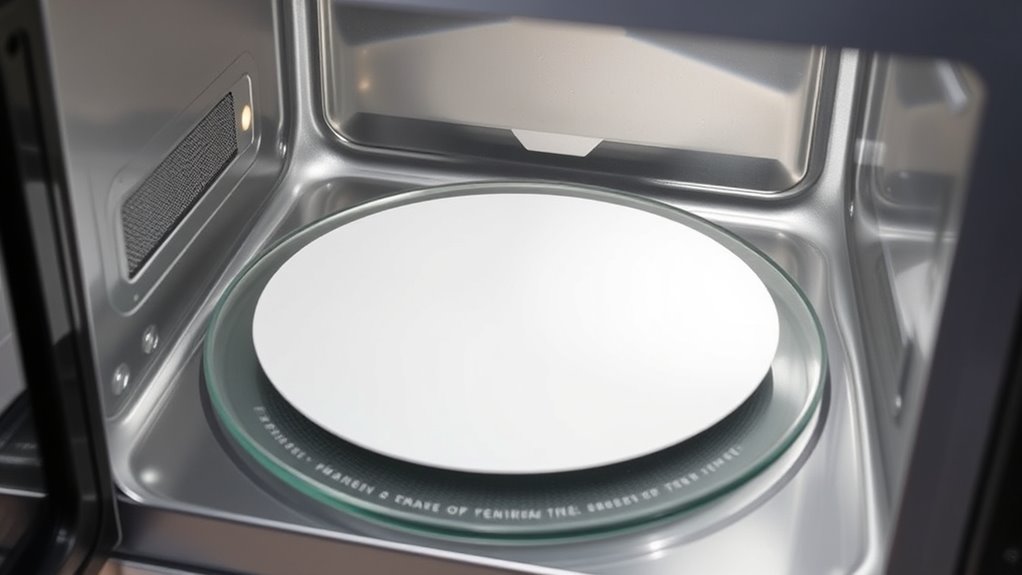
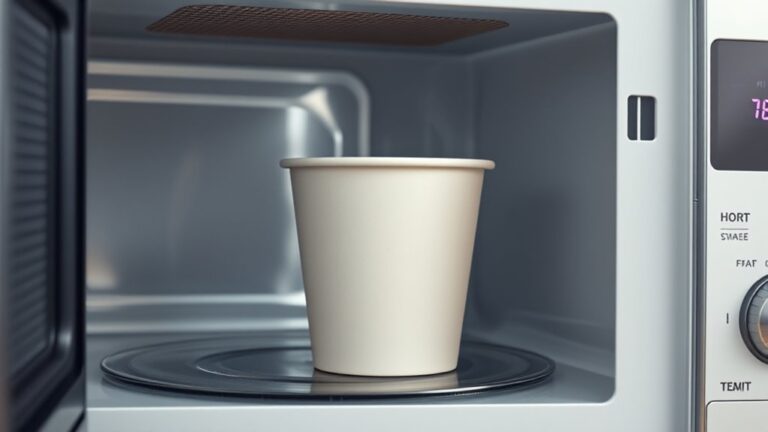
You’ll want to place the paper in the center of the microwave to guarantee even heating. Make sure the paper doesn’t overlap or bunch up, as this can cause uneven cooking or even sparks.
Always use paper that’s labeled microwave-safe to avoid any safety hazards. It’s a simple step that can make a big difference!
Center Paper Placement
Although microwaves heat unevenly, placing paper at the center helps guarantee consistent warming. When you position your paper right in the middle, it avoids hot spots and cold patches, reducing the risk of burns or uneven heating.
The rotating plate in most microwaves is designed to spin food or paper placed centrally, ensuring every part gets equal exposure to the microwave energy.
Keep these tips in mind for perfect placement:
- Lay the paper flat without folds or creases.
- Center it on the microwave turntable.
- Ensure the paper doesn’t touch the microwave walls.
- Leave enough space around the paper for proper air circulation.
This simple step helps you microwave paper safely and efficiently.
Avoid Paper Overlap
Why should you avoid overlapping paper in the microwave? When paper overlaps, it creates thicker layers that trap heat unevenly.
This can cause some parts to overheat, increasing the risk of scorching or even fire. You want to make sure each sheet lies flat and separate.
By spreading the paper out, you allow microwaves to penetrate evenly, preventing hot spots that damage the paper or pose safety hazards. Overlapping also blocks steam from escaping, which can make the paper soggy or weaken it.
To keep things safe and effective, place your paper sheets side by side with a little space between them. This simple step helps maintain the paper’s integrity and ensures your microwave runs smoothly without any damage.
Use Microwave-Safe Paper
Choosing microwave-safe paper is essential for preventing fires and damage when heating items. You want to pick paper designed to withstand microwave heat without igniting or releasing harmful chemicals.
Look for labels that explicitly say “microwave-safe.” Avoid glossy, metallic, or heavily printed papers, as these can cause sparks or melting.
When positioning your paper in the microwave, opt for plain white paper towels or napkins, microwave-safe parchment paper, paper plates labeled safe for microwave use, or paper liners made specifically for microwaving.
Using these materials ensures your paper won’t catch fire or damage the microwave. Always double-check the packaging or manufacturer’s instructions before heating.
This way, you keep your food safe and your microwave working properly without any unexpected mishaps.
Recommended Microwave Settings for Paper
You’ll want to choose a low to medium power level when microwaving paper to prevent overheating. Keep the heating duration short, usually no more than 20-30 seconds at a time.
These settings help avoid burns and reduce fire risks. Just take it slow and check the paper frequently to stay safe.
Power Level Selection
Although microwaving paper might seem straightforward, selecting the right power level is essential to prevent damage or fire hazards. You want to avoid high settings that can cause the paper to scorch or ignite.
Instead, opt for lower power levels to gently warm the paper without risking harm.
Here are some tips to visualize proper power level use:
- Use 30-50% power to slowly warm the paper
- Avoid full power settings that create hotspots
- Choose defrost or low power modes on your microwave
- Monitor the paper closely to stop heating if it starts to curl or smoke
Just keep an eye on it as it heats, and you’ll be fine!
Heating Duration Guidelines
When heating paper in the microwave, keeping the duration short is essential to prevent overheating or ignition. Start with 10 to 15 seconds at a low power setting to minimize risk.
If you need more time, heat in 5-second increments, checking the paper after each interval. Avoid long, continuous heating sessions since paper can quickly dry out and potentially catch fire.
Remember, different microwave models vary, so adjust your timing accordingly. Always stay nearby and monitor the process closely.
If the paper feels warm but not hot, it’s usually safe to proceed with additional short bursts. By following these guidelines, you can safely heat paper without damaging it or your microwave.
Safety and caution are your best tools when working with paper in your microwave. So, keep an eye on things and don’t rush it!
Common Risks and How to Avoid Them
Because paper isn’t designed for microwaving, it carries certain risks you should comprehend before heating it. If you’re not careful, you might cause fires, sparks, or damage to your microwave.
Microwaving paper isn’t safe and can lead to fires, sparks, or microwave damage if you’re not careful.
To avoid these issues, keep an eye on the paper and follow these tips:
- Avoid using paper with metallic ink or foil, which can spark.
- Don’t microwave paper for too long; it can overheat and catch fire.
- Ensure the paper is dry, as wet paper heats unevenly and weakens.
- Don’t use printed newspaper or colored paper that may release toxins when heated.
Alternatives to Using Paper in the Microwave
Since paper can pose risks in the microwave, you might want to contemplate safer alternatives. Using microwave-safe glass or ceramic containers is a reliable choice—they don’t catch fire and heat evenly.
Silicone lids or microwave-safe plastic wraps can cover your food without the hazards that paper towels or napkins might bring. If you need to absorb moisture, opt for a clean cloth towel designed for kitchen use, but make sure it’s damp to prevent scorching.
Microwave-safe vented covers also help trap steam and prevent splatters, reducing cleanup without risking damage. By choosing these options, you avoid the fire hazards and chemical concerns paper can introduce, ensuring your food heats safely and efficiently every time.
Conclusion
When you think about putting paper in the microwave, it’s easy to worry about sparks or fires—but with the right paper and precautions, it’s actually safe. You just need to choose microwave-safe paper, avoid metallic inks, and keep a close eye on the process.
By understanding these simple steps, you can protect your microwave and yourself. Don’t let fear stop you; safe paper use in the microwave is possible and practical.
Using microwave-safe paper means selecting papers that won’t catch fire or release harmful chemicals. Also, avoid any paper with metallic designs or inks, as those can cause sparks. Always monitor the microwave while heating paper to catch any issues early.
In conclusion, putting paper in the microwave safely is all about using the right type of paper and staying attentive. When you choose microwave-safe paper and avoid metallic elements, you minimize risks. Keeping a close watch during the process adds an extra layer of safety. So, don’t hesitate—safe paper use in the microwave can be easy, practical, and damage-free when done correctly.