How You Can Safely Microwave Paper Cups
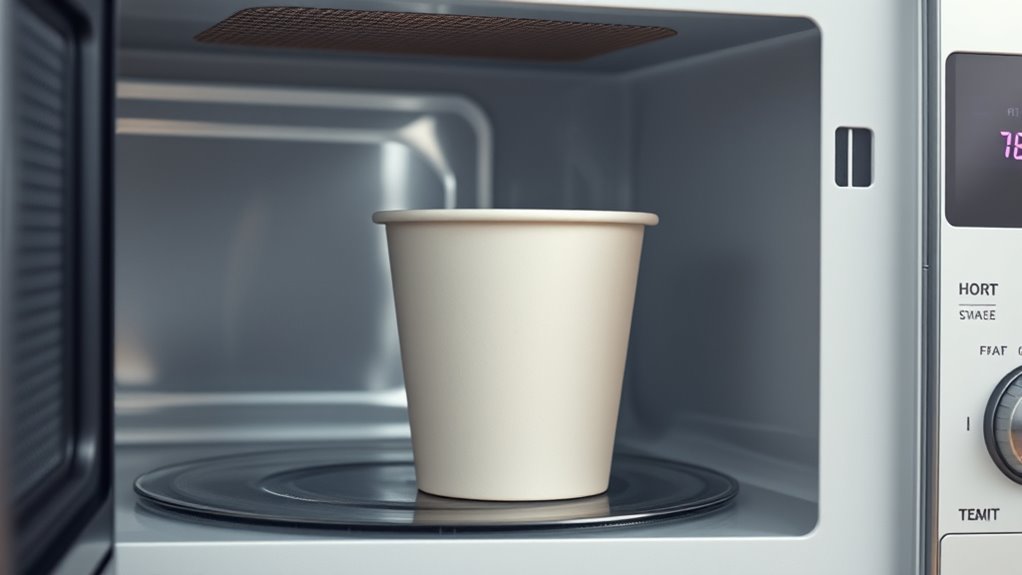
To safely microwave paper cups, you should only use those labeled as microwave-safe. Make sure the cups don’t have any metallic coatings or decorations because those can cause sparks or fires.
Heat your drink in short intervals, about 15–20 seconds, and keep a close eye on the cup. If you notice any warping or overheating, stop the microwave immediately.
Avoid cups with plastic linings since they can melt or release harmful chemicals when heated. If you want to be extra safe, consider transferring your drink to a microwave-friendly mug instead.
By following these tips, you’ll protect yourself and your appliances from mishaps. It’s always better to be cautious and keep things simple when microwaving paper cups.
Understanding Paper Cup Materials and Microwave Safety
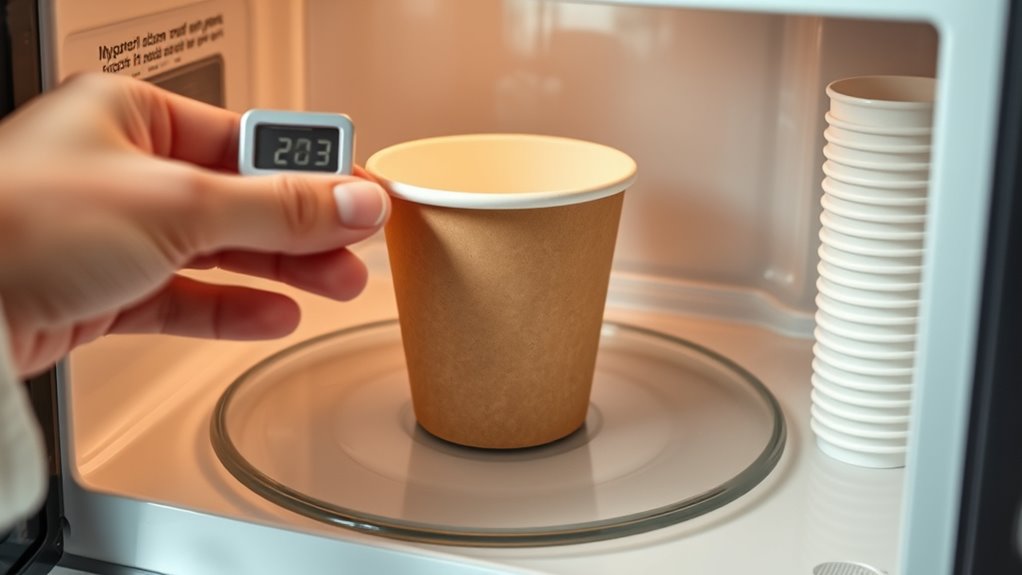
Although paper cups might seem microwave-safe, not all materials they contain can handle the heat. You need to know that many paper cups have a thin plastic lining to prevent leaks. This lining can melt or release harmful chemicals when microwaved.
Some cups also have metallic coatings or designs that aren’t microwave-friendly, which could cause sparks or fires. When you microwave a paper cup, the paper itself might withstand the heat briefly, but if the cup isn’t designed for microwave use, it could weaken and leak.
To stay safe, always consider what the cup is made of before heating. Understanding these materials helps you avoid damage to the cup and protects your safety. Awareness is key to preventing accidents in the kitchen.
Identifying Microwave-Safe Paper Cups
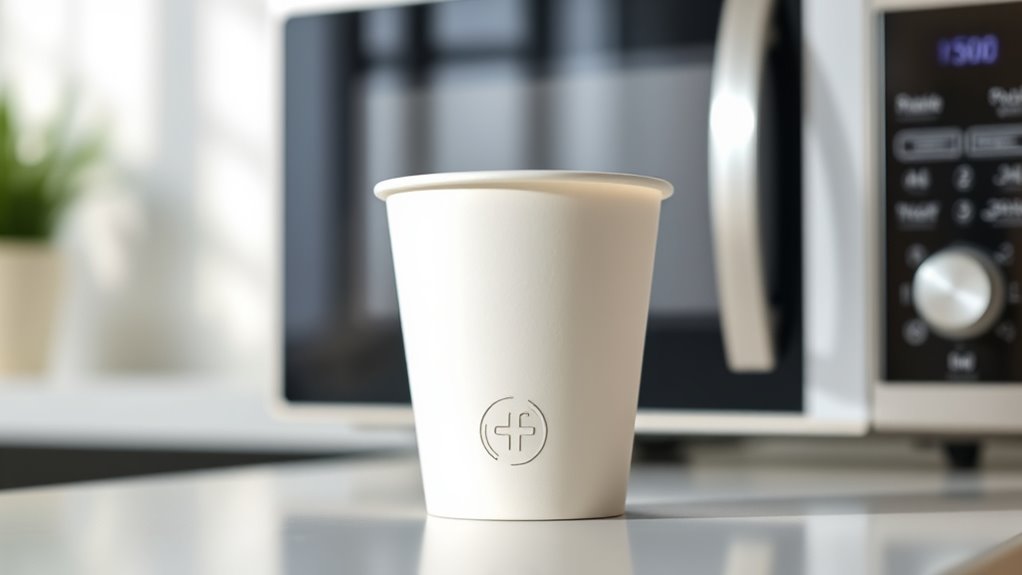
When you want to microwave a paper cup, you’ll need to check for clear labels or symbols indicating it’s microwave-safe. Look for icons like a microwave with wavy lines or explicit wording such as “microwave-safe” on the cup or packaging.
If you don’t spot these, the cup might not be suited for microwave use. Also, avoid cups with metallic coatings or decorations, as these aren’t microwave-friendly.
If you’re unsure, consider using cups specifically designed for microwave heating, often found in stores or online. Checking the manufacturer’s website can also help confirm microwave compatibility.
Risks of Microwaving Non-Microwave-Safe Paper Cups
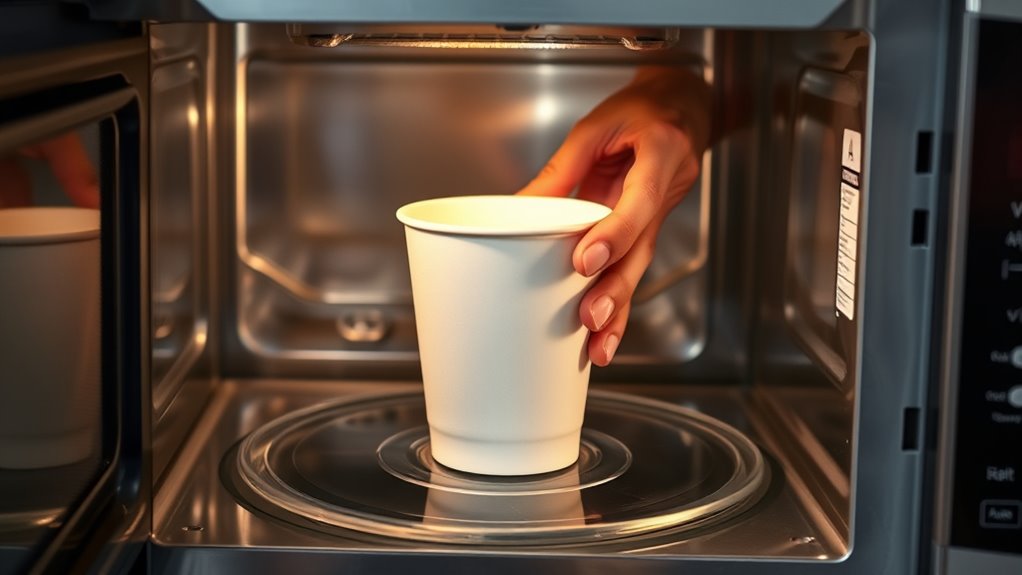
If you microwave a paper cup that isn’t labeled microwave-safe, you risk harmful chemicals leaching into your drink. These cups can also catch fire or melt, causing burns and damage.
It’s important to understand these dangers before heating your cup in the microwave. Better safe than sorry, right? Always check the label first!
Chemical Leaching Hazards
Microwaving paper cups that aren’t labeled microwave-safe can cause harmful chemicals to leach into your drink. Many paper cups have plastic coatings or inks that aren’t designed to withstand microwave heat.
When heated, these coatings can break down, releasing substances that contaminate your beverage. This isn’t just about taste; some chemicals may pose health risks over time.
To avoid chemical leaching, keep these points in mind: always check if the cup is marked microwave-safe before use.
Also, avoid microwaving cups with shiny or plastic linings. Instead, use microwave-safe containers designed to withstand heat without degrading.
Fire and Melting Risks
Beyond chemical concerns, you should also watch out for fire and melting risks when heating paper cups that aren’t microwave-safe. These cups often contain plastic linings or coatings that can melt under high heat, causing the cup to lose its shape or integrity.
If the cup’s material melts or ignites, it can damage your microwave and create a dangerous fire hazard. You might notice smoke, a burning smell, or even sparks—signs you should stop microwaving immediately.
To avoid this, only use paper cups labeled microwave-safe or transfer your drink to a microwave-safe container. Don’t microwave cups with metallic elements or decorations either, as they can cause arcing.
Staying cautious prevents accidents and keeps you and your appliances safe. So, it’s really worth taking a moment to check before you pop that cup in the microwave!
Step-by-Step Guide to Microwaving Paper Cups Safely
Before microwaving, make sure your paper cup is labeled microwave-safe to avoid any hazards. Always keep an eye on the heating time to prevent overheating or damage.
Following these simple steps helps you use paper cups safely in the microwave. It’s pretty straightforward, and a little caution goes a long way!
Check Cup Material
How can you tell if your paper cup is safe to heat in the microwave? First, check the material composition printed on the cup or packaging.
Many paper cups have a thin plastic lining to prevent leaks, but not all are microwave-safe. Here’s what you should look for:
- Microwave-safe label: Look for explicit labeling that the cup can be microwaved.
- Plastic lining type: Avoid cups with polyethylene or wax coatings; those with microwave-safe polypropylene linings are generally better.
- No metal parts: Make sure the cup doesn’t have metallic rims or decorations, because those can spark in the microwave.
Monitor Heating Time
Once you’ve confirmed your paper cup is microwave-safe, you need to pay close attention to heating times to avoid damage or spills. Start by microwaving your cup in short intervals of 15 to 20 seconds.
This helps prevent overheating, which can weaken the cup’s structure or cause hot spots that lead to spills. After each interval, carefully check the temperature and the cup’s condition.
If it feels too hot or the cup shows signs of warping, stop microwaving immediately. Remember, paper cups generally aren’t designed for prolonged microwave use, so err on the side of caution.
Alternatives to Microwaving Paper Cups
Although microwaving paper cups might seem convenient, you can easily avoid potential risks by choosing safer alternatives. Instead of risking spills or chemical exposure, consider these options to heat your drinks safely and effectively.
Use a microwave-safe ceramic or glass mug. These materials handle heat well and won’t leach chemicals.
Or, transfer your beverage to a microwave-safe container with a vented lid to avoid pressure buildup and spills.
You could also heat your drink on the stovetop or with an electric kettle. This way, you get controlled and even warming without worrying about the container.
Tips for Preventing Accidents When Heating Drinks in Paper Cups
If you still choose to microwave drinks in paper cups, taking precautions can help you avoid spills, burns, and other accidents. Always check that the cup is microwave-safe and avoid overheating by heating in short intervals.
Use a microwave-safe plate underneath to catch any spills, and handle the cup with a cloth or oven mitt to protect your hands from heat. It’s a simple way to keep things safe and clean.
| Tip | Why It Matters | How to Implement |
|---|---|---|
| Use microwave-safe cups | Prevents cup breakdown | Check labels before heating |
| Heat in short bursts | Avoids overheating | Heat 30 seconds, stir, repeat |
| Place on a plate | Catches spills | Use a microwave-safe plate |
| Use heat protection | Prevents burns | Handle with oven mitt or cloth |
Conclusion
Microwaving paper cups can be risky, but knowing which ones are safe makes all the difference. Did you know that about 60% of paper cups contain a plastic lining that can melt or release harmful chemicals when heated?
By choosing microwave-safe cups and following proper steps, you protect yourself and your drink. Always prioritize safety to avoid accidents—your health and peace of mind are worth it every time you heat your beverage.
So, next time you think about microwaving that paper cup, make sure it’s labeled microwave-safe. This simple check helps you avoid harmful chemicals and prevents the cup from melting or catching fire. Remember, using the right paper cups for microwaving ensures a safer experience and keeps your drinks tasting great. Stay safe and enjoy your warm beverage without worry!