How You Can Safely Use Butcher Paper in the Oven
To safely use butcher paper in the oven, start by choosing unwaxed, food-grade butcher paper designed specifically for cooking. This type of paper can handle temperatures up to about 220°F–250°F without breaking down or catching fire. It’s important to check the packaging to confirm the heat tolerance before you use it.
When wrapping your meat, do it loosely to allow airflow. This helps the meat cook evenly and keeps it from steaming too much. Avoid using staples to secure the paper since they can be a hazard in the oven. Instead, tuck or fold the paper carefully.
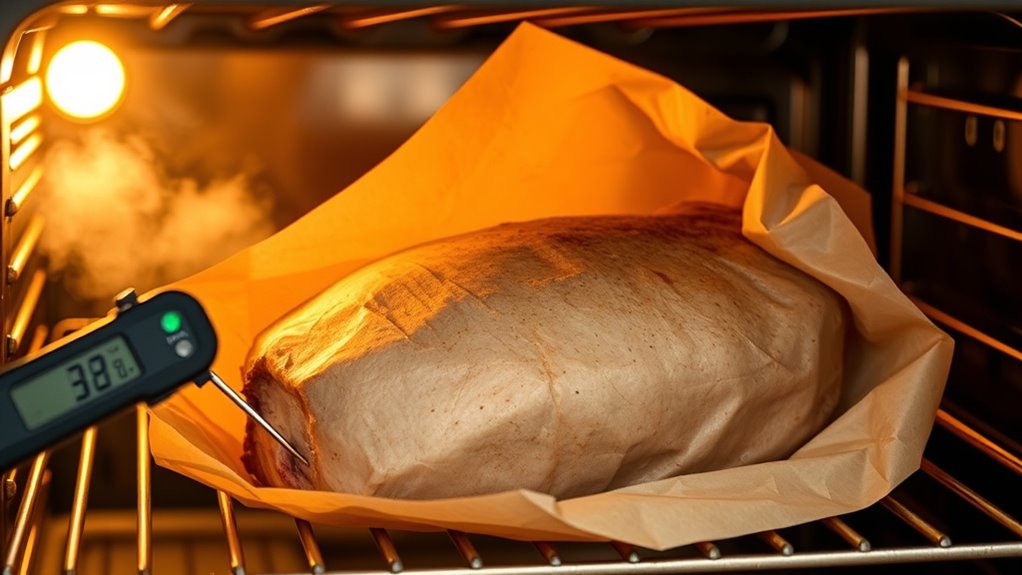
Place the wrapped meat on a baking sheet to catch any drips and keep your oven clean. Try not to exceed the paper’s heat limit — going higher can cause the paper to melt or even start a fire. Using a meat thermometer is a smart move, too. It helps you keep an eye on your meat’s internal temperature for perfectly cooked results every time.
Cooking with butcher paper can be a great way to lock in flavor and moisture while keeping things safe in the kitchen. There’s a bit more to learn for perfect results, but these tips will get you started right.
Understanding Different Types of Butcher Paper
Although butcher paper might look simple, it comes in different types that affect how you use it in the oven. You’ll find waxed and unwaxed butcher paper, each suited for specific tasks.
Waxed butcher paper has a thin layer of wax, making it moisture-resistant but not heatproof. Using it in high temperatures can cause the wax to melt or smoke, so it’s better for wrapping cold or room-temperature foods.
Unwaxed butcher paper, on the other hand, is plain kraft paper without coatings. It’s more heat-tolerant and suitable for oven use, especially for wrapping meats during low-and-slow cooking.
Knowing which type you have helps prevent mishaps and ensures your food cooks properly. So, always check the type before placing butcher paper in your oven.
Checking Oven-Safe Temperature Limits
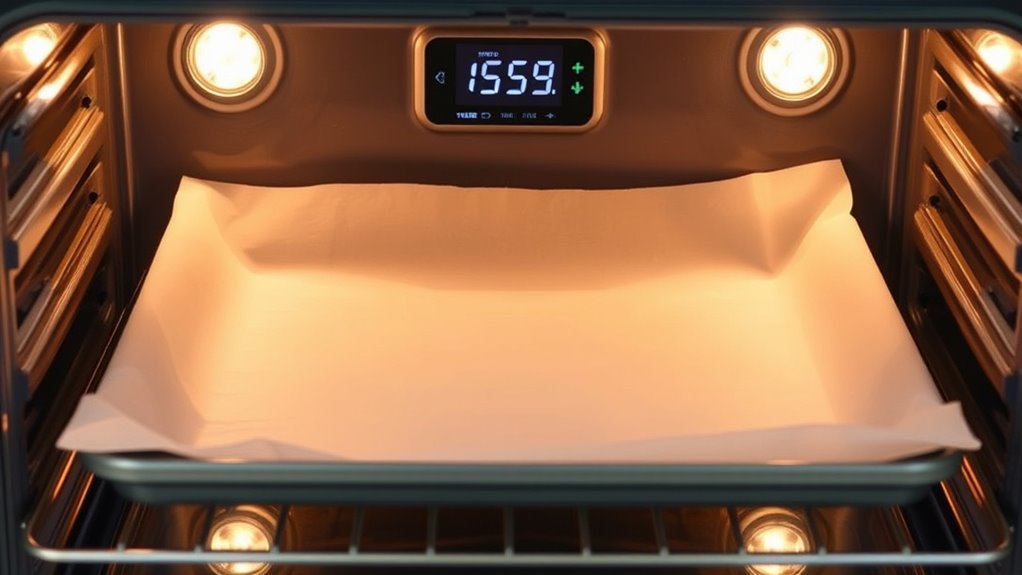
Now that you know the difference between waxed and unwaxed butcher paper, it’s important to check the temperature limits before using it in your oven. Most unwaxed butcher paper can handle temperatures up to 220°F to 250°F safely. This makes it suitable for low-and-slow cooking methods.
Waxed butcher paper, on the other hand, often has a lower heat tolerance. Using it above its limit can cause the wax to melt or even ignite. Always check the packaging or manufacturer’s guidelines for specific heat ratings.
If you can’t find this information, it’s better to avoid using butcher paper at high temperatures. Using butcher paper beyond its oven-safe range risks ruining your food and creating a fire hazard. So, staying within limits is key to safe cooking.
Preparing Meat With Butcher Paper Wrapping
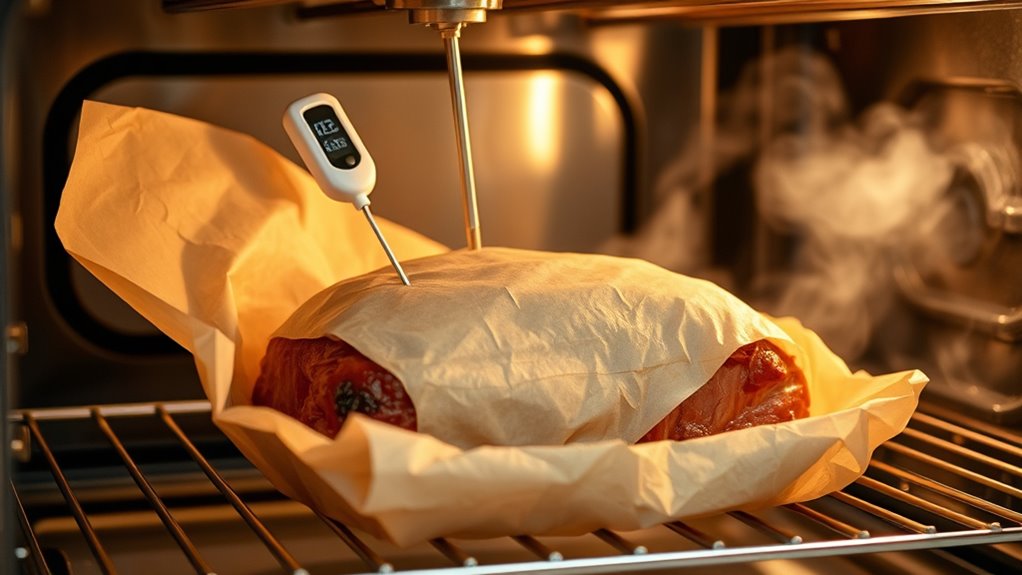
When preparing meat with butcher paper wrapping, you’ll want to guarantee the paper is properly positioned to retain moisture while allowing the meat to breathe. Start by selecting high-quality, food-grade butcher paper designed for cooking.
Next, place your seasoned meat on the paper, making sure it’s centered. Fold the paper snugly around the meat but avoid wrapping it too tightly, which can trap steam and affect texture.
Secure loose ends without using staples or adhesives that aren’t oven-safe. Finally, position the wrapped meat on a baking sheet to catch any drips.
Keep these tips in mind: use uncoated, natural butcher paper and avoid plastic or wax-coated types. Wrap loosely for airflow and make sure no paper touches heating elements.
Also, keep an eye on the internal meat temperature while cooking. This way, you’ll get the best results every time!
Techniques for Wrapping Foods Securely
When wrapping foods for the oven, you’ll want to pick butcher paper that’s designed to handle heat without breaking down. Make sure you secure the paper tightly around your food to keep juices in and prevent any leaks.
Using techniques like folding edges neatly and tying with kitchen twine can help keep everything sealed during cooking. It’s all about keeping those flavors locked in and making sure nothing escapes while it cooks.
Choosing the Right Paper
How do you choose the right butcher paper to guarantee your food wraps securely and cooks evenly? Start by picking a paper that’s food-grade and specifically designed for cooking to avoid any unwanted chemicals or flavors.
Look for these key features:
- Adequate thickness for durability without tearing
- Breathable texture to allow smoke and moisture escape
- Heat resistance suitable for your oven’s temperature
- Non-coated or natural kraft paper to prevent melting
- Size large enough to fully wrap your food
Using the right butcher paper ensures your food stays juicy and absorbs smoky flavors well. Avoid generic or wax-coated papers since they can melt or catch fire.
Securing Wraps Effectively
Although choosing the right butcher paper is essential, securing your wraps effectively plays an equally important role in ensuring your food cooks evenly and retains its moisture.
You want your wrap snug but not too tight, allowing steam to circulate while preventing leaks. Use kitchen twine or metal clips designed for high heat. Avoid plastic ties or tape, which can melt.
Here’s a quick guide to wrapping techniques:
| Technique | Benefit | Feeling It Evokes |
|---|---|---|
| Folding edges | Prevents leaks | Confidence |
| Twine tying | Tight seal | Control |
| Metal clips | Easy removal | Convenience |
| Double wrapping | Extra protection | Security |
| Leaving vents | Steam escape | Relief |
Master these and your meals will stay juicy and delicious every time.
Monitoring Cooking Time and Temperature
Since butcher paper can affect heat distribution, you need to keep a close eye on your cooking time and temperature to make certain your food cooks evenly and safely. Here’s how you can monitor effectively:
Use an oven thermometer to verify your oven’s actual temperature. Check the internal temperature of your food with a reliable meat thermometer.
Adjust cooking times slightly, as butcher paper may slow heat penetration. Open the oven sparingly to maintain stable heat levels.
Set a timer and note any changes needed for future reference. This way, you’ll get great results every time!
Alternatives to Butcher Paper for Oven Use
If you’re looking for safe alternatives to butcher paper in the oven, parchment paper is a great choice thanks to its non-stick and heat-resistant properties.
You can also try silicone baking mats, which are reusable and provide even heat distribution. Both options help you cook without worrying about paper safety or sticking issues.
Parchment Paper Benefits
When you need a safe alternative to butcher paper in the oven, parchment paper offers several advantages. It’s specially designed to withstand heat, so you don’t have to worry about burning or releasing harmful chemicals.
You can use it for baking, roasting, and even steaming. Plus, it’s non-stick, which means your food won’t stick to the surface, making cleanup easier.
Here are some key benefits:
- Heat resistant up to 420°F (215°C)
- Non-stick surface for easy food release
- Moisture-resistant, preventing sogginess
- Food-safe and chemical-free
- Convenient and disposable for quick cleanup
Using parchment paper guarantees your cooking stays safe and efficient without the risks associated with butcher paper in high heat. It’s really a smart choice to keep things simple and safe in the kitchen.
Silicone Baking Mats
Although butcher paper isn’t ideal for oven use, silicone baking mats provide a reliable and reusable alternative that you can count on. These mats are heat-resistant up to around 480°F (250°C), making them perfect for most baking tasks.
You can place a silicone mat directly on your baking sheet to prevent sticking and promote even cooking. Plus, they’re non-toxic and easy to clean—just rinse with warm soapy water or toss them in the dishwasher.
Unlike butcher paper, silicone mats won’t absorb oils or flavors, so your food’s taste stays pure. If you’re looking for a sustainable option that reduces waste, silicone mats are a smart pick.
Just remember to avoid using sharp knives on them to maintain their surface integrity.
Conclusion
Using butcher paper in the oven is like giving your meat a cozy, breathable jacket—it locks in moisture while letting heat work its magic. By understanding the paper’s oven-safe limits and wrapping your food securely, you’ll avoid any unexpected mishaps.
Keep a close eye on cooking times and temperatures to get perfect results every time. If butcher paper isn’t an option, don’t worry—there are plenty of alternatives to help you wrap up your culinary masterpiece safely.
In summary, using butcher paper in the oven can enhance your cooking by retaining moisture and flavor. Just make sure to stay within the recommended oven-safe temperature limits and wrap your food properly to prevent any issues. If you need substitutes, options like parchment paper or foil can work just as well, ensuring your meal turns out delicious every time. So go ahead, use butcher paper confidently and enjoy perfectly cooked dishes with ease!