How You Can Use Parchment Paper Safely in a Microwave
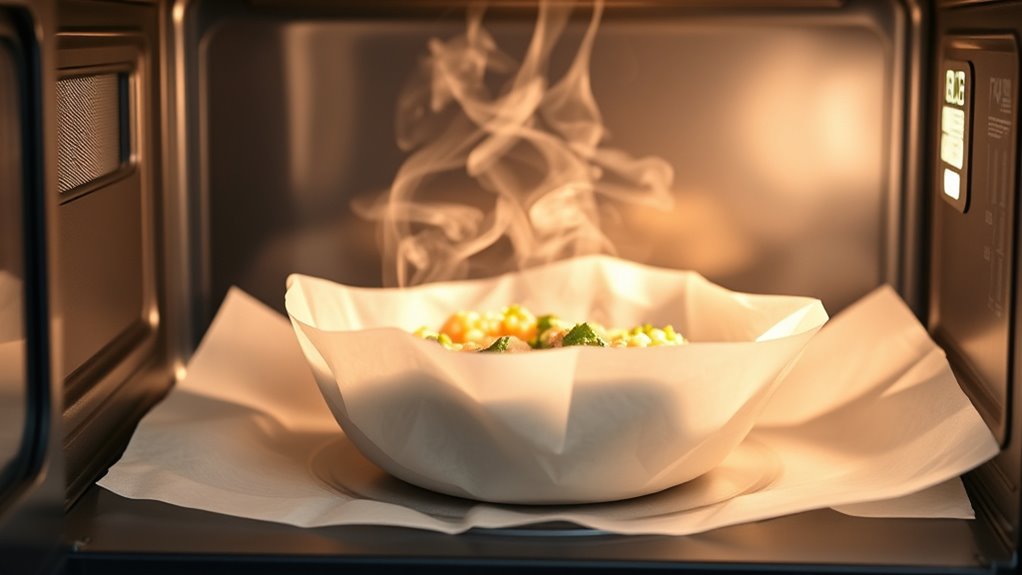
To use parchment paper safely in your microwave, start by choosing a microwave-safe type. Look for uncoated or silicone-coated parchment paper, and avoid wax-coated varieties, which can melt or cause problems.
Lay the parchment paper flat inside a microwave-safe dish. Make sure it doesn’t touch the microwave’s walls or heating elements to prevent any risk of fire or damage.
Don’t overheat your food. Stick to medium or low power settings and keep heating times short to avoid burning the parchment paper.
Use parchment paper to cover food loosely. This helps prevent splatters and keeps your food moist while it cooks.
Proper handling and placement of parchment paper in your microwave are key to safe use.
Keep reading for more helpful tips on where to place it, what foods work best, and how to clean up afterward.
Understanding Microwave-Safe Materials
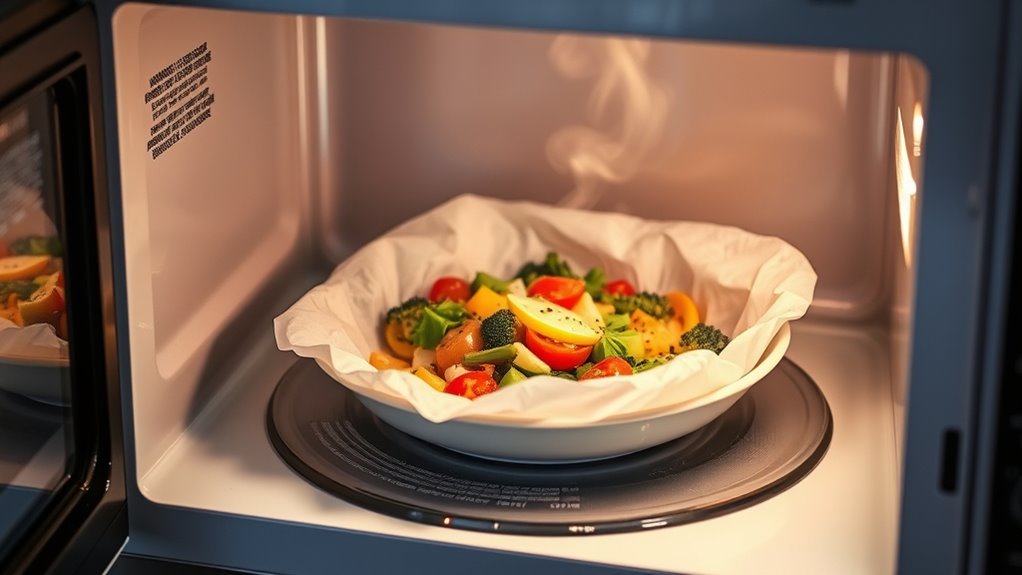
Although not all kitchen materials are safe for microwave use, understanding which ones are microwave-safe helps you avoid accidents and damage. You should always choose containers labeled as microwave-safe, like certain plastics, glass, and ceramic.
Avoid metal, as it can cause sparks and fires. Some plastics may melt or release harmful chemicals if heated improperly, so check for microwave-safe symbols.
When it comes to paper products, plain parchment paper is generally safe because it’s designed to withstand heat without burning or melting. However, you should never microwave wax paper or paper towels with printed ink, as these may release toxins or catch fire.
Choosing the Right Type of Parchment Paper
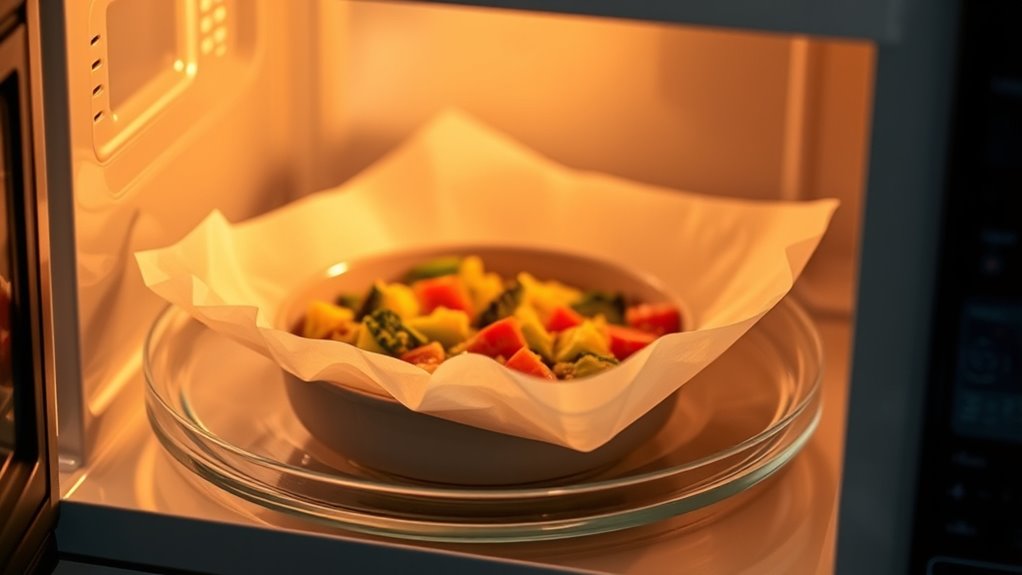
When picking parchment paper for your microwave, make sure it’s labeled microwave-safe to avoid any hazards. You’ll want to steer clear of wax-coated varieties since they can melt or catch fire.
Choosing the right type keeps your food safe and your microwave in good shape. It’s a simple step that makes a big difference!
Microwave-Safe Label Importance
Because not all parchment paper is designed for microwave use, you need to check for a microwave-safe label before using it. This label guarantees the paper can withstand microwave heat without melting, burning, or releasing harmful substances.
When shopping, look closely at the packaging or product description for this certification. If you skip this step, you risk damaging your food, microwave, or even causing a fire hazard.
Remember, microwave-safe parchment paper is specially treated to handle intense heat safely. If the label is missing or unclear, avoid using it in your microwave.
Avoid Wax-Coated Varieties
Checking for a microwave-safe label is just one step in picking the right parchment paper. You should also avoid wax-coated varieties because the wax can melt or even catch fire in the microwave.
Instead, look for uncoated or silicone-coated parchment paper, which withstands heat safely. Using the wrong type might ruin your food and damage your microwave.
Here’s a quick guide to help you choose wisely:
| Type | Microwave Safety | Result if Used in Microwave |
|---|---|---|
| Wax-Coated | No | Melts, fumes, possible fire hazard |
| Silicone-Coated | Yes | Safe, durable, non-stick |
| Uncoated (Natural) | Yes | Safe, but less non-stick |
Stay safe by picking parchment paper designed for microwave use. It really makes a difference!
Proper Placement of Parchment Paper in the Microwave
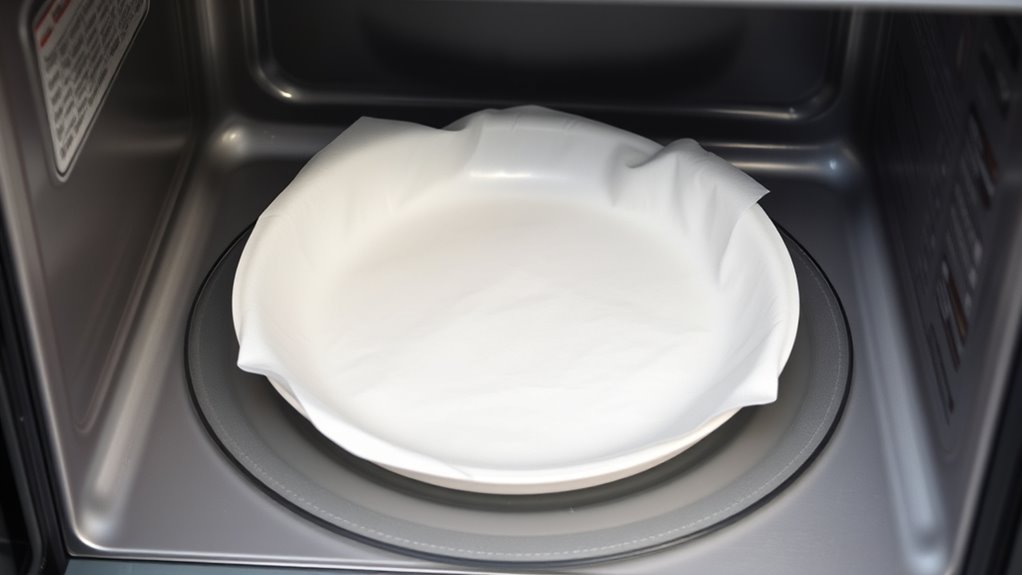
Although parchment paper is microwave-safe, you need to place it correctly to prevent it from touching the microwave’s walls or heating elements. When you line your dish, make sure the parchment paper lies flat and stays within the container’s edges.
Avoid letting it curl up or hang over the sides, as this can cause uneven heating or even sparks. If you’re covering food, fold the parchment paper loosely to allow steam to escape, preventing sogginess.
Always check that the paper doesn’t come into direct contact with the microwave’s interior surfaces. By positioning parchment paper carefully, you ensure safe heating and maintain your microwave’s performance.
Taking these simple steps will help you use parchment paper effectively without risking damage or poor cooking results. It’s pretty easy once you get the hang of it!
Avoiding Overheating and Fire Hazards
When you use parchment paper in the microwave, you’ll want to keep a close eye on heating times and temperatures to avoid overheating and potential fire hazards. Don’t microwave parchment paper for longer than recommended since excessive heat can cause it to scorch or ignite.
Use medium or lower power settings when possible, especially for longer cooking times. Avoid placing parchment paper too close to the microwave’s heating elements or walls where it might overheat.
Always check the paper during cooking—if you notice any browning, smoke, or unusual smells, stop the microwave immediately. Remember, parchment paper is designed to withstand moderate heat, but it’s not fireproof.
Using Parchment Paper for Different Types of Foods
When you use parchment paper in the microwave, it works great for steaming vegetables by trapping moisture. You can also reheat baked goods without drying them out by covering them with parchment.
Plus, it’s perfect for covering saucy dishes to prevent splatters while heating. Just pop it on top and you’re good to go!
Vegetables and Steaming
If you want to steam vegetables quickly and evenly in the microwave, parchment paper can be a great tool. Simply place your chopped veggies in a microwave-safe dish, add a splash of water, then cover the dish with a parchment paper lid.
Make sure to leave a small vent for steam to escape. The parchment paper traps moisture, creating a gentle steaming environment that helps cook your vegetables without drying them out or making them soggy.
It’s safer than using plastic wrap, which can melt or release harmful chemicals. Plus, parchment paper won’t stick to your food, making cleanup easier.
Just keep an eye on cooking times, as microwaves vary, and always ensure the paper doesn’t touch the microwave’s walls to avoid any fire risk.
Reheating Baked Goods
Although reheating baked goods in the microwave can be tricky, using parchment paper makes the process much easier. It helps maintain their texture too.
By wrapping your pastries or breads in parchment paper, you prevent them from drying out. This keeps them soft without getting soggy. Pretty handy, right?
Here’s a quick guide on reheating different baked goods safely with parchment paper:
| Baked Good | Time (Seconds) | Tips |
|---|---|---|
| Croissants | 15-20 | Wrap loosely to retain flakiness |
| Muffins | 20-30 | Cover to keep moist |
| Cookies | 10-15 | Use parchment to avoid sogginess |
Use parchment paper as a gentle barrier; it won’t overheat or catch fire. This keeps your baked treats delicious and ready to enjoy.
Covering Saucy Dishes
How do you keep saucy dishes from splattering all over your microwave? Simply cover the dish with parchment paper before heating. Parchment paper acts as a barrier, catching any splatters while allowing steam to escape, which prevents sogginess.
Make sure to leave a small gap or tent the paper slightly so it doesn’t stick to the food or trap too much moisture. Avoid sealing the dish tightly, as this can cause pressure buildup and uneven heating.
Remember, parchment paper is microwave-safe and won’t melt or catch fire at typical cooking temperatures. But always check for any printed patterns or coatings that might not be suitable.
Using parchment paper this way keeps your microwave clean and your food heated evenly without drying out. It’s a simple trick that really works!
Cleaning Tips and Maintenance After Microwave Use
When you finish using parchment paper in the microwave, cleaning up promptly helps maintain both your appliance and the paper’s effectiveness. Don’t let food residue build up on the microwave walls or on the paper itself, as this can cause odors or reduce performance.
Here are some quick tips to keep things in top shape:
- Wipe the microwave interior with a damp cloth after each use.
- Dispose of used parchment paper if it’s greasy or torn.
- Avoid using harsh chemicals on the microwave to prevent damage.
Also, let the microwave air out briefly with the door open to reduce moisture buildup. And don’t forget to store unused parchment paper in a dry, cool place to keep it fresh.
Following these steps will keep your microwave clean and your parchment paper ready for next time. Easy, right?
Conclusion
Using parchment paper in your microwave is easier than you think, and it can be a total game-changer for your cooking! Just make sure you pick microwave-safe parchment, place it properly, and never let it overheat—you don’t want a fireball in your kitchen.
Whether you’re reheating leftovers or steaming veggies, parchment paper keeps things clean and simple. It helps prevent splatters and keeps your food moist without making a mess.
Follow these tips, and you’ll wonder how you ever lived without it in your microwave routine! Using parchment paper safely in a microwave not only makes cooking more convenient but also protects your dishes and keeps cleanup quick. Give it a try and enjoy hassle-free meals every time!