How to Recycle Shredded Paper Properly
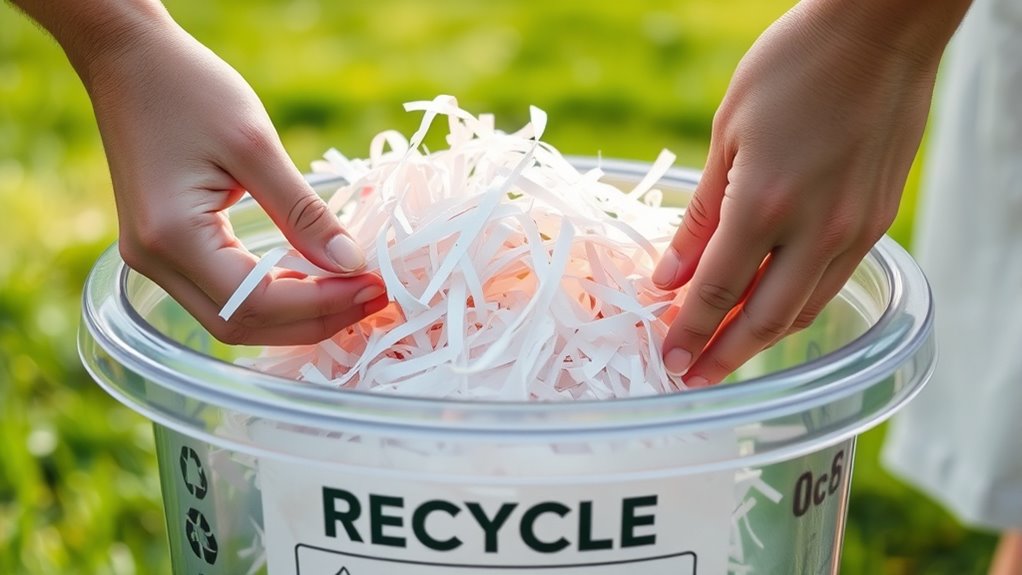
To recycle shredded paper properly, you’ll want to keep it dry and free of contaminants.
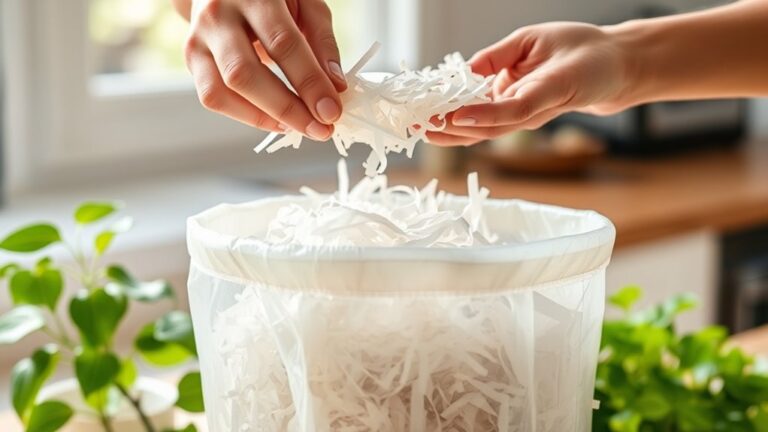
Then, contain it in clear, sealed paper bags or sturdy containers.
Avoid loose piles or plastic bags since shredded paper can scatter and contaminate other recyclables.
Always check your local recycling rules to make sure shredded paper is accepted and follow their specific guidelines.
If you stick to these tips, you’ll help ensure your shredded paper is recycled efficiently and responsibly.
There’s more to know about smart handling and reuse options, so keep an eye out for those tips too!
Why Shredded Paper Requires Special Recycling Attention
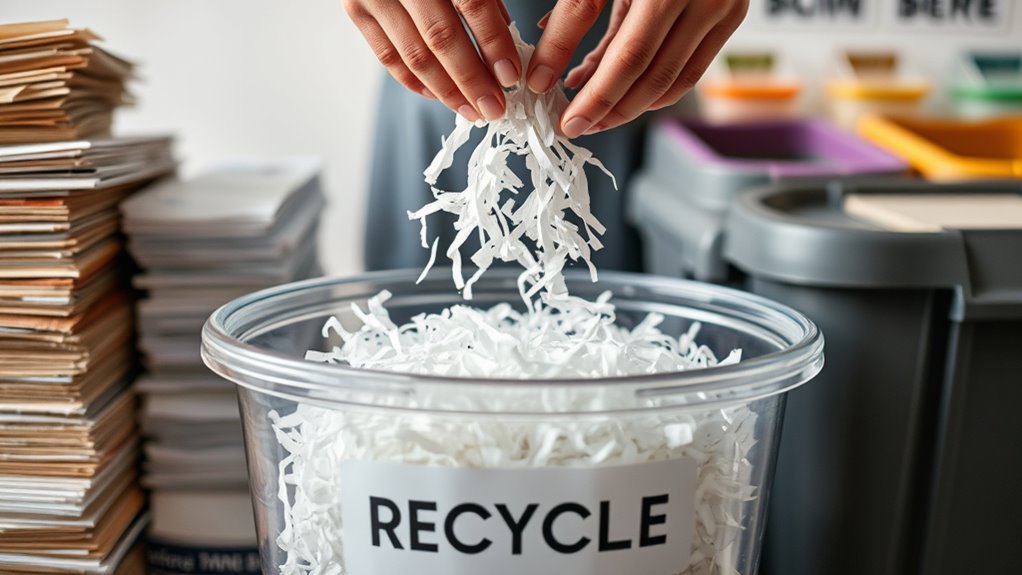
Although shredded paper looks like any other recyclable material, it actually requires special attention because its small size can cause problems in the recycling process. When you toss shredded paper loosely into your recycling bin, it can slip through sorting machinery, contaminating other materials or getting lost entirely.
This not only reduces the efficiency of recycling facilities but also increases the risk of shredded paper ending up in landfills. Plus, shredded paper’s lightweight nature makes it prone to blowing away during collection, which can lead to littering.
You need to know that recycling centers may have specific guidelines for shredded paper. Its fibers are shorter and less valuable for recycling compared to whole sheets.
Understanding these challenges helps you recycle shredded paper responsibly and support effective waste management. It’s all about doing your part the right way!
Preparing Shredded Paper for Recycling
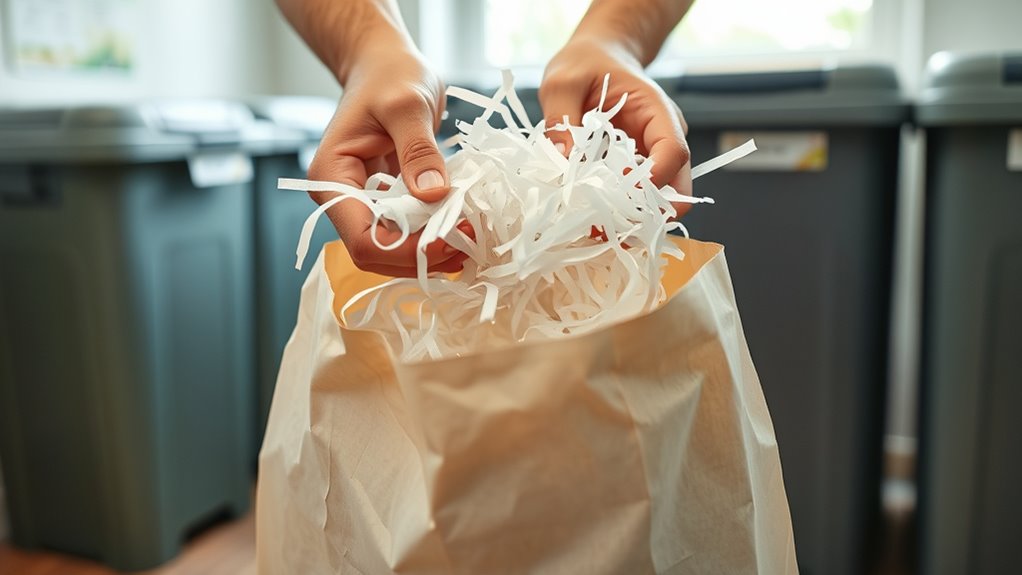
Now that you understand why shredded paper needs special care, let’s look at how you can prepare it properly for recycling. First, keep the shredded paper dry and free from contaminants like food or plastic. Damp or dirty paper can’t be recycled effectively.
Next, consider placing the shredded paper inside a paper bag or a cardboard box. This helps prevent it from scattering during collection and processing. Avoid using plastic bags, as many facilities don’t accept them.
Also, don’t overfill containers; shredded paper should be loosely packed to maintain airflow. Finally, keep the shredded paper separate from other recyclables to ensure it’s handled correctly.
Checking Local Recycling Guidelines
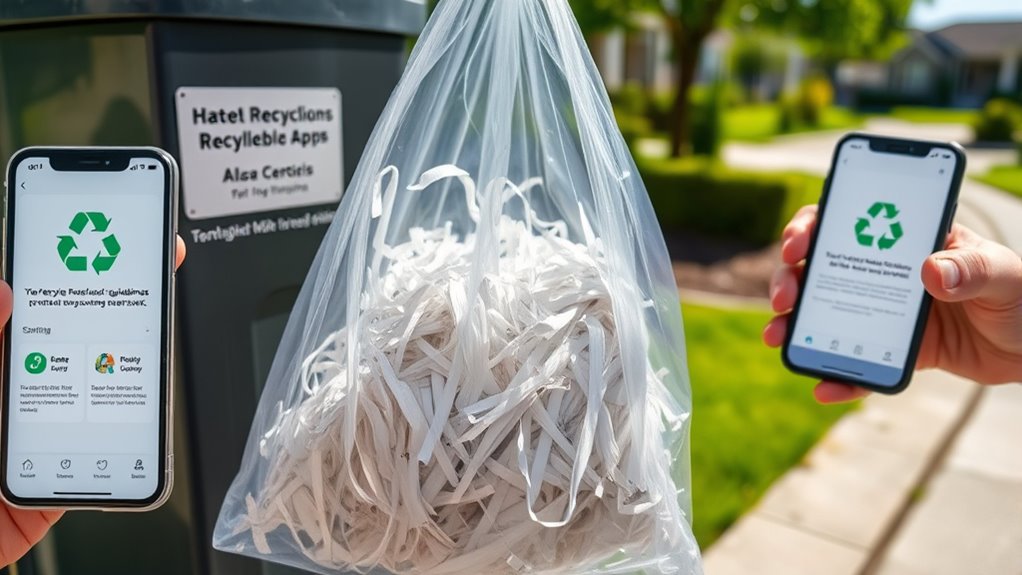
How do you know if your shredded paper will be accepted by your local recycling program? The best step is to check with your town or city’s official waste management website or call their customer service.
Recycling rules vary widely—some programs accept shredded paper only if it’s contained properly, while others might reject it altogether due to processing challenges. Look for specific instructions about shredded paper to avoid contamination or processing issues.
You might also find detailed guidelines about paper types that qualify or restrictions related to volume. By confirming these rules beforehand, you’ll ensure your shredded paper gets recycled efficiently and won’t end up in the landfill.
Staying informed helps you recycle responsibly and supports your local program’s success. It’s a small step that makes a big difference!
Using Paper Bags or Containers for Shredded Paper
You should choose sturdy paper bags that can hold shredded paper without tearing. Using containers helps keep your shredded paper organized and prevents it from scattering.
Make sure to store everything in a dry place to keep it in good condition before recycling. This way, your shredded paper stays neat and ready for recycling without any hassle.
Choosing Suitable Paper Bags
Where should you store shredded paper to guarantee easy recycling and prevent mess? Choosing the right paper bag is key. Opt for bags made from sturdy kraft paper—they’re strong enough to hold shredded paper without tearing.
Avoid plastic bags since many recycling centers don’t accept shredded paper in plastic. Look for bags with a flat bottom and ample capacity; this helps keep the paper contained and makes handling easier.
If you’re unsure, check with your local recycling program for bag requirements. Also, don’t overfill the bag—leave some space to avoid spills.
Benefits of Using Containers
Choosing the right paper bag sets the foundation for managing shredded paper, but using containers takes it a step further. When you use containers, you keep shredded paper secure and prevent it from scattering, which makes handling and transporting much easier.
Containers offer durability that paper bags lack, so you won’t worry about tears or spills. They also help you stay organized by keeping shredded paper in one place, reducing clutter around your recycling area.
Plus, containers can be reused multiple times, making them an eco-friendly option that cuts down on waste. By choosing containers, you protect shredded paper from moisture and pests, ensuring it stays in good condition until you’re ready to recycle it properly.
Proper Storage Techniques
Since shredded paper can easily scatter or absorb moisture, storing it properly is essential to keep it intact and manageable.
You should use paper bags or airtight containers to prevent mess and maintain dryness. Paper bags are eco-friendly and breathable, while containers offer better protection from humidity and pests.
Label your storage clearly to simplify recycling or reuse.
Here’s a quick comparison to help you decide:
| Storage Type | Pros | Cons |
|---|---|---|
| Paper Bags | Biodegradable, cheap | Less moisture-proof |
| Plastic Bins | Airtight, reusable | Not biodegradable |
| Cardboard Box | Recyclable, easy to label | Can weaken if wet |
Choose based on your environment and recycling schedule to keep shredded paper neat and ready for recycling.
It really depends on what works best for you and your space!
Alternative Ways to Reuse Shredded Paper
You can give shredded paper new life by adding it to your compost pile. It helps balance green materials and speeds up decomposition.
If composting isn’t your thing, try using shredded paper for creative craft projects like homemade decorations or gift packaging. These simple ideas let you reduce waste while making something useful or fun.
Composting Shredded Paper
Although shredded paper might seem like waste, it actually makes an excellent addition to your compost pile. You can use it as a carbon-rich “brown” material, balancing out the nitrogen-rich “greens” like food scraps and grass clippings.
Just make sure the shredded paper is free from glossy finishes, colored inks, or plastic coatings, as these can harm your compost. Before adding, moisten the shredded paper slightly to prevent it from blowing away and help it break down faster.
Mix it thoroughly with other compost materials to improve aeration and speed decomposition. Using shredded paper in your compost not only reduces landfill waste but also enriches your garden soil, promoting healthy plant growth with natural nutrients.
Craft Projects Ideas
Recycling shredded paper doesn’t stop at composting—it can also spark creativity in various craft projects. You can turn shredded paper into decorative items, gifts, or even practical household objects.
For example, shredded paper works great for papier-mâché, stuffing for cushions, or homemade gift wrap filler. Using it this way reduces waste and gives you unique, eco-friendly crafts.
Here’s a quick guide to inspire you:
| Craft Idea | Purpose |
|---|---|
| Papier-mâché | Create bowls, masks, or sculptures |
| Gift Box Filler | Protect fragile items in packaging |
| Seed Starter Pots | Biodegradable pots for seedlings |
| Paper Beads | Handmade jewelry or decorations |
| Pet Bedding | Soft, absorbent material for pets |
Try these ideas and see how shredded paper can brighten your projects while helping the environment!
Common Mistakes to Avoid When Recycling Shredded Paper
When handling shredded paper, many people make errors that can reduce its recyclability or even contaminate the recycling stream. One common mistake is tossing shredded paper loosely into recycling bins.
Because the pieces are small, they can slip through sorting machinery or get caught in other materials, causing issues. Instead, you should place shredded paper in a clear, sealed bag or a paper bag to keep it contained.
Another error is mixing shredded paper with non-recyclable materials like plastic or food waste, which can spoil entire batches. Avoid including shredded paper with glossy or colored sheets, as they might not be accepted.
Conclusion
Recycling shredded paper properly takes a bit of extra care, but it’s definitely worth it. Remember, “slow and steady wins the race”—taking time to check local guidelines and prepare your shredded paper right helps keep recycling efficient.
Use paper bags or containers to avoid mess, and think about reusing shredded paper creatively. You could use it for packing material or even as mulch in your garden.
Avoid common mistakes like mixing shredded paper with other recyclables or throwing it loose in the bin. Doing your part in reducing waste this way keeps the recycling process smooth and effective every time. Proper shredded paper recycling not only helps the environment but also supports a cleaner, more sustainable community. So, take a moment to recycle shredded paper properly—it truly makes a difference!