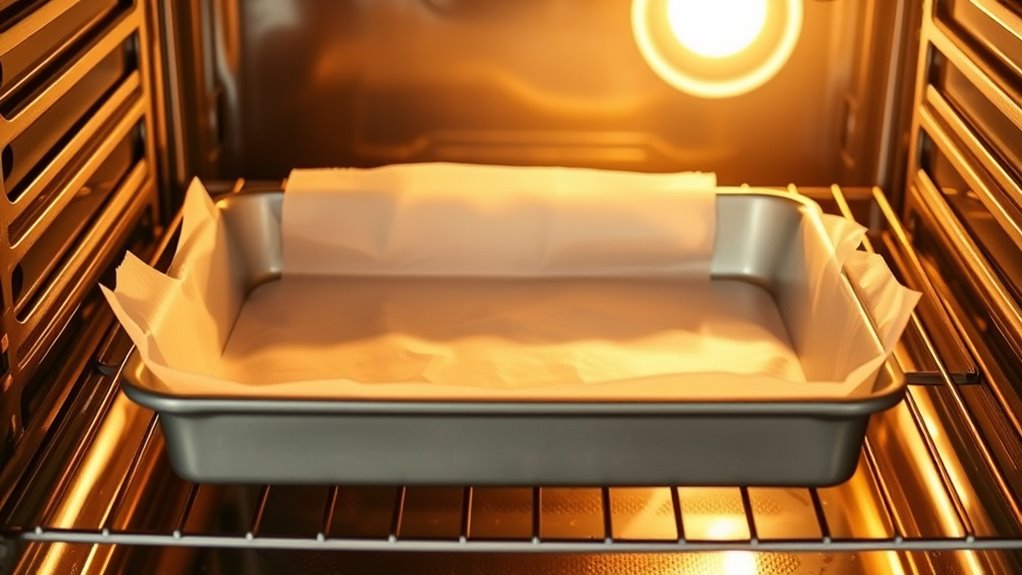
How Do You Put Parchment Paper in the Oven Safely
To use parchment paper safely in the oven, start by cutting it to fit snugly inside your baking tray. Make sure to keep it flat without folding to prevent uneven cooking or burning.
Never let the paper touch the oven walls, heating elements, or open flames. Also, keep your oven temperature below 420°F, as higher heat can cause the parchment to burn or even catch fire.
Avoid placing parchment paper directly on oven racks or the oven bottom, which can be dangerous. Keep an eye on your baking, and watch for any signs of browning on the paper.
If you want to get the best results and reuse your parchment paper wisely, there are some handy tricks you’ll find helpful ahead.
Trust me, it makes baking so much easier!
Understanding Parchment Paper and Its Oven-Safe Temperature Limits
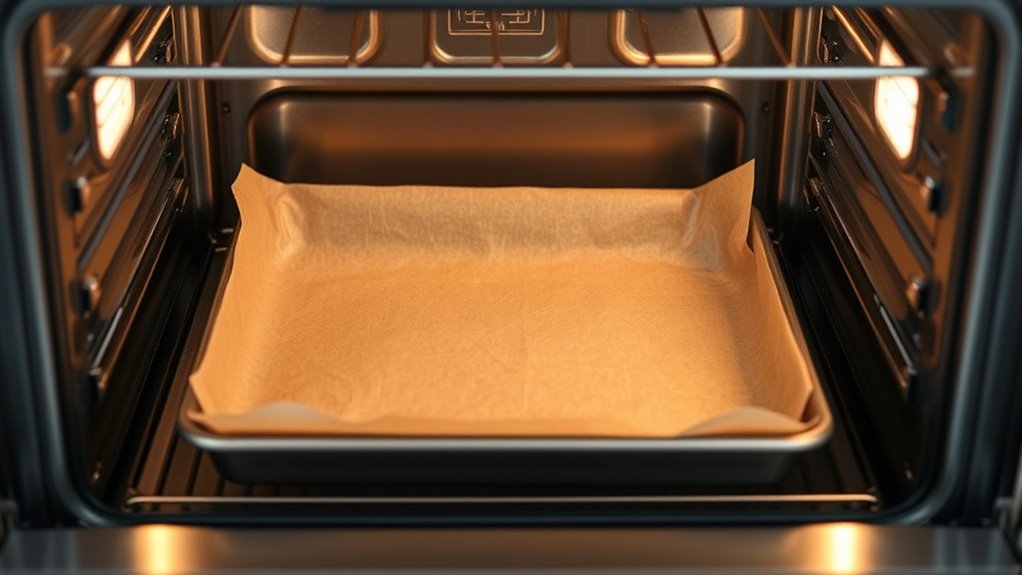
How hot can parchment paper safely go in your oven? Typically, parchment paper can withstand temperatures up to 420°F (215°C). If you push beyond this limit, the paper can start to brown, smoke, or even catch fire.
You’ll want to avoid using parchment paper under a broiler or in a toaster oven set at very high temperatures because it’s not designed for direct, intense heat. Keep in mind that parchment paper is coated with silicone, which gives it heat resistance, non-stick properties, and moisture resistance.
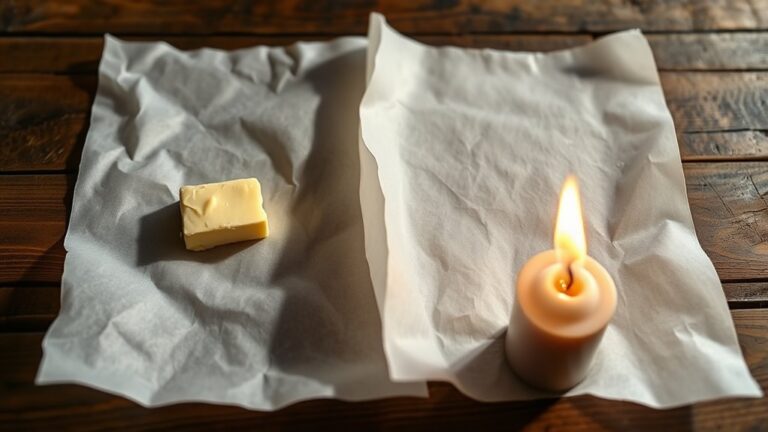
However, it’s not the same as wax paper, which can melt or ignite at lower temperatures. Always check the manufacturer’s guidelines on the packaging to confirm the specific temperature limits for your parchment paper brand.
Preparing Your Baking Tray With Parchment Paper
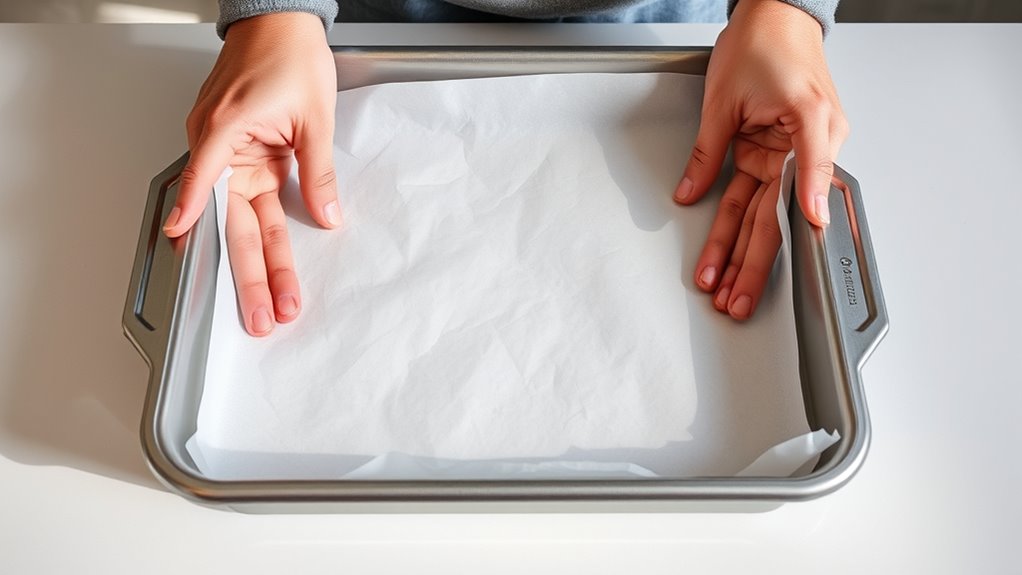
Before placing your ingredients on the tray, make sure to cut the parchment paper to fit snugly inside without overlapping the edges. This prevents the paper from curling up or touching the oven walls, which can cause uneven cooking or even burning.
Cut parchment paper to fit the tray perfectly to avoid curling and prevent uneven cooking or burning.
Lay the parchment flat, ensuring it covers the entire base of the tray for easy cleanup. If your tray has raised edges, trim the paper to avoid bunching.
Avoid folding parchment paper as creases can cause hot spots. If needed, you can lightly grease the tray before placing the parchment to keep it in place, especially when working with lightweight paper.
Properly preparing your baking tray with parchment paper helps promote even cooking and prevents sticking. This way, your baked goods come out perfectly every time.
Positioning Parchment Paper Properly in the Oven
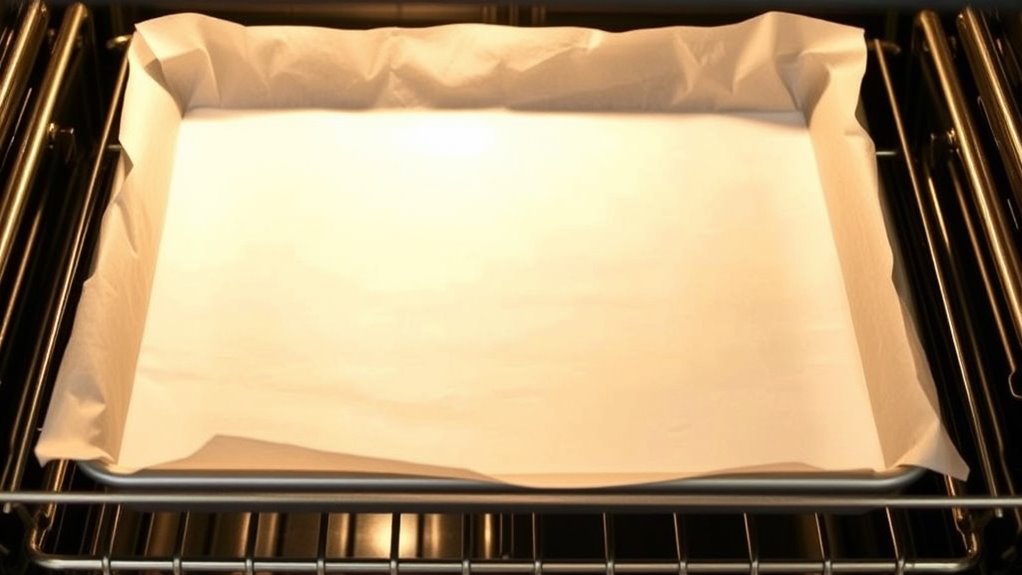
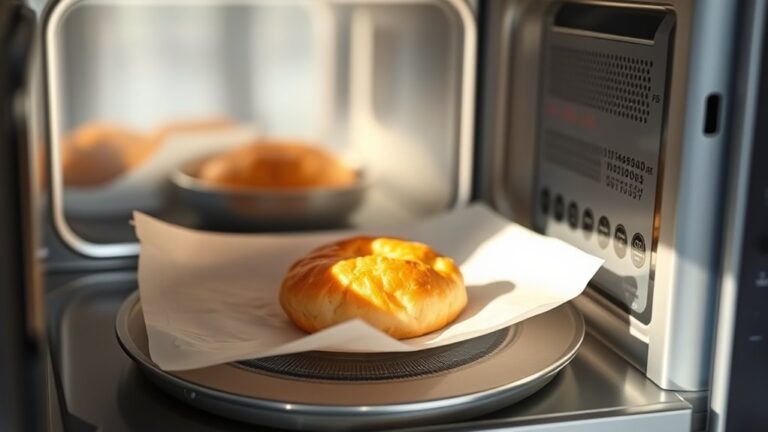
When you place parchment paper in the oven, make sure it lies flat and stays within the boundaries of your baking tray. This prevents the paper from curling up and touching the oven’s heating elements, which could cause burning.
Trim any excess paper so it doesn’t hang over the edges. Also, position the tray in the center of the oven to ensure even heat distribution.
Avoid placing parchment paper directly on oven racks, as it may slip and cause a fire hazard.
| Proper Positioning Tips | Why It Matters |
|---|---|
| Keep paper flat | Prevents curling and burning |
| Fit within tray edges | Avoids paper contact with heat |
| Center oven rack | Ensures even cooking |
| Don’t place on racks | Reduces fire risk |
Avoiding Common Mistakes When Using Parchment Paper
You’ll want to keep your oven temperature within safe limits to avoid burning parchment paper.
Placing the paper correctly on the baking tray helps prevent it from touching heating elements or flames.
Proper Oven Temperature Limits
Although parchment paper can withstand high heat, you should never exceed its recommended oven temperature limits to prevent burning or releasing harmful fumes. Most parchment papers are safe up to about 420°F (215°C).
If you push beyond this temperature, the paper can scorch, discolor, or even ignite. To stay safe, always check the packaging for the manufacturer’s specified maximum temperature.
If your recipe calls for higher heat, consider alternatives like silicone baking mats or greased pans. Remember, even if parchment looks fine initially, overheating can compromise its integrity and safety.
Staying within the recommended temperature guarantees your parchment paper performs well without posing risks. So, before preheating your oven, double-check those limits and adjust your cooking plan accordingly.
Correct Placement Techniques
Where should you place parchment paper to get the best results? Always lay it flat on your baking sheet or pan, making sure it fully covers the surface without hanging over the edges. You don’t want it curling up the sides or sticking out because that can cause uneven cooking or even catch on the oven elements.
If you’re lining a baking tray, smooth out any wrinkles to keep your food cooking evenly. And when you’re using parchment paper inside a cake pan, cut it to fit the bottom exactly. Then, just lightly grease the sides of the pan instead of lining them.
One more thing—never put parchment paper directly on the oven rack. It can sag, cause spills, or block the airflow, which isn’t good for your bake. Stick to these tips, and you’ll avoid common mistakes while making sure your baked goods cook evenly and safely!
Preventing Paper Burning
If parchment paper touches the oven’s heating elements or gets too close to an open flame, it can easily burn or catch fire. To prevent this, always trim the parchment to fit inside your baking pan without hanging over the edges.
Avoid placing parchment directly on the oven rack or bottom, where it’s more exposed to heat. Also, never use parchment paper at temperatures exceeding its recommended limit, usually around 420°F (215°C).
Keep an eye on your food while baking, especially if your oven has hot spots. Using heavy-duty parchment can offer extra protection, but don’t rely on it to prevent contact with heating elements.
Alternatives to Parchment Paper for High-Heat Cooking
When you need to cook at higher temperatures, parchment paper might not always cut it. You can switch to silicone baking mats, which handle heat well and are reusable.
Aluminum foil is another option, but be sure to use it correctly to avoid sticking or tearing. It’s pretty handy once you get the hang of it!
Silicone Baking Mats
Although parchment paper is great for many baking tasks, it can’t handle extremely high temperatures. That’s where silicone baking mats come in handy.
You can use these mats repeatedly for roasting, baking, or cooking at temperatures up to about 480°F (250°C), much higher than parchment paper’s limit. Just place the mat directly on your baking sheet, and it provides a non-stick surface without the risk of burning or smoking.
Silicone mats also distribute heat evenly, helping your food cook consistently. Plus, they’re easy to clean—just rinse or put them in the dishwasher.
If you often bake at high heat or want a reusable, eco-friendly option, silicone baking mats are a smart choice to replace parchment paper safely.
Aluminum Foil Options
How can you handle high-heat cooking without risking your parchment paper burning? Aluminum foil offers a great alternative, especially for temperatures above parchment’s safe limit (around 420°F).
You can use it to line baking sheets or wrap foods, but be cautious with acidic ingredients as foil can react. It’s sturdy and heat-resistant, making it ideal for broiling or roasting.
Here’s a quick comparison:
| Feature | Parchment Paper | Aluminum Foil |
|---|---|---|
| Max Temperature | ~420°F | 1200°F+ |
| Non-stick | Yes | No (unless coated) |
| Reactivity | None | Reacts with acids |
Use foil for high heat but avoid sticky baked goods since it lacks non-stick properties.
Tips for Reusing Parchment Paper Safely
Since parchment paper can often withstand multiple uses, you can save money and reduce waste by reusing it carefully. First, make sure the paper isn’t overly greasy or burnt; if it’s only lightly soiled, it’s usually fine for a second use.
Parchment paper often withstands multiple uses—just ensure it’s lightly soiled and not burnt before reusing.
Gently wipe off any crumbs or residue to avoid flavor transfer. Just be sure to avoid reusing paper that has come into contact with raw meat or fish to prevent cross-contamination.
Also, keep an eye on the oven temperature—reused parchment may be more prone to burning if exposed to high heat. And don’t forget to flatten the paper before reuse so it fits your baking tray properly.
Following these tips helps you get more mileage out of your parchment paper without compromising safety or food quality. It’s an easy way to be a bit more eco-friendly in the kitchen!
Conclusion
Now that you know how to handle parchment paper like a pro, you’re ready to bake without a hitch. Just remember, it’s like a trusty sidekick—helpful but with limits.
Keep it within its oven-safe temperature, place it properly, and avoid direct heat to prevent any mishaps. This means no touching the oven walls or flames.
With these tips, your baking will be smooth sailing. Your parchment paper will stay safe and reusable for many delicious adventures ahead.
So, when you’re wondering how do you put parchment paper in the oven safely, just think of it as a simple step that protects your baked goods and your oven. Follow these guidelines, and you’ll enjoy perfect results every time!