Can Paper Go in the Microwave?
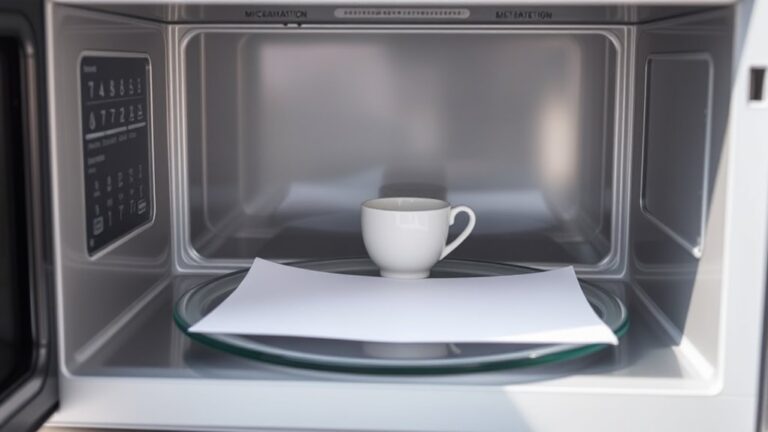
You can safely use plain paper like white paper towels, parchment, or wax paper in the microwave, as long as they’re free of prints, coatings, or metallic inks. These types of paper are microwave-friendly and won’t cause sparks or fires.
Just avoid newspaper, brown bags, or decorated papers that could spark or release harmful chemicals. It’s better to steer clear of anything printed or with metallic elements.
Use paper towels lightly dampened and don’t wrap food too tightly to prevent fire risk. Keeping the paper slightly moist helps avoid overheating.
If you want to discover safer options and tips for using paper or alternatives, there’s more helpful info ahead. Stick around to learn how to microwave your food safely with paper products!
Types of Paper Safe for Microwaving
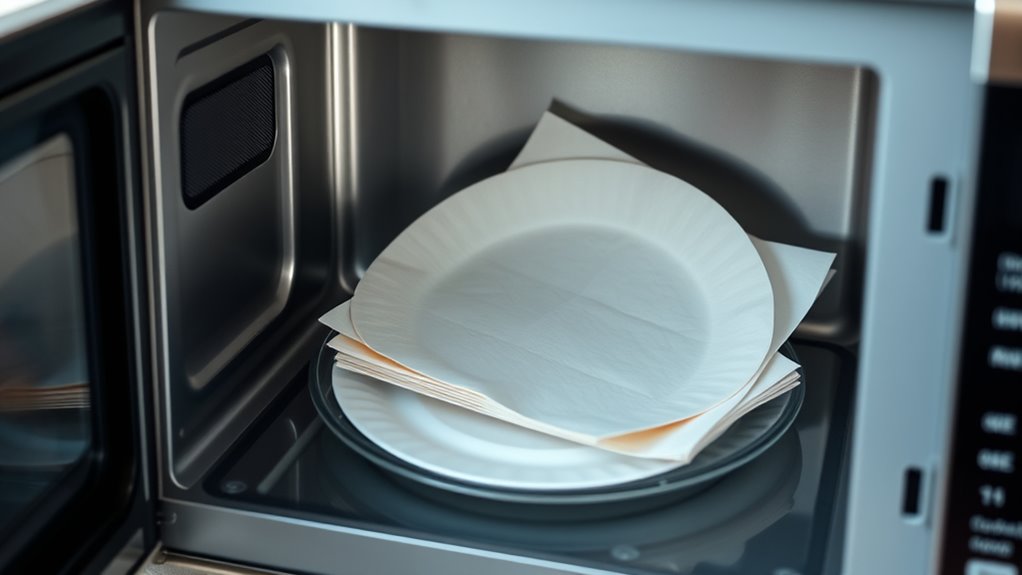
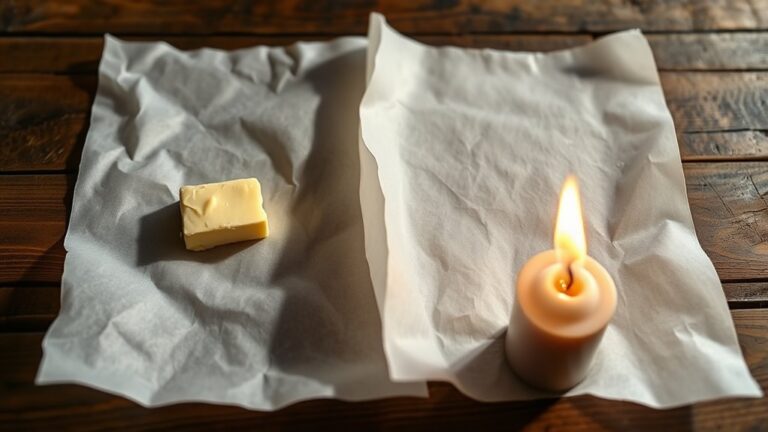
What kinds of paper can you safely use in the microwave? You can microwave plain white paper towels, parchment paper, and wax paper without much worry. These papers don’t contain metal or harmful coatings that might cause sparks or fires.
Plain paper towels are great for covering food to prevent splatters, while parchment paper works well for wrapping or lining microwave-safe dishes. Wax paper acts as a moisture barrier and is safe for short microwaving times.
However, always ensure the paper is free of prints, inks, or any decorative elements, as those can contain chemicals that might not be microwave-safe. Stick to unbleached or white, untreated paper products to avoid any risks.
Using these safe papers helps you heat food conveniently and cleanly. It’s a handy little tip that makes microwave cooking easier and less messy!
Paper Products to Avoid in the Microwave
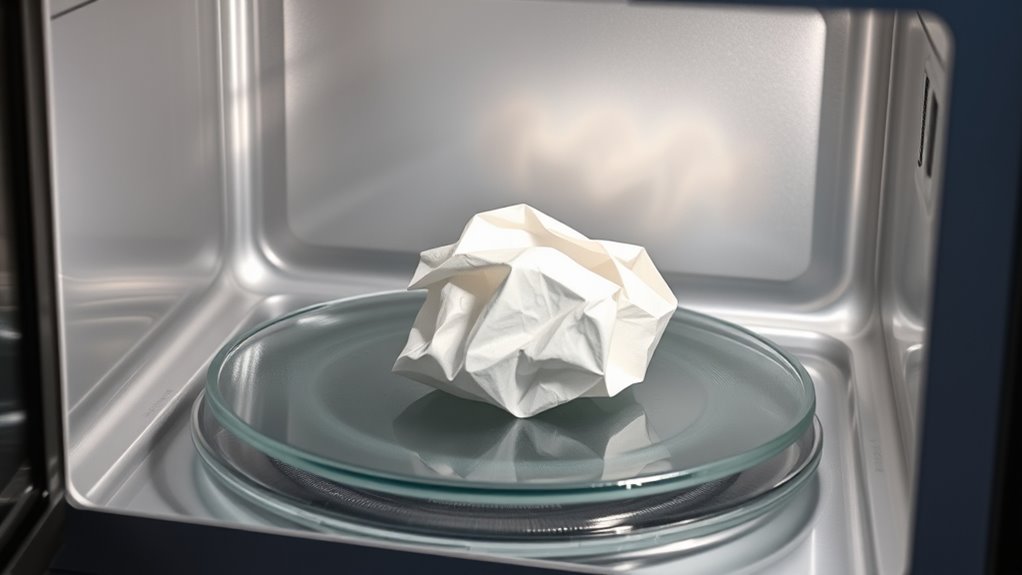
Although some paper products seem harmless, you should avoid microwaving items like newspaper, brown paper bags, and printed or decorated paper. Newspaper ink can release harmful chemicals when heated, and the paper itself may catch fire.
Avoid microwaving newspaper, brown bags, or decorated paper—ink and materials can release toxins or ignite.
Brown paper bags often contain materials not designed for microwave use, risking sparks or even flames. Printed or decorated paper sometimes has metallic inks or coatings, which can cause arcing and damage your microwave.
You also want to steer clear of waxed or laminated paper, as the coatings can melt or emit fumes. Avoid using paper with any adhesives or plastic elements, since these can melt or release toxic substances.
Sticking to plain, uncoated paper products keeps your microwave safe and your food uncontaminated.
How to Use Paper Towels and Napkins Properly
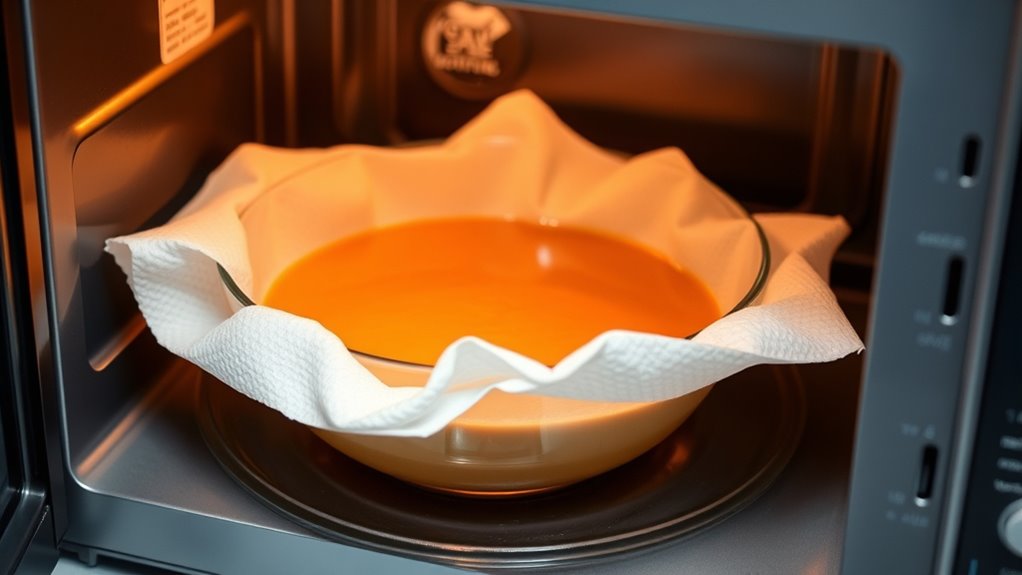
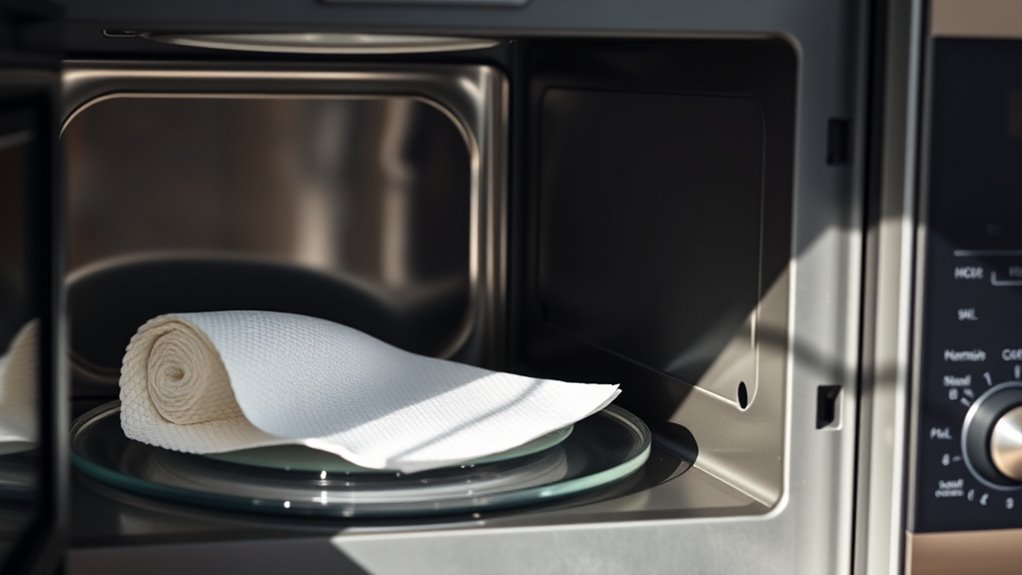
While some paper products pose risks in the microwave, paper towels and napkins can be safe and convenient when used correctly. To use them properly, always choose plain, unprinted varieties without metallic inks or coatings.
Place a paper towel or napkin over your food to prevent splatters and help retain moisture. But avoid wrapping food tightly, as this can trap steam and cause uneven heating.
Never let paper towels or napkins touch the microwave’s interior walls or heating elements. Use them for short heating times and keep an eye on your food to prevent overheating or burning.
Also, dampening a paper towel slightly before microwaving can help keep food moist and reduce the risk of the paper catching fire. With these tips, you’ll use paper towels and napkins safely in your microwave.
Risks of Microwaving Certain Paper Materials
You need to be careful with certain paper materials in the microwave because some can catch fire easily.
Papers with chemical coatings might release harmful fumes when heated. Knowing which types are safe can help you avoid accidents and health risks.
Paper Material Flammability
Since paper is composed of cellulose fibers, it can catch fire if exposed to high microwave temperatures for too long. When you microwave paper, especially thin or dry types like paper towels or napkins, they may heat unevenly, increasing the risk of ignition.
You should avoid microwaving paper products for extended periods or at high power settings. Using paper with moisture content, such as damp paper towels, reduces the chance of burning because the water absorbs some heat.
Additionally, thicker or denser paper materials like cardboard might smolder if overheated. To stay safe, always monitor any paper you microwave closely and never leave the microwave unattended.
Understanding paper’s flammability helps you prevent accidents and ensures safer microwave use. So, it’s better to be cautious when heating paper items in the microwave!
Chemical Coatings Danger
When microwaving paper materials, you need to be cautious about chemical coatings that can release harmful fumes or melt under heat. Many paper products, like some paper plates, cups, or takeout containers, have plastic or wax coatings to make them water-resistant.
These coatings aren’t designed to withstand microwave heat and can break down, releasing toxic chemicals into your food or air. If you use paper with unknown coatings, you risk contaminating your meal or causing unpleasant odors.
To stay safe, always check if the paper product is labeled microwave-safe. If it isn’t, avoid microwaving it. Choosing plain, uncoated paper towels or parchment paper reduces the risk of exposure to dangerous chemicals and helps keep your microwave experience safe and worry-free.
Tips for Safely Microwaving Food With Paper
Although microwaving food with paper can be convenient, it’s important to follow certain safety tips to prevent fires or contamination. First, only use plain, uncoated paper products like paper towels or parchment paper designed for microwave use.
Use only plain, uncoated paper like microwave-safe paper towels or parchment to avoid fires and contamination.
Avoid recycled paper or printed paper, as they may contain harmful inks or chemicals. Never microwave paper with metallic elements such as foil or staples, since they can spark and cause fires.
Keep the paper away from the microwave’s walls to avoid overheating. Use short intervals when microwaving and check the paper frequently to verify it isn’t overheating or burning.
Lastly, never reuse paper towels that have absorbed grease or food, as these can ignite more easily. Following these tips keeps your microwave use safe and effective.
Alternatives to Using Paper in the Microwave
If you want a safer option than paper, try microwave-safe containers made of glass or silicone. These materials heat evenly and won’t catch fire like some paper products might.
You can also use reusable microwave covers to keep your food moist without worrying about safety. They’re pretty handy and easy to clean too!
Microwave-Safe Containers
Since paper isn’t always the best choice for microwaving, you’ll want to use containers specifically designed for microwave use. These containers guarantee your food heats evenly and safely without the risk of sparks or harmful chemicals.
Here are three reasons to choose microwave-safe containers:
- Safety: They won’t release toxins or catch fire, unlike some papers or plastics.
- Durability: These containers withstand repeated heating without warping or melting.
- Convenience: Many come with lids that help retain moisture, preventing splatters and keeping your microwave clean.
Silicone and Glass Options
Why settle for paper when you can use silicone or glass containers in your microwave? Silicone is flexible, heat-resistant, and won’t leach harmful chemicals into your food. You can easily pop silicone lids or containers in the microwave without worrying about melting or warping.
Glass containers, especially those labeled microwave-safe, are another excellent choice. They distribute heat evenly, reducing hot spots and helping your food cook more consistently. Plus, glass won’t absorb odors or stains like paper might.
Both silicone and glass options are reusable, eco-friendly alternatives that save you money and reduce waste. Just make sure to check for any manufacturer guidelines before microwaving, and avoid sudden temperature changes to prevent cracking or damage.
These materials offer safer, more durable solutions than paper in the microwave. Give them a try—you might be surprised at how convenient and effective they are!
Reusable Microwave Covers
A reusable microwave cover offers a practical and eco-friendly alternative to paper products when heating your food. Unlike disposable paper towels or plates, these covers reduce waste and save you money over time.
They prevent splatters effectively, keeping your microwave clean without the hassle of constant scrubbing. Plus, they’re designed to withstand high heat safely, so you don’t have to worry about harmful chemicals leaching into your food.
Here’s why you’ll love using reusable microwave covers:
- They cut down on single-use waste, helping the environment.
- They keep your microwave spotless, saving you time and effort.
- They’re durable and easy to clean, lasting for years.
Switching to reusable covers is a smart, sustainable choice you won’t regret. Give it a try—you’ll wonder how you ever heated food without one!
Conclusion
You might be surprised to learn that about 70% of paper products are safe to use in the microwave when used correctly. By sticking to plain paper towels or napkins, you cut down on fire risks and chemical exposure.
Just avoid glossy or printed papers, and you’ll be good. Remember, using paper properly helps keep your food safe and your microwave in good shape.
So next time, choose wisely and heat confidently! Using microwave-safe paper products not only protects your food from contaminants but also prevents damage to your appliance. It’s an easy way to enjoy quick meals without worry. Keep these tips in mind, and you’ll be heating with peace of mind every time.