How to Safely Microwave a Paper Plate
To safely microwave a paper plate, start by picking one that’s labeled microwave-safe. Make sure it’s plain and doesn’t have any metallic trim or decorations. Those shiny edges might look nice, but they can cause sparks or even fires in your microwave.
Also, steer clear of coated or flimsy plates. They might melt or catch fire when heated, which is definitely something you want to avoid. Using a solid, sturdy paper plate is always the safer bet.
When you’re ready to heat your food, use medium power on your microwave. Heat in short bursts—think 30 seconds to 2 minutes—and check the plate frequently. This way, you can keep an eye on it and stop if it gets too hot or starts to look damaged.
If you notice the plate becoming too hot, or if it starts to warp or burn, stop the microwave right away. Safety first!
Keep these tips in mind, and you’ll find it’s easy to enjoy your microwave meals without worry.
Identifying Microwave-Safe Paper Plates
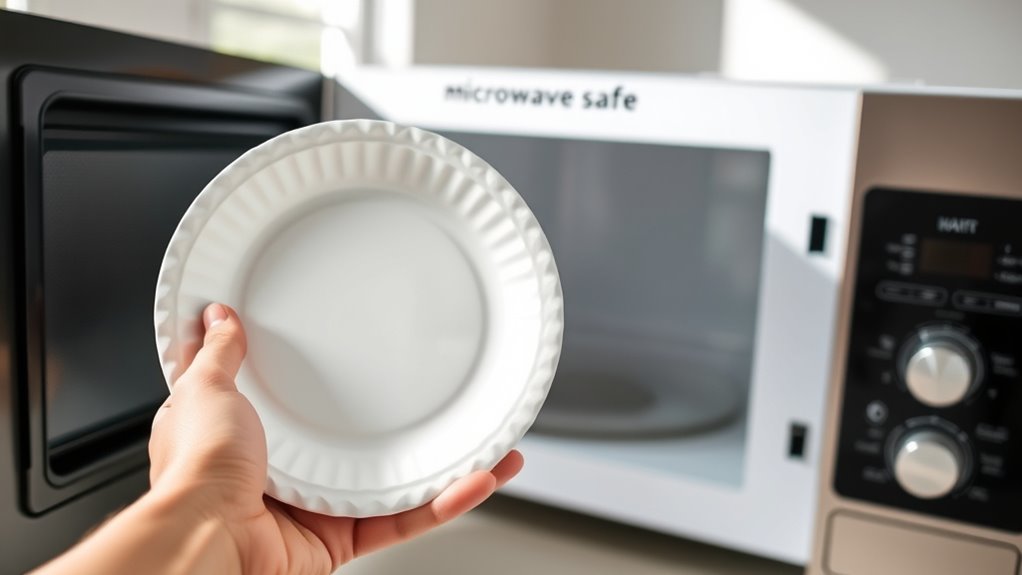
Before you heat food on a paper plate, you need to make sure it’s microwave-safe. Not all paper plates can handle microwave heat without issues.
Look for a label or symbol indicating microwave safety, often found on the packaging or the plate itself. Avoid plates with metallic trim or decorations—they can cause sparks and damage the microwave.
If the plate feels thin or flimsy, it might not withstand microwaving and could soak through or even ignite. Plain, white paper plates without any coatings are usually safe choices.
When in doubt, check the manufacturer’s instructions or opt for plates explicitly marked microwave-safe. Taking these steps helps prevent fires, melting, or chemicals leaching into your food, keeping both you and your microwave safe.
Preparing Your Paper Plate for Microwaving
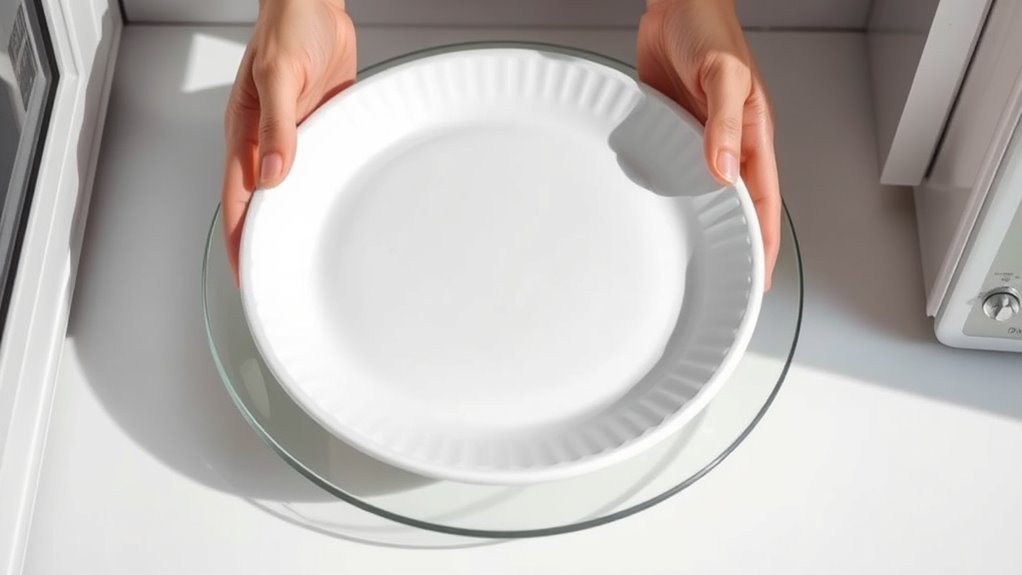
Before you microwave your paper plate, make sure it’s labeled microwave-safe to avoid any hazards. Check carefully for any metallic decorations like foil or shiny trims, as these can cause sparks or fires.
Taking these simple steps will help you heat your food safely and efficiently. It’s always better to be safe than sorry when dealing with microwaves!
Check for Microwave Safety
Although many paper plates seem safe for microwaving, you should always verify their microwave compatibility to avoid sparks, melting, or harmful chemicals leaching into your food. Start by checking the packaging or the bottom of the plate for a microwave-safe label or symbol.
If you don’t see any indication, it’s best to err on the side of caution and avoid using that plate in the microwave. You can also test the plate by microwaving it empty for 20 seconds; if it remains cool, it’s likely safe, but if it gets hot, it’s not suitable.
Always choose plates specifically designed for microwave use to ensure safety and prevent damage to both your plate and microwave. It’s a simple step, but it really helps keep things safe and hassle-free.
Avoid Metallic Decorations
Once you’ve confirmed your paper plate is microwave-safe, take a close look for any metallic decorations. Metallic rims, foil prints, or shiny accents can cause sparks and even fires when microwaved.
If you spot any metallic elements, don’t use that plate in the microwave. Instead, opt for a plain paper plate without any shiny details. Even small metal bits can damage your microwave or pose a safety hazard.
When in doubt, choose a simple, undecorated plate to keep things safe. Remember, avoiding metallic decorations helps prevent electrical arcing and ensures your food heats evenly without risk.
Always prioritize safety by inspecting your plate thoroughly before microwaving. This small step can save you from potential accidents and appliance damage.
Recommended Heating Times and Power Settings
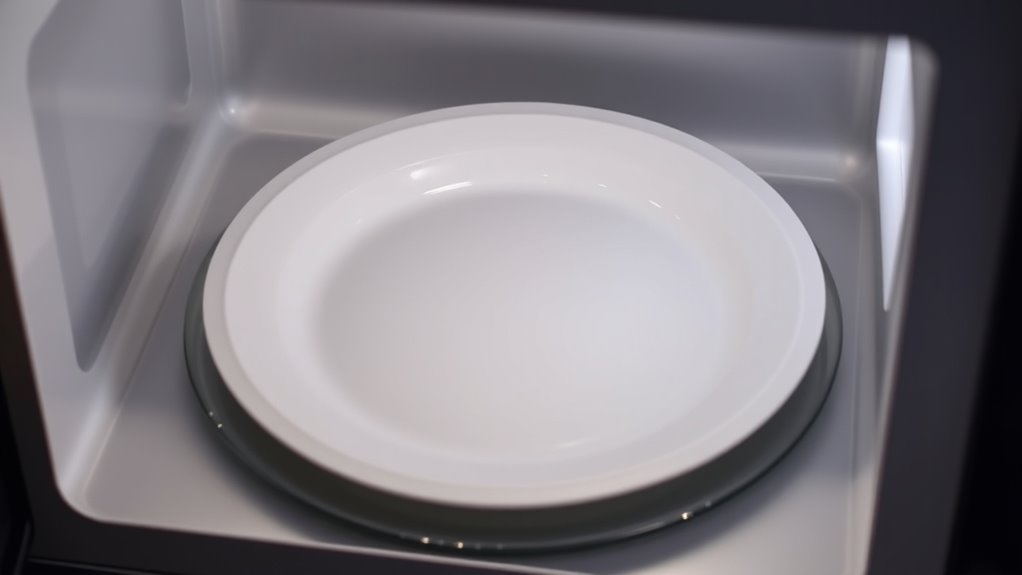
You’ll want to use medium or low power settings to prevent the paper plate from overheating. Heating times typically range from 30 seconds to 2 minutes, depending on your food’s moisture and quantity.
Always start with shorter intervals and adjust as needed to keep things safe. It’s better to heat in bursts than to risk overheating.
Optimal Power Levels
Since paper plates can vary in thickness and coating, selecting the right microwave power level is essential to prevent overheating or burning.
To keep your food safe and your plate intact, consider these tips:
- Use Medium or 50% power for most reheating tasks. This reduces the risk of plate scorching and uneven heating.
- Choose Low or Defrost settings when warming delicate items or thin paper plates to avoid overheating.
- Avoid High or Full power unless you’re microwaving very short bursts. Otherwise, this can cause rapid heat buildup and damage the plate.
Suggested Heating Durations
Although microwaving times can vary depending on your appliance and the food’s moisture content, following recommended heating durations and power settings helps prevent damage to paper plates while ensuring your meal heats evenly.
Generally, start by microwaving on medium power for 30 to 60 seconds. If your food needs more time, heat in 15- to 20-second increments to avoid overheating the plate.
Thin or lightweight paper plates may only handle short bursts, so monitor closely. For denser or moister foods, slightly longer heating is fine but keep the power at 50-70% to reduce the risk of scorching.
Always check the plate’s condition after heating; if it gets too hot or shows any signs of weakening, stop immediately. This cautious approach keeps your paper plate intact and your food warm.
Avoiding Common Microwave Paper Plate Hazards
When microwaving a paper plate, you need to be aware of potential hazards like overheating, chemical leaching, and fire risks. To stay safe, follow these key tips:
First, check for microwave-safe labels** — not all paper plates are designed for microwave use. Using non-microwave-safe plates** can release harmful chemicals or cause sparks. So, it’s really important to make sure your plate says it’s microwave-safe.
Next, avoid overheating. Don’t microwave plates for longer than recommended. Overheating can weaken the plate and increase the fire risk. Just keep an eye on the time and don’t go overboard.
Also, watch out for greasy or coated plates. Plates with plastic coatings or heavy grease may catch fire or melt. So, always choose plain, uncoated plates for microwaving. It’s a safer bet and keeps things simple.
Alternatives to Paper Plates for Microwaving
Wondering what to use instead of paper plates for microwaving? You’ve got several safe and practical options. Microwave-safe glass or ceramic plates are reliable choices; they won’t warp or release harmful chemicals.
Silicone mats also work well, offering a flexible, reusable surface that’s easy to clean. If you prefer disposable options, look for microwave-safe plastic containers labeled as such, but avoid those not intended for microwave use.
Avoid metal or paper products with metallic accents, as they can spark. Using these alternatives helps you prevent hazards like fires or chemical leaching.
Plus, many are more eco-friendly and durable than paper plates. So next time you heat your food, consider these options for safety and convenience.
Cleaning Up After Microwaving Paper Plates
Since paper plates can become flimsy and messy after microwaving, cleaning up requires a bit of care to avoid spills and stains. You’ll want to handle the plate gently and clean up any drips quickly.
Paper plates get flimsy and messy in the microwave, so handle gently and clean drips promptly to avoid spills.
Here’s how to keep things tidy:
- Dispose Carefully: If the plate is soggy or has absorbed food oils, throw it away promptly to prevent leaks.
- Wipe Surfaces: Use a damp cloth to clean your microwave’s interior if any food splattered during heating.
- Use a Tray: Next time, place the paper plate on a microwave-safe tray to catch any spills and make cleanup easier.
Conclusion
Microwaving a paper plate is like steering a gentle river—you just need the right guide. By choosing microwave-safe plates, prepping them properly, and sticking to recommended times and power settings, you’ll avoid hazards and keep your food safe.
If you want, alternatives can be your backup raft. Remember to clean up afterward to keep things flowing smoothly.
With these steps, you’ll microwave confidently every time, without a hitch. Always check the label to ensure the paper plate is microwave-safe, and never use plates with metallic trim or decorations. Keeping these tips in mind helps you safely heat your food without worrying about fires or harmful chemicals. So next time you’re in a hurry, grab that microwave-safe paper plate and enjoy a quick, safe meal!