How You Can Get a Pap Smear During Your Period
You can get a pap smear during your period by scheduling with your healthcare provider and letting them know you’re menstruating. Light bleeding usually won’t prevent the test, but heavy flow might mean rescheduling.
Avoid douching, creams, or sex 24-48 hours before your appointment for the best sample. The provider will adjust the procedure to minimize discomfort and ensure accuracy.
Keep calm and communicate any concerns during the exam. To understand more about preparation and what to expect, keep exploring.
Understanding the Importance of Pap Smears
Although you might find the idea uncomfortable, getting a pap smear is an essential step in maintaining your cervical health. This simple test helps detect abnormal cells on your cervix early, before they can develop into cervical cancer.
By scheduling regular pap smears, you’re taking control of your health and giving yourself the best chance to catch any issues early. It’s a quick procedure, usually done during a routine pelvic exam, and it provides critical information about your cervical condition.
Even if you feel fine, abnormal changes can occur without symptoms. So, staying consistent with your pap smears means you’re proactive, not reactive.
Can You Have a Pap Smear While Menstruating?

Wondering if you can get a pap smear while you’re on your period? The short answer is yes, you can. Many healthcare providers say it’s possible to have a pap smear during menstruation, though some prefer to avoid it due to potential challenges.
Menstrual blood might make it harder to collect a clear sample, which could affect test accuracy. However, if your period is light and you’re comfortable, your provider can often still perform the test.
If your bleeding is heavy, they might suggest rescheduling to ensure the best results. Ultimately, it’s your choice, so don’t hesitate to discuss your situation with your healthcare professional to decide the best timing for your pap smear.
How to Prepare for a Pap Smear During Your Period
If you’re planning to get a pap smear during your period, taking a few simple steps can help make certain the process goes smoothly and the results are accurate. First, wear comfortable, easily removable clothing to simplify the exam.
Bring a sanitary pad or clean tampon for after the appointment to stay fresh. Avoid douching, using vaginal creams, or having sexual intercourse 24 to 48 hours before your test, as these can affect results.
It’s also helpful to inform your healthcare provider that you’re menstruating; they may adjust the procedure accordingly. Lastly, stay relaxed and ask any questions beforehand to ease anxiety.
What to Expect During the Pap Smear Appointment
Knowing how to prepare sets you up for a smoother experience when you arrive for your pap smear during your period.
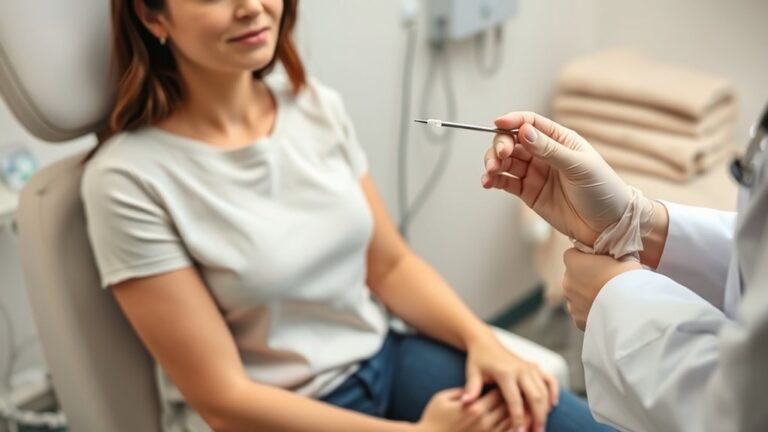
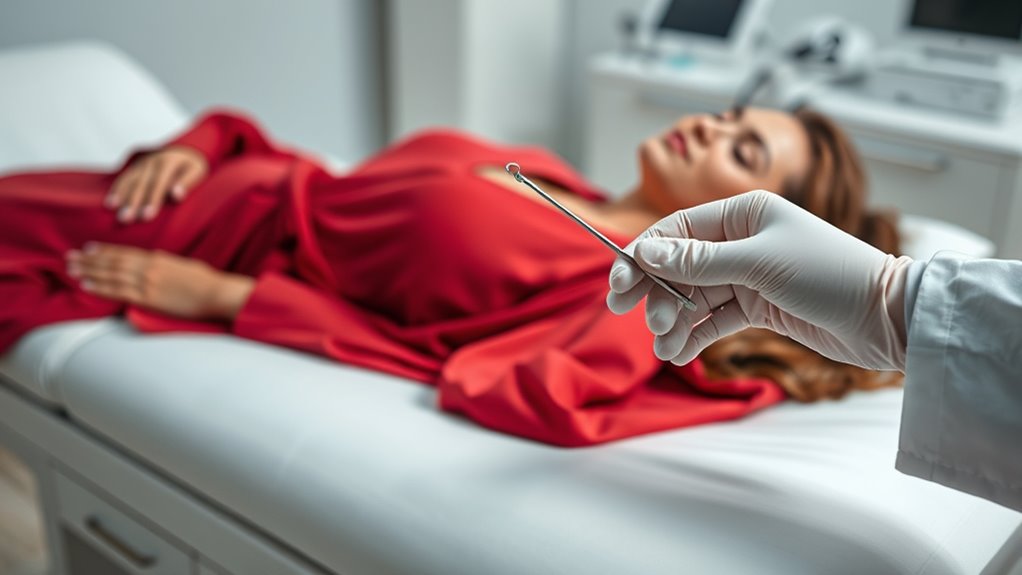
When you get to the appointment, the healthcare provider will ask about your menstrual cycle and any symptoms. You’ll lie on an exam table and place your feet in stirrups.
The provider gently inserts a speculum to open the vaginal walls, which might feel a bit cold or uncomfortable but should not be painful. Then, they use a small brush or spatula to collect cells from your cervix.
If there’s light bleeding, it’s normal and expected during your period. The entire process usually takes just a few minutes.
Afterward, the provider will remove the speculum, and you can get dressed and discuss when to expect your results.
Tips for Reducing Discomfort and Anxiety
You can ease your discomfort and anxiety by practicing simple relaxation techniques like deep breathing before and during the exam.
Don’t hesitate to communicate openly with your provider about any concerns or sensations you’re experiencing. Staying calm and keeping the lines of communication open helps make the process smoother for you.
Relaxation Techniques
Although getting a Pap smear during your period can feel uncomfortable, practicing relaxation techniques can help ease both physical discomfort and anxiety. Start by taking slow, deep breaths—inhale through your nose, hold for a few seconds, then exhale slowly through your mouth.
This calms your nervous system and reduces tension. You can also try progressive muscle relaxation: tense each muscle group for a few seconds, then release. This helps your body feel more at ease.
Visualizing a calm, peaceful place can distract your mind from discomfort. Listening to soothing music or guided meditation before and during the appointment can also lower stress levels.
These simple techniques can make the experience more manageable and help you stay relaxed throughout your Pap smear.
Communicate With Provider
Relaxation techniques can set the stage for a smoother Pap smear, but clear communication with your healthcare provider plays a big role in reducing discomfort and anxiety too.
Before the appointment, tell your provider that you’re on your period and share any concerns you have. Don’t hesitate to ask questions about the procedure or express any discomfort during the exam.
Your provider can adjust their approach, explain each step, and offer reassurance to help you feel more at ease. If you feel pain or need a break at any point, speak up immediately.
Interpreting Your Pap Smear Results After Testing on Your Period
When your Pap smear is done during your period, the presence of blood can sometimes affect how the results are interpreted. Blood can obscure cervical cells, making it harder for the lab to get a clear reading.
This might lead to inconclusive or unclear results, so your provider may suggest repeating the test once your period ends. However, many labs are experienced in handling samples collected during menstruation and can still provide accurate interpretations.
If your results come back abnormal or unclear, don’t panic—your doctor will guide you on next steps, which might include follow-up testing. Always communicate openly with your provider about your cycle timing, so they can consider it when reviewing your results and advising on the best course of action for your health.
Conclusion
Remember, getting a pap smear during your period isn’t a roadblock but a bridge to proactive health. You might feel hesitant, but don’t let timing delay your care—your body’s rhythm shouldn’t dictate your well-being.
Like a river that flows regardless of the season, your commitment to regular screenings keeps you moving toward peace of mind. Embrace the process, knowing each test is a step closer to protecting your future self.
Getting a pap smear during your period is totally doable and important. Don’t skip your appointment just because of your cycle. Staying on top of cervical health screenings helps detect issues early and keeps you in control of your health. So go ahead and schedule that pap smear—your well-being deserves it, no matter the time of the month.