How to Choose Between Aluminum Oxide and Garnet Paper Using 3 Key Factors
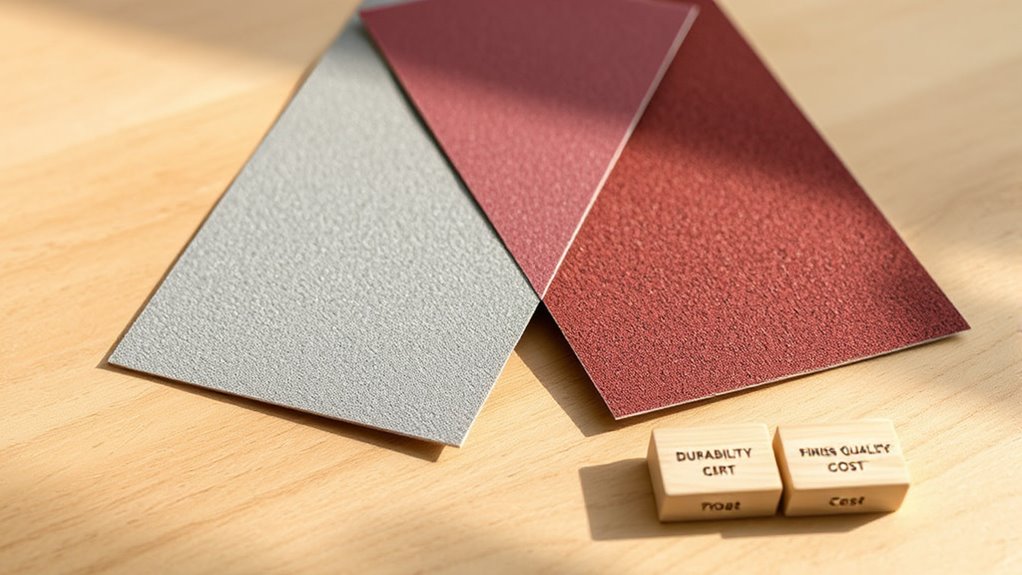
When choosing between aluminum oxide and garnet paper, it’s important to consider three key factors: durability, surface finish, and cost. Both abrasives have their strengths and are suited for different types of sanding projects. Knowing these differences helps you pick the right sandpaper to get the job done efficiently and with the best results.
Aluminum oxide paper is known for its durability. It lasts longer and works well on tough materials and with power tools. So, it’s perfect for heavy-duty projects where you need sanding that can keep up with more demanding tasks.
On the other hand, garnet paper wears down faster but gives a finer surface finish. It’s ideal for hand sanding, especially on softwoods where a smooth finish is key. Garnet is also more budget-friendly but doesn’t hold up as long as aluminum oxide.
While aluminum oxide might cost more upfront, it usually offers better value over time. Keep these factors in mind, and you’ll be able to match the right abrasive to your project needs with confidence.
Durability Comparison: Aluminum Oxide vs. Garnet
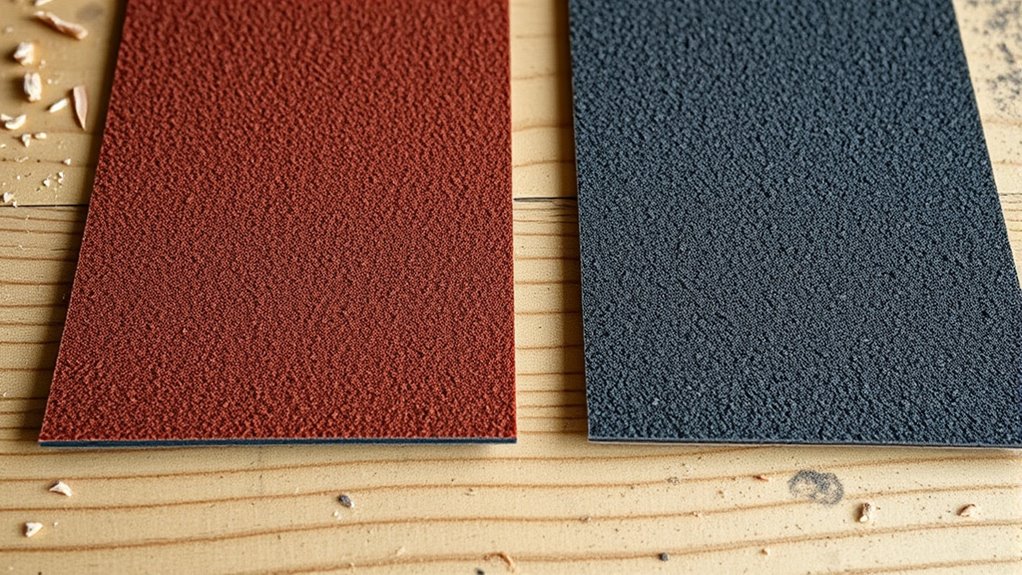
Although both aluminum oxide and garnet paper serve sanding purposes, aluminum oxide tends to last longer under heavy use. When you’re sanding tougher materials or working on larger projects, aluminum oxide’s durability helps maintain its abrasive qualities without wearing down quickly.
Garnet paper, on the other hand, is softer and wears out faster, especially if you apply significant pressure or sand rough surfaces. You’ll find garnet excels at finer tasks but won’t hold up as well over time compared to aluminum oxide.
Surface Finish Quality and Application Suitability
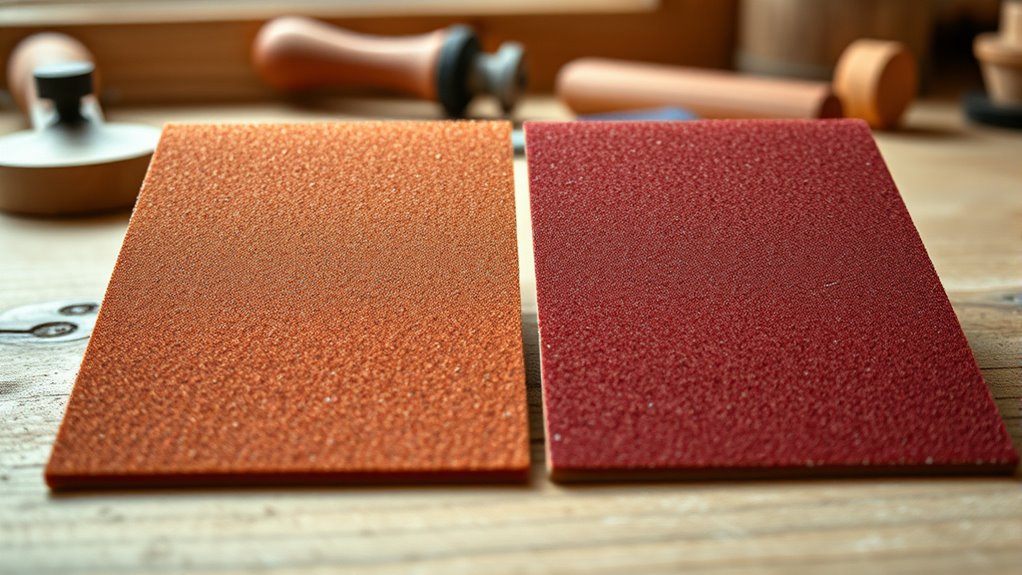
While aluminum oxide offers greater durability, the quality of the surface finish you want plays a big role in choosing between these two abrasives. You’ll find aluminum oxide ideal for rough sanding and preparing tougher surfaces, while garnet excels at finer, smoother finishes on softer woods.
Aluminum oxide is durable for rough sanding; garnet shines with smooth, fine finishes on soft woods.
Consider these factors:
- Surface Type: Aluminum oxide suits hardwoods and metals; garnet works best on softwoods and delicate surfaces.
- Finish Smoothness: Garnet provides a finer, more polished finish without deep scratches.
- Application: Aluminum oxide handles aggressive material removal; garnet is perfect for final sanding stages.
- Tool Compatibility: Aluminum oxide is great for power sanding; garnet performs well with hand sanding.
Cost Analysis and Value for Money
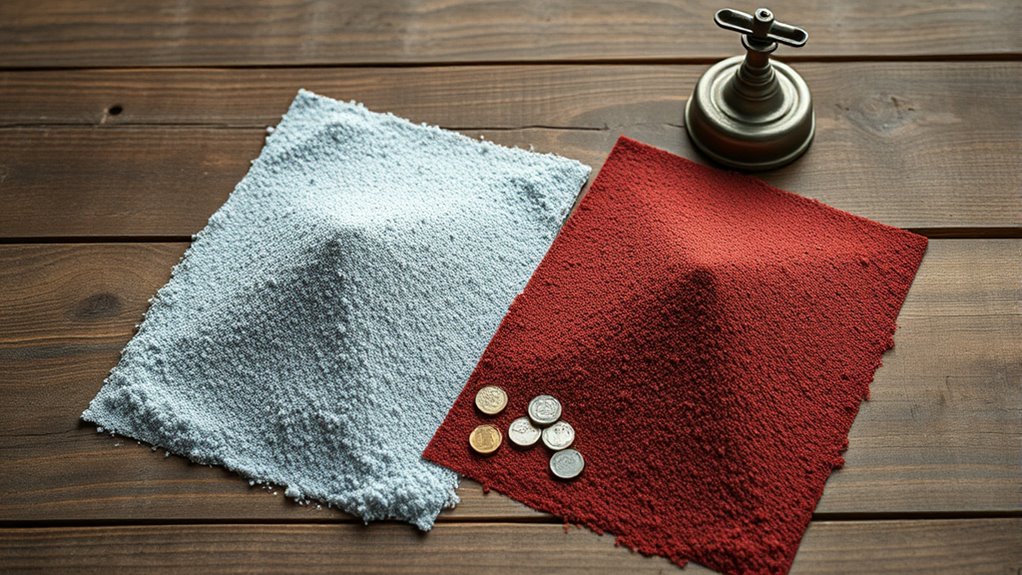
Because your budget impacts your choice, understanding the cost differences between aluminum oxide and garnet paper helps you get the best value for your money. Aluminum oxide paper typically costs more upfront but lasts longer, meaning you replace it less often.
Garnet paper is cheaper initially but wears out faster, leading to more frequent purchases. If you’re tackling heavy-duty projects or working with harder materials, aluminum oxide’s durability justifies the higher price.
For light sanding or softer woods, garnet paper offers a budget-friendly option without sacrificing quality. Consider how often you’ll sand and the materials involved to balance initial costs with longevity.
Conclusion
Choosing between aluminum oxide and garnet paper is like picking the right brush for your masterpiece. Aluminum oxide stands tough, ready to endure, while garnet offers a softer touch for finer finishes.
Think about durability, the surface you want, and your budget’s rhythm. When you blend these factors, you’ll find the perfect grit to polish your project to perfection—turning rough edges into a smooth symphony of craftsmanship.
Choosing the right sanding paper means balancing aluminum oxide’s long-lasting grit with garnet’s finer finish. Consider your project’s surface and your budget to decide what works best. With the right choice, your work will shine, reflecting quality and care in every stroke. So, choose wisely and let your craft stand out beautifully.