Can Wax Paper Go in the Oven?
You shouldn’t put wax paper in the oven because its wax coating melts at around 200°F and can catch fire at typical baking temperatures.
Wax paper is great for wrapping and lining during cold prep but isn’t designed for heat.
If you need a heat-safe option, parchment paper or foil are much better choices.
Wondering why wax paper isn’t oven-safe and what alternatives work best? Keep exploring to find out more.
What Is Wax Paper Made Of?
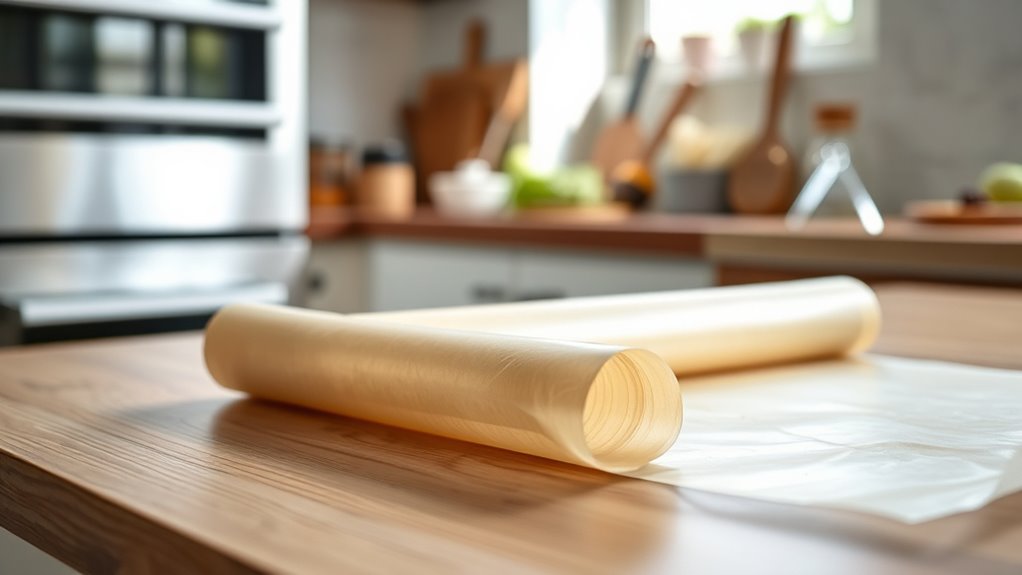
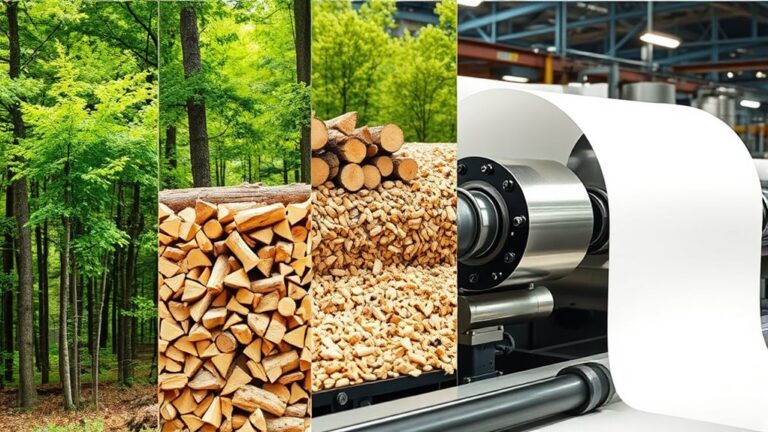
Have you ever wondered what wax paper is made of? It’s basically regular paper coated with a thin layer of wax, usually paraffin or soybean wax. This wax coating gives the paper its unique properties, like being non-stick and moisture-resistant.
When you handle wax paper, you’ll notice it feels slightly slick and shiny compared to ordinary paper. The wax acts as a barrier, preventing food from sticking and keeping moisture out. That’s why it’s popular for wrapping sandwiches or lining baking sheets for no-bake treats.
However, since wax paper is coated with a flammable substance, it’s not suitable for use with direct heat. So, it’s important to understand its makeup to use it safely and effectively in your kitchen tasks.
Heat Resistance of Wax Paper
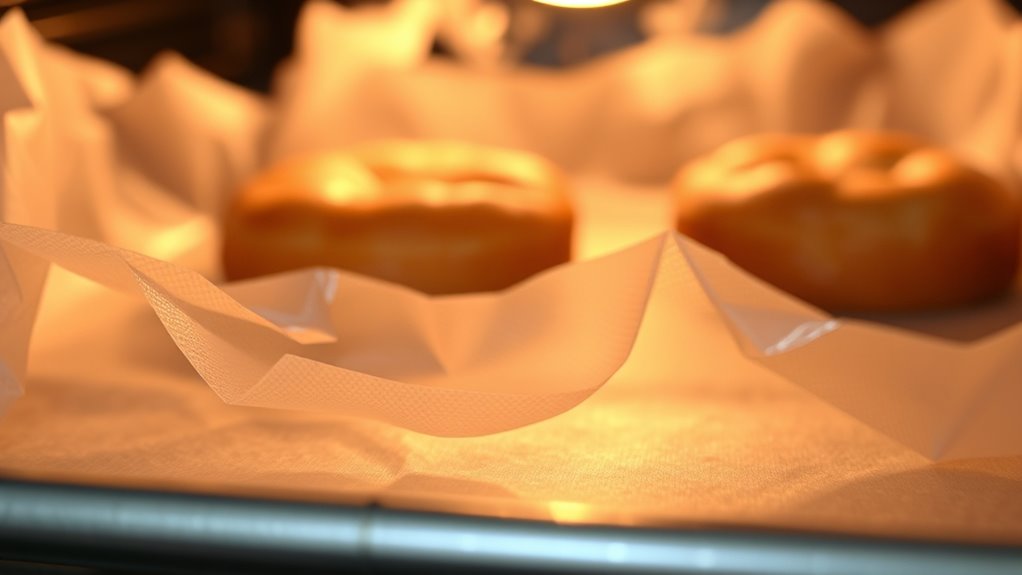
Since wax paper is coated with flammable wax, it can’t handle high temperatures well. When you expose it to heat above about 200°F (93°C), the wax starts to melt. The paper may even catch fire if the temperature rises further.
You should never put wax paper directly in the oven because it can smoke, burn, or stick to your food.
Keep in mind these key points about wax paper’s heat resistance:
- Melts around 200°F (93°C)
- Ignites easily at higher temperatures
- Not safe for baking or roasting
- Suitable only for cold or room temperature uses
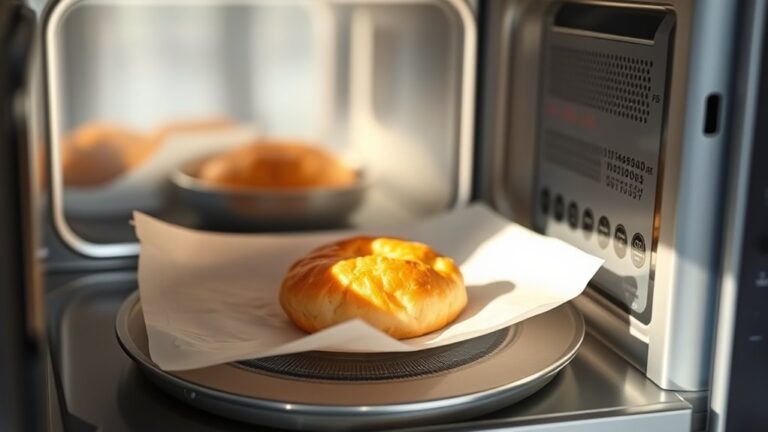
- Can be used in the microwave briefly if not touching food
Understanding wax paper’s limits helps you avoid kitchen mishaps and keeps your cooking safe. So, it’s best to use it only when you’re sure the temperature won’t get too hot.
Differences Between Wax Paper and Parchment Paper
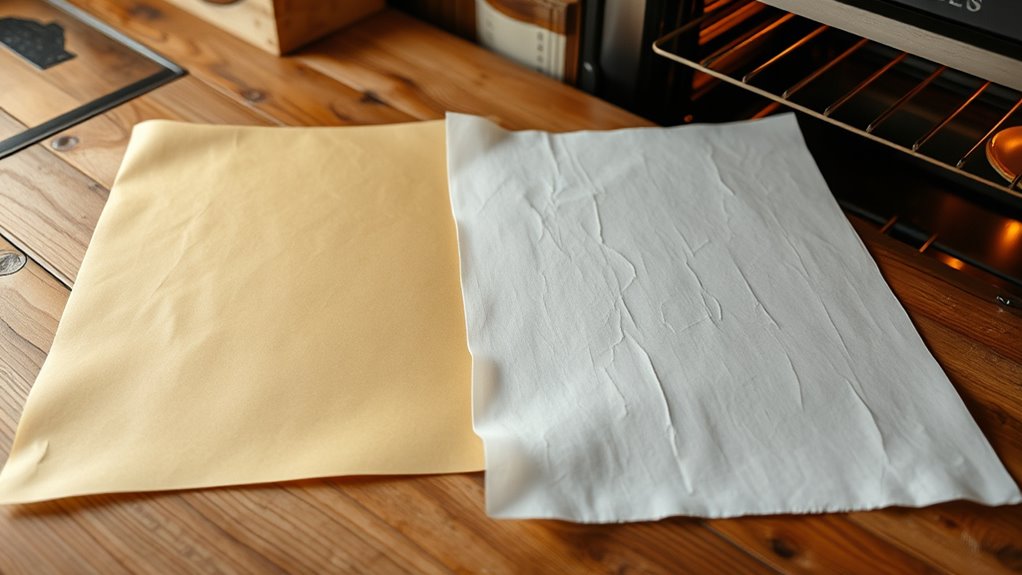
How do wax paper and parchment paper differ when it comes to kitchen use? Wax paper is coated with a thin layer of wax, making it moisture-resistant but not heat-resistant. You’ll find it great for wrapping food, lining countertops, or preventing sticking when rolling out dough.
Parchment paper, on the other hand, is treated with silicone, which gives it excellent heat resistance. You can safely use parchment paper in the oven for baking or roasting without worrying about it melting or catching fire.
While both papers are non-stick, parchment paper handles heat up to around 420°F, making it suitable for most oven tasks. Wax paper’s coating can melt or smoke under heat, so it’s best reserved for cold or room-temperature uses in the kitchen.
Risks of Using Wax Paper in the Oven
Although wax paper works well for many kitchen tasks, it’s not designed to withstand oven heat. Using wax paper in the oven can lead to several risks you should be aware of.
The wax coating can melt, smoke, or even catch fire, creating a hazardous situation. Plus, melted wax might transfer to your food, which can affect taste and safety.
You could also damage your cookware or oven if wax drips and burns. Here are some specific risks to keep in mind:
- Wax paper can ignite at temperatures as low as 420°F (215°C).
- Melting wax produces unpleasant smoke and odors.
- Fire hazards increase if wax paper directly contacts heating elements.
- Wax residue can stick to baking trays or pans.
- Food contamination may result from melted wax mixing with ingredients.
Safe Alternatives to Wax Paper for Oven Use
When you need to line your baking sheets or wrap food for the oven, choose parchment paper or aluminum foil instead of wax paper to guarantee safety and effectiveness. Parchment paper is heat-resistant, non-stick, and perfect for baking or roasting without the risk of melting or catching fire.
It handles temperatures up to around 420°F (215°C), making it ideal for most oven tasks. Aluminum foil, on the other hand, can withstand even higher temperatures and is great for wrapping food to retain moisture or for lining pans to simplify cleanup.
Both alternatives provide reliable, oven-safe options that protect your cookware and ensure your food cooks evenly. So, avoid wax paper in the oven and opt for these materials to keep your cooking safe and hassle-free.
Tips for Using Wax Paper in the Kitchen
You should know wax paper can’t handle high heat, so avoid using it in the oven. Instead, reach for parchment paper or aluminum foil when cooking or baking.
Keeping these alternatives in mind helps you stay safe and get the best results. It’s a simple swap that makes a big difference!
Wax Paper Heat Limits
How hot can wax paper safely get before it becomes a problem? Wax paper is coated with a thin layer of wax, usually paraffin, which starts to melt around 120°F (49°C). It’s not designed to withstand high oven temperatures and can smoke, catch fire, or transfer waxy residue if exposed to heat above this point.
To use wax paper safely, keep these limits in mind:
- Avoid placing wax paper directly in the oven or on hot surfaces.
- Use it only for cold prep tasks like wrapping food or lining countertops.
- Don’t expose it to temperatures above 200°F (93°C).
- Never use wax paper under a broiler or on a baking sheet in the oven.
- If you need heat resistance, opt for parchment paper or foil instead.
Stay cautious to prevent accidents and keep your kitchen safe. It’s always better to be safe than sorry when dealing with heat and wax paper!
Alternative Cooking Papers
Although wax paper isn’t suitable for high-heat cooking, you can still use it effectively for many kitchen tasks. When you need to bake or roast, switch to parchment paper or aluminum foil instead.
Parchment paper withstands oven temperatures up to about 420°F, making it perfect for lining baking sheets or wrapping food. Aluminum foil offers even higher heat resistance and is great for covering dishes or creating packets.
Wax paper works best for non-heat applications like wrapping sandwiches, covering countertops during messy prep, or separating layers of baked goods for storage. By choosing the right paper, you’ll keep your food safe and your kitchen efficient.
Always double-check the packaging to verify you’re using the appropriate paper for your cooking method. It’s a simple step that can save you from a kitchen mishap!
Conclusion
You shouldn’t put wax paper in the oven because the heat can melt the wax and even cause it to smoke or catch fire.
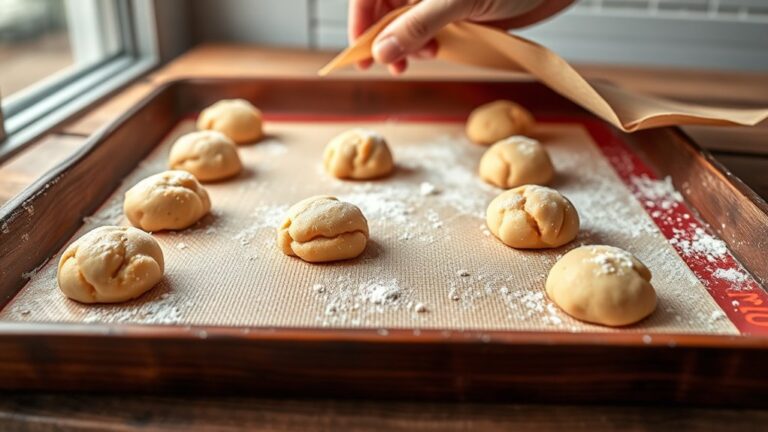
For example, imagine baking cookies and seeing your wax paper start to smoke—definitely not what you want! Instead, use parchment paper, which can handle high temperatures safely.
By choosing the right paper, you’ll keep your kitchen safe and your baked goods perfect every time. Remember, wax paper is great for wrapping food or lining surfaces but not for baking.
So, when it comes to oven use, always opt for parchment paper instead of wax paper to avoid any fire hazards or ruined treats. This simple switch makes all the difference in safe and successful baking.