Do Paper Plates Have Gluten and How to Determine It
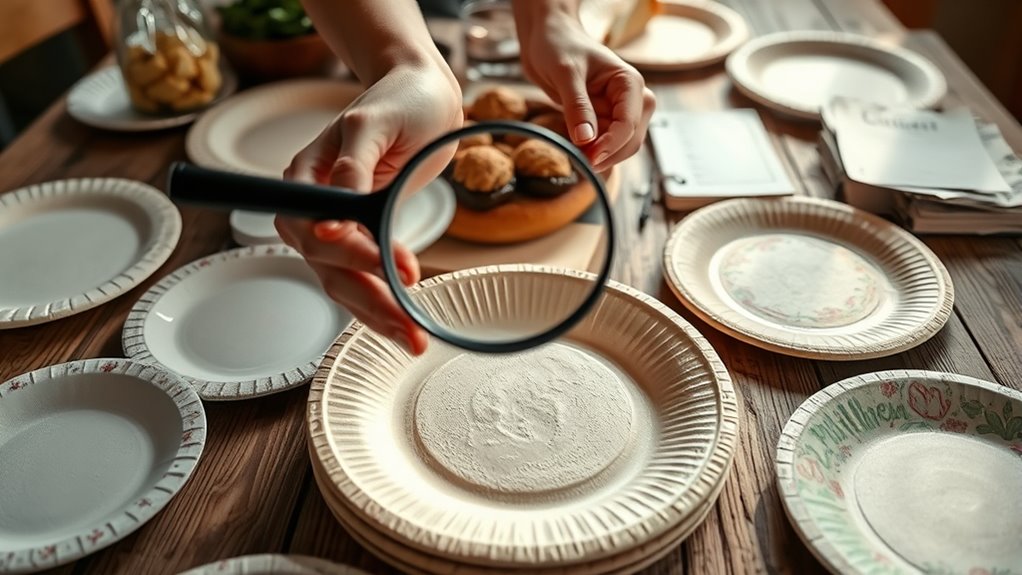
Most paper plates are naturally gluten-free since they’re made from wood pulp. However, some may contain wheat-based adhesives or coatings, which can introduce gluten.
To be sure, look for plates labeled gluten-free or with certifications like GFCO. Avoid decorated or coated plates unless you’ve verified they’re safe. Always check packaging for any gluten warnings to stay on the safe side.
Handling plates properly also helps prevent gluten cross-contact. If you want to confidently choose safe options and avoid hidden gluten risks, keep exploring how to identify and use gluten-free paper plates effectively. It’s all about being informed and cautious!
Understanding the Composition of Paper Plates
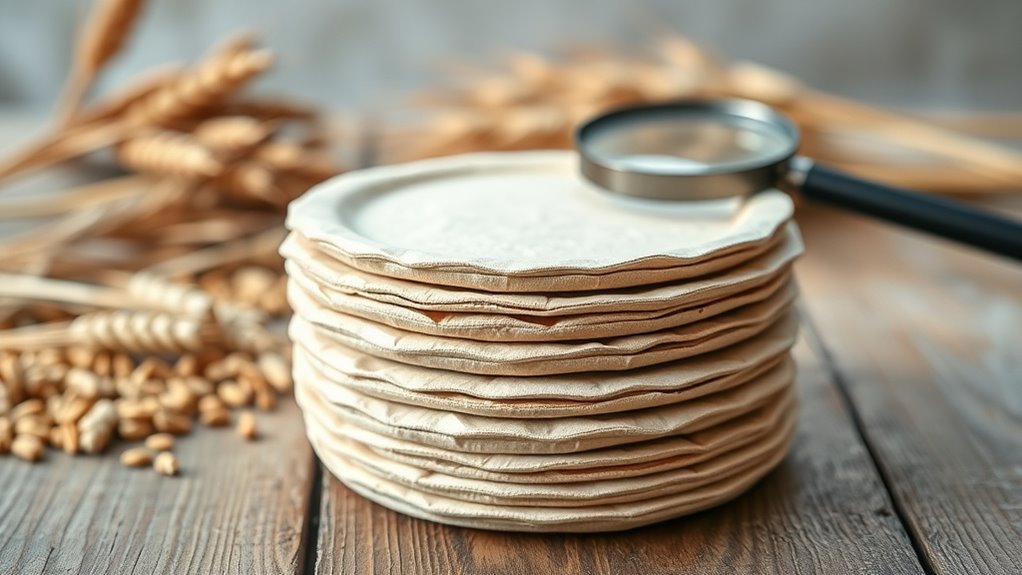
Although paper plates seem simple, their composition can vary widely depending on their intended use. You’ll find that most paper plates are made from wood pulp, pressed and coated for durability and moisture resistance.
Some have a thin plastic lining to prevent leaks, while others might include a wax coating. The quality and thickness of the paper also differ, depending on whether the plate is designed for light snacks or heavy meals.
You should know that additives like adhesives, dyes, and treatments can be part of the mix to enhance strength or appearance. Understanding these basic materials helps you assess what’s in your paper plate and whether it suits your needs, especially if you have specific dietary concerns or allergies.
Potential Sources of Gluten in Paper Plates
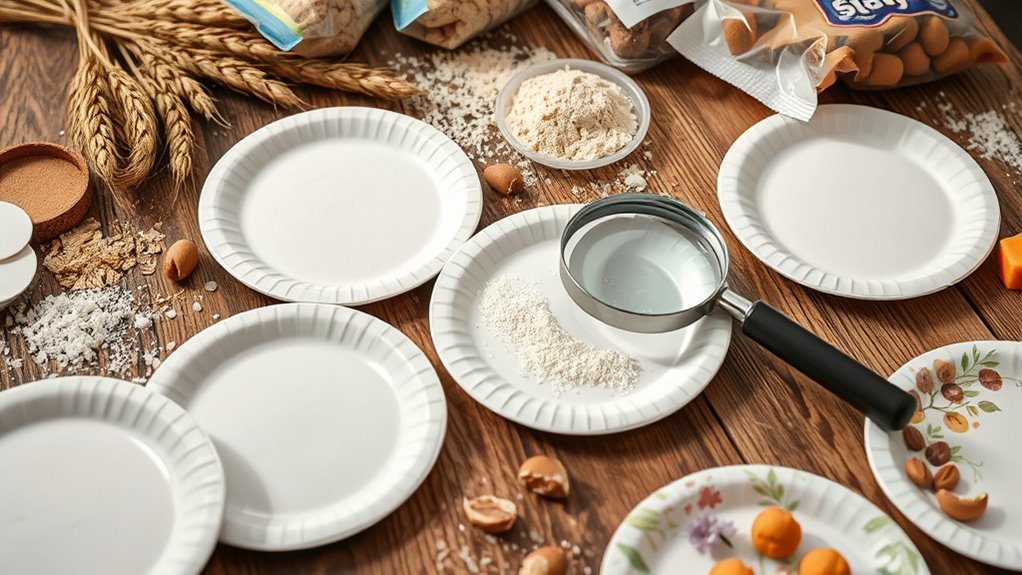
Knowing what goes into your paper plates can help you identify any hidden ingredients that might affect your health. While most paper plates are made from wood pulp, some manufacturers use additives or binders that could contain gluten.
Understanding paper plate ingredients helps you spot hidden gluten that may impact your health.
For example, starches derived from wheat might be used as adhesives or coatings to improve plate strength and moisture resistance. Also, some decorative prints or textures on plates may involve gluten-containing substances.
If you have gluten sensitivity or celiac disease, it’s really important to check product labels or contact manufacturers directly to confirm whether gluten is present. Ingredient transparency can vary, so you can’t just assume all paper plates are gluten-free.
Being proactive like this helps you avoid unexpected gluten exposure through these potential sources. It’s always better to be safe than sorry when it comes to your health!
Risks of Cross-Contamination With Gluten
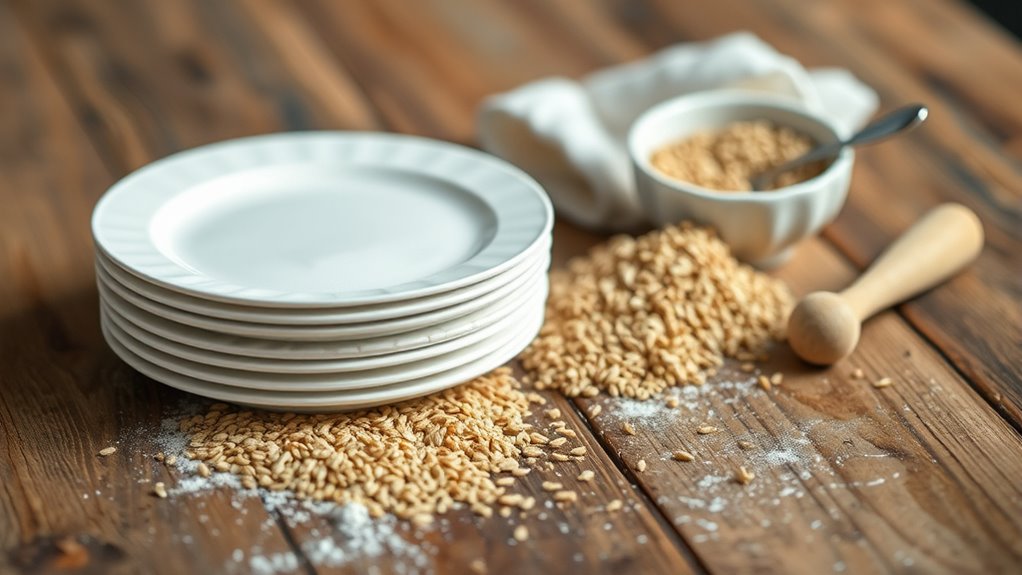
When you use paper plates that have been in contact with gluten-containing foods, you risk cross-contamination that can trigger reactions if you have gluten sensitivity or celiac disease. Even if the plate itself is gluten-free, crumbs or residue from gluten items can transfer to your food.
This risk increases in shared spaces like parties or potlucks where plates might be reused or stacked together. So, it’s really important to be careful about what surfaces your gluten-free foods touch.
To avoid exposure, you should always use clean, uncontaminated plates and avoid placing gluten-free foods on surfaces that previously held gluten-containing items. Being vigilant about cross-contact helps protect your health and prevents unexpected gluten ingestion.
Identifying Gluten-Free Paper Plate Options
When choosing gluten-free paper plates, you’ll want to check the materials carefully since some may contain wheat-based additives. Look for clear certifications and labels that confirm the product is gluten-free to avoid any hidden risks.
This way, you can confidently select plates that keep your meals safe. It’s always better to double-check so you don’t have to worry later!
Materials Used in Plates
Although many paper plates seem simple, the materials used can affect whether they’re gluten-free. Most paper plates are made from wood pulp, which naturally doesn’t contain gluten.
However, some plates include additives like wheat starch as a binding agent or coatings that might contain gluten derivatives. To verify your plates are safe, look for options made from 100% cellulose fibers without wheat-based additives.
Plates made from bamboo or sugarcane fibers are also typically gluten-free and eco-friendly. Avoid plates with printed designs or textured surfaces if you’re unsure about the materials used.
Since manufacturers vary their ingredients, it’s best to check product details or contact the company directly to confirm the materials and avoid gluten contamination.
Certification and Labeling
Since materials and additives vary widely, relying on certification and labeling can help you confidently choose gluten-free paper plates. Look for products explicitly marked as “gluten-free” or those certified by recognized organizations like the Gluten-Free Certification Organization (GFCO). These labels indicate the plates meet strict gluten-free standards.
Be wary if the packaging lacks clear information; manufacturers aren’t required to list gluten unless it’s an ingredient, so cross-checking is essential. You can also contact customer service to confirm if their plates contain gluten or risk cross-contamination.
Choosing certified gluten-free options reduces uncertainty, especially if you or your guests have celiac disease or gluten sensitivity. Always read labels carefully, and when in doubt, pick well-known brands with transparent certification to ensure safety.
How to Verify Gluten-Free Claims on Packaging
When you check paper plate packaging, start by reading the gluten-free labels carefully. Look for certification symbols that confirm the product meets strict gluten-free standards.
Also, watch out for any cross-contamination warnings that could affect your choice. It’s always better to be cautious, especially if you have a sensitivity or allergy.
Reading Gluten-Free Labels
How can you be sure that a gluten-free label on packaging truly means the product is safe for your diet? Start by carefully reading the label’s wording. Terms like “gluten-free” are regulated in many countries, meaning the product contains less than a specified amount of gluten, usually 20 ppm or less.
However, watch for ambiguous phrases like “made in a gluten-free facility” versus “may contain gluten,” which imply different risks. Check the ingredients list for any hidden gluten sources such as wheat, barley, or rye derivatives.
Also, consider cross-contamination warnings carefully; if the label states the product “may contain traces of gluten,” it might not be safe for you. Always read labels fully and stay informed about gluten terminology to make the best choice.
Identifying Certification Symbols
Although gluten-free labels can be helpful, you should also look for certification symbols on packaging to guarantee the product meets strict gluten-free standards. These symbols come from trusted organizations like the Gluten-Free Certification Organization (GFCO) or the Celiac Support Association (CSA).
They verify that the product contains less than 20 parts per million of gluten, the FDA’s limit for gluten-free labeling. When you see these marks, you can trust the product has undergone rigorous testing and audits.
Always check for these symbols, especially if you have celiac disease or a severe gluten intolerance. This extra step makes certain you’re making a safe choice and not relying solely on general claims that might not be thoroughly verified.
Cross-Contamination Warnings
Certification symbols can give you confidence in a product’s gluten-free status, but it’s equally important to watch for cross-contamination warnings on packaging. These warnings alert you if the product was made in a facility that processes gluten-containing ingredients or shares equipment with them.
Even if the item itself doesn’t contain gluten, cross-contact during manufacturing can introduce trace amounts. Look for phrases like “may contain wheat,” “processed in a facility that also processes gluten,” or “made on shared equipment.”
If you see these, consider your own sensitivity level before deciding to use the product. When in doubt, contact the manufacturer for detailed information.
Staying vigilant about cross-contamination helps you avoid accidental gluten exposure and maintain your dietary safety. It’s always better to be cautious!
Best Practices for Using Paper Plates in Gluten-Free Settings
When serving gluten-free meals, you’ll want to choose paper plates that minimize the risk of cross-contamination. Always opt for plates labeled gluten-free or made from materials unlikely to contain gluten, like plain paper or uncoated cardboard.
Avoid plates with decorative coatings or printed designs that might include gluten-containing adhesives. Use a fresh plate for each gluten-free guest to prevent crumbs or residue from gluten-containing foods.
Store gluten-free plates separately and handle them with clean hands or utensils. If you’re serving both gluten and gluten-free dishes, keep the plates, utensils, and serving areas distinctly separated.
Conclusion
When it comes to gluten in paper plates, you don’t have to navigate a maze blindfolded. By understanding their composition and checking for cross-contamination, you’ll avoid hidden gluten just like Theseus found his way out of the labyrinth.
Always verify gluten-free labels and choose trusted options to keep your meals safe. It’s pretty straightforward once you know what to look for.
With these steps, you’ll confidently protect your health, turning what seems complex into a simple, worry-free part of your gluten-free journey. Remember, determining if paper plates have gluten involves just a bit of awareness and careful checking. This way, you can enjoy your meals without worry, making gluten-free living easier and safer every day.