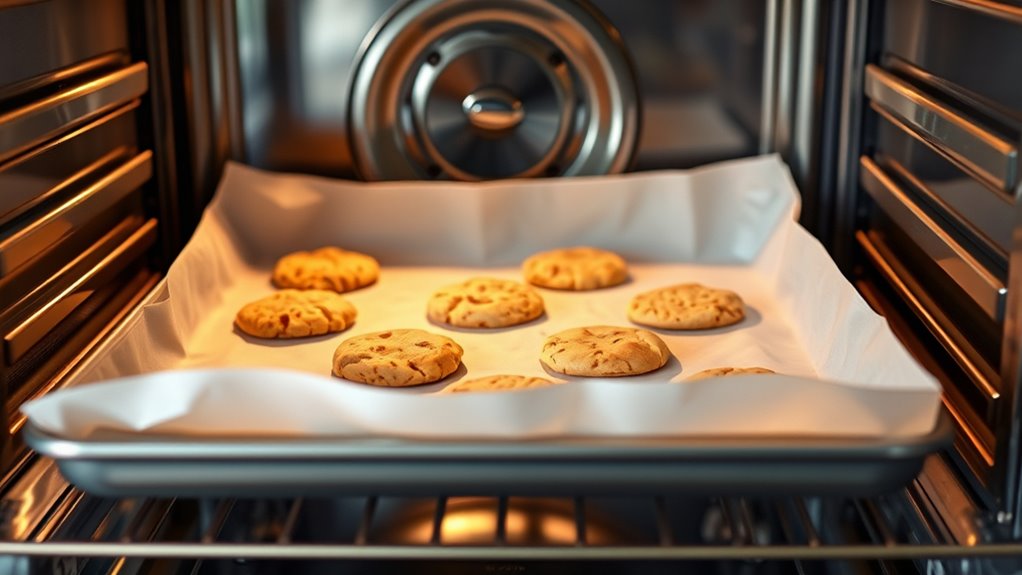
Can Parchment Paper Go in the Oven?
Yes, you can use parchment paper in the oven as long as you keep the temperature below about 420°F (215°C). It’s heat-resistant and non-stick, making cleanup easy and preventing food from sticking. This makes parchment paper a popular choice for baking and roasting.
Just remember to avoid using it under broilers or open flames. Also, don’t let it hang over the edges of your pans to stay safe.
If you want to learn tips on how to use parchment paper properly and explore some alternatives, the following information will help you out. It’s all about making your cooking easier and safer!
Understanding Parchment Paper and Its Uses
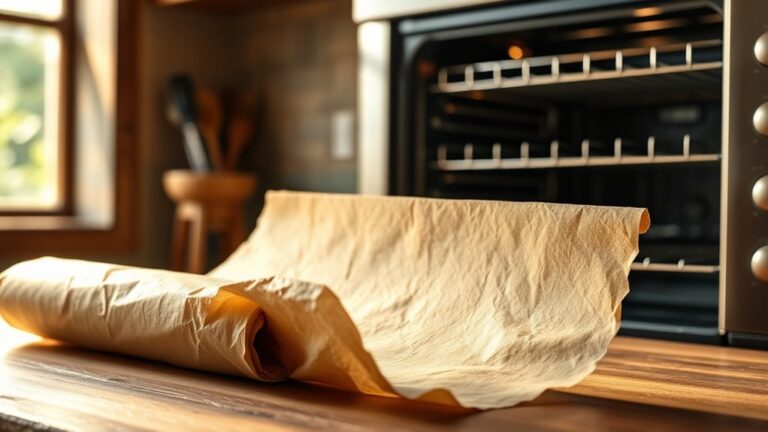
What exactly is parchment paper, and why do so many cooks rely on it? Parchment paper is a heat-resistant, non-stick paper that’s coated with silicone. When you bake or roast, it creates a barrier between your food and the pan, preventing sticking and making cleanup a breeze.
You can use it to line baking sheets, wrap foods for cooking en papillote, or even separate layers of baked goods for storage. It’s especially handy when working with sticky or delicate items like cookies, fish, or roasted vegetables.
Unlike wax paper, parchment paper is designed to withstand oven heat, so it won’t melt or catch fire under normal baking conditions. Knowing how to use parchment paper can improve your cooking experience and result in better, cleaner dishes.
Temperature Limits of Parchment Paper
How hot can you safely use parchment paper in your oven? Most parchment papers are designed to withstand temperatures up to about 420°F (215°C). When you bake or roast, you should keep your oven below this limit to avoid browning, scorching, or even burning the paper.
Going over this temperature risks the paper igniting or releasing unwanted fumes, so it’s important to check packaging labels for exact heat tolerances. If your recipe calls for higher temperatures, you might want to contemplate alternatives.
Comparing Parchment Paper to Aluminum Foil
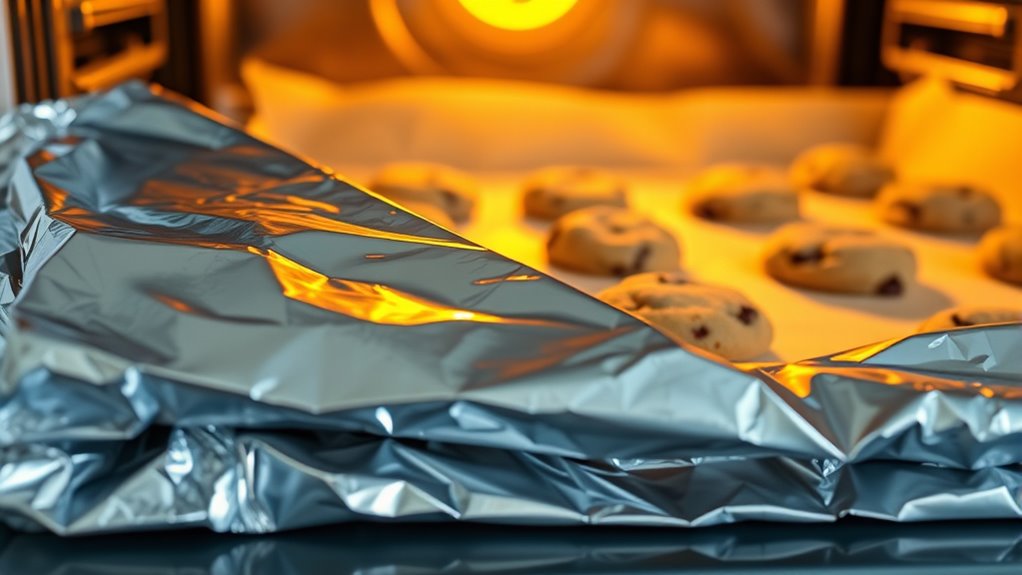
While parchment paper handles moderate oven temperatures well, aluminum foil offers a different range of uses thanks to its higher heat tolerance and versatility.
You’ll find parchment paper ideal for baking cookies or roasting vegetables without sticking. But foil can withstand broiling and grilling.
Foil also molds tightly around food, helping retain moisture. Here’s a quick comparison:
| Feature | Parchment Paper | Aluminum Foil |
|---|---|---|
| Heat Tolerance | Up to 420°F (215°C) | Up to 1200°F (650°C) |
| Non-stick | Yes | No |
| Moisture Retention | Moderate | Excellent |
| Reusability | Usually single-use | Can be reused |
| Best For | Baking, steaming | Grilling, broiling, wrapping |
Choosing between them really depends on your cooking method and temperature needs.
How to Use Parchment Paper Safely in the Oven
Because parchment paper can withstand temperatures up to 420°F (215°C), you can safely use it for most baking tasks without worry. Just make sure to check your recipe’s temperature first before you start.
Parchment paper is safe for baking up to 420°F—always verify your recipe’s temperature first.
Avoid using parchment paper under a broiler or on a direct flame, since those can get way hotter than it can handle. When you’re lining baking sheets or pans, cut the paper so it fits properly. This way, it won’t hang over the edges where it might burn.
Place the parchment paper flat in the pan — try not to fold or crumple it. That can cause uneven cooking and might even be a fire hazard. And one more thing: don’t reuse parchment paper if it’s scorched or brittle after baking.
Follow these simple steps, and you’ll get great results without any safety worries in your oven.
Common Mistakes to Avoid With Parchment Paper
Even if you handle parchment paper carefully, certain mistakes can still sneak in and affect your baking. To get the best results, watch out for these common errors:
- Using parchment paper beyond its heat limit – Don’t place it under the broiler or in ovens hotter than 450°F. It may burn if exposed to too much heat.
- Letting the paper hang over the pan edges – This can cause it to catch fire. So, always trim excess paper to fit your bakeware.
- Reusing parchment paper multiple times – It loses its non-stick properties over time. Plus, it can transfer burnt bits onto your food.
Avoid these pitfalls, and your parchment paper will help you bake smoothly without any smoky surprises or ruined dishes.
Alternatives to Parchment Paper for Baking and Cooking
If you find yourself out of parchment paper or want to skip some of the common mistakes mentioned earlier, several alternatives can step in for baking and cooking. You can use silicone baking mats, which are reusable, non-stick, and heat-resistant, making them perfect for cookies and roasting vegetables.
Aluminum foil works well for roasting and can withstand higher temperatures, but it’s not non-stick unless you grease it lightly. Greasing your baking sheet or pan directly with butter or oil also prevents sticking, though cleanup might take a bit more effort.
For some recipes, especially those requiring steaming or wrapping, banana leaves or corn husks can be natural substitutes. Each alternative suits different tasks, so choosing the right one depends on what you’re cooking and your oven’s temperature.
Conclusion
Now that you know parchment paper can handle the oven’s heat—usually up to 420°F—you’re ready to bake like a pro without a hitch. Just remember, it’s not a superhero; keep it away from direct flames or broilers to avoid a smoky disaster.
With parchment paper as your trusty sidekick, your kitchen adventures will be smoother, cleaner, and more delicious. It prevents sticking and makes cleanup a breeze, which means less stress and more time to enjoy your tasty creations.
So go ahead, let your baking dreams take flight! Using parchment paper in the oven is a simple trick that really makes a difference. Just keep it within the safe temperature range, and you’ll be all set for success every time you bake.