Do You Have to Spray Parchment Paper for Baking?
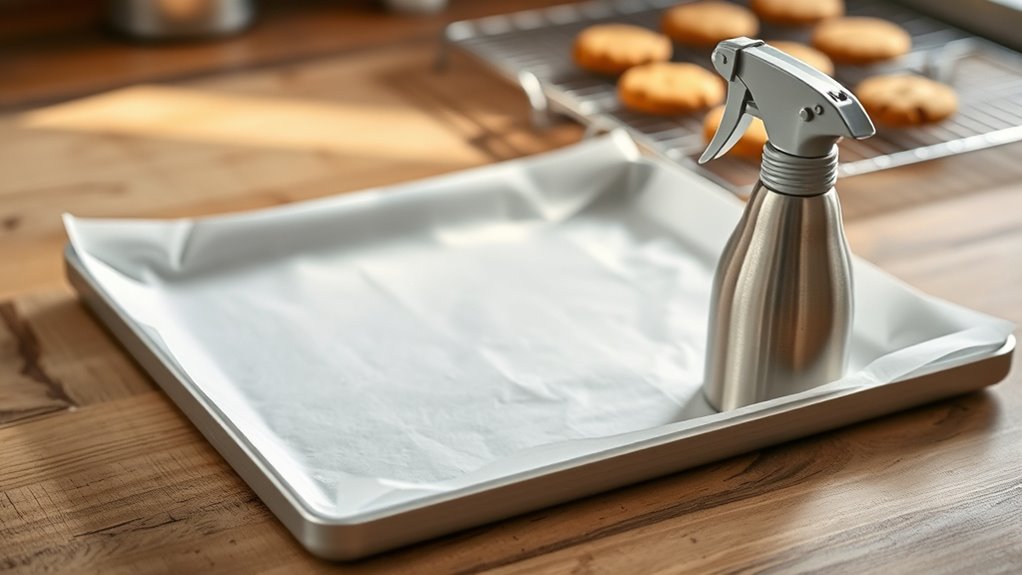
You don’t have to spray parchment paper for most baking because its silicone coating naturally prevents sticking. This makes it super convenient for everyday use in the kitchen. Parchment paper is designed to handle heat and keep your baked goods from sticking without any extra effort.
However, if you’re working with sticky batters, delicate pastries, or sugary glazes, a light spray can help prevent tearing and make lifting easier. It’s a handy trick to keep your treats looking perfect.
Plus, spraying also reduces residue buildup if you reuse the paper, which is great for saving resources.
You’ll find that knowing when and how to add a little grease can improve your baking results and keep your treats intact. So, while it’s usually not necessary, a bit of spray can be your secret weapon in tricky baking situations.
Give it a try next time you want that flawless finish!
Understanding the Non-Stick Properties of Parchment Paper
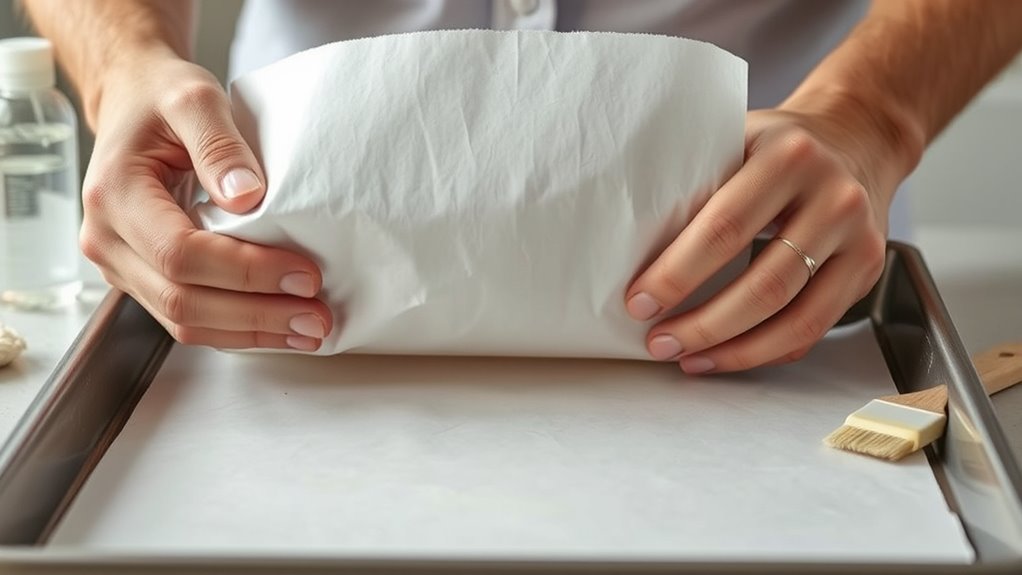
Although it might seem necessary to spray parchment paper before baking, you usually don’t have to. Parchment paper is specially coated with silicone, which creates a non-stick surface that prevents food from sticking during baking.
When you line your baking sheets with it, you’re basically creating a barrier between your food and the pan. This means cookies, cakes, and roasted veggies slide right off without tearing or sticking.
Because of this silicone coating, parchment paper handles high oven temperatures well and keeps its non-stick qualities intact. So, unless you’re working with super sticky batters or just want a little extra peace of mind, you can skip spraying.
Knowing this can save you time and cut down on extra fats or oils in your recipes. Plus, it makes baking a bit cleaner and healthier overall.
Situations Where Spraying Parchment Paper Might Be Beneficial
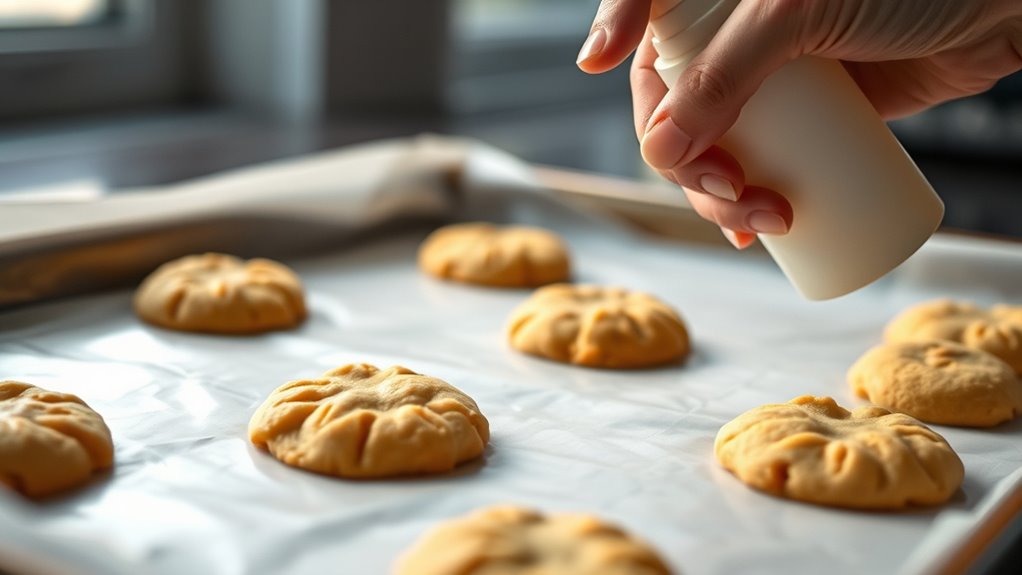
Even though parchment paper usually prevents sticking on its own, you might want to spray it in certain cases to guarantee an easy release. For example, when baking particularly sticky batters or doughs, like caramel-heavy cookies or fruit-filled pastries, a light spray can provide extra assurance against sticking.
If you’re working with delicate baked goods that you want to lift perfectly intact, a bit of oil spray on parchment helps avoid tears or breakage. Also, when roasting vegetables or cooking items with sugary glazes, spraying the parchment can prevent stubborn residue buildup.
Finally, if you reuse parchment paper for multiple batches, a quick spray refreshes its non-stick surface, making cleanup and removal smoother. In these situations, spraying is a simple step to improve your baking results.
Types of Baked Goods That May Need Extra Greasing
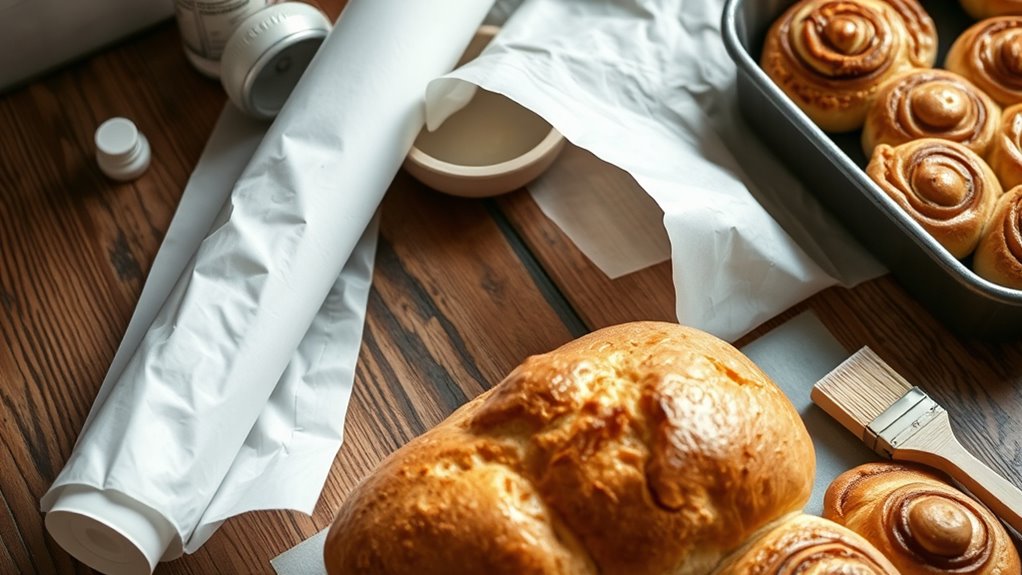
When you’re working with sticky batters, spraying parchment paper can prevent your baked goods from sticking and tearing.
Delicate pastries also benefit from a light greasing to help them release cleanly without damage.
Knowing when to add that extra layer can save you frustration and keep your treats looking perfect.
Sticky Batter Challenges
Since some batters tend to stick more than others, you might need to spray or grease your parchment paper to prevent frustration. Sticky batters like those for brownies, dense cakes, or certain cookie doughs can cling stubbornly, making clean removal tough.
If you skip greasing, you risk tearing your baked goods or leaving behind a messy residue. To avoid this, lightly coat the parchment with nonstick spray or a thin layer of butter before adding the batter. This extra step ensures your treats slide off easily, keeping their shape intact and your parchment reusable.
Delicate Pastry Considerations
Although parchment paper usually provides a nonstick surface, delicate pastries like croissants, puff pastry, or chiffon cakes often need extra greasing to prevent tearing or sticking.
You want to guarantee these fragile baked goods release smoothly without damaging their flaky or airy textures.
A light spray or brushing of butter or oil on parchment can make a big difference.
| Pastry Type | Reason for Greasing | Recommended Grease Type |
|---|---|---|
| Croissants | Prevents sticking, tearing | Butter or nonstick spray |
| Puff Pastry | Fragile layers stick easily | Light oil or butter |
| Chiffon Cake | Delicate edges cling | Nonstick spray |
| Meringue | Avoids sticking and cracking | Light oil |
| Angel Food Cake | Prevents crumb loss | Butter spray |
How to Properly Spray or Grease Parchment Paper
You’ll want to spray or grease parchment paper mainly when baking sticky or delicate items that could tear or stick. Use a light, even coating of non-stick spray or a thin layer of butter or oil to cover the surface without pooling.
Applying it properly guarantees your baked goods release easily and keep their shape. It’s a simple step that makes a big difference in your baking results!
When to Spray Paper
When you decide to use parchment paper for baking, knowing whether to spray or grease it depends on the recipe and your desired outcome. You should spray parchment paper when you’re working with sticky or delicate baked goods that might cling, like sugar cookies or certain cakes.
Spraying helps create a non-stick surface without altering the texture or browning of your baked item. On the other hand, if your recipe already contains enough fat, like butter or oil, you often don’t need to spray the paper.
Best Greasing Techniques
To get the best results with parchment paper, you need to apply the right greasing technique that matches your recipe’s requirements. If your recipe calls for a non-stick surface but your parchment paper isn’t silicone-coated, lightly spray it with a cooking spray or brush a thin layer of oil.
Avoid drenching the paper; a light coat is enough to prevent sticking without affecting texture. For baked goods like cookies or cakes, you might skip greasing if the parchment is non-stick. But greasing helps with sticky items like caramel or cheese.
When using spray, hold the can about 6-8 inches away to ensure even coverage. Greasing the pan edges can also help prevent sticking. Always check your recipe’s specifics to decide the best method.
Alternatives to Spraying Parchment Paper
Although spraying parchment paper can be convenient, several effective alternatives can prevent sticking without added sprays.
You don’t always need that extra step to keep your baked goods from sticking. Here are three options you can try:
- Use Silicone Baking Mats – These mats provide a naturally non-stick surface and can be reused, making them eco-friendly and easy to clean.
- Lightly Dust with Flour or Cocoa Powder – After placing your dough or batter, dust a small amount of flour or cocoa powder to create a barrier between the parchment and your baked item.
- Grease the Food, Not the Paper – Instead of spraying the paper, lightly coat your dough or batter with oil or butter for added moisture and to prevent sticking.
These alternatives keep your baking hassle-free and mess-free. Give them a shot next time you bake!
Tips for Achieving Perfect Bakes Without Extra Spray
Even without extra spray, you can achieve perfect bakes by focusing on proper preparation and technique. Start by using high-quality parchment paper that’s non-stick and sturdy enough to handle your recipe. Make sure your baking sheet is clean and dry to prevent sticking.
For sticky batters or doughs, chilling them briefly before baking can help reduce adhesion. When placing parchment paper, smooth out any wrinkles to ensure even contact with your batter or dough. Avoid dragging baked goods across the paper; instead, gently lift or slide them off.
Finally, keep an eye on baking times and temperatures—overbaking can cause sticking. By following these simple tips, you’ll enjoy easy release and flawless results without needing extra spray. It’s easier than you might think!
Conclusion
You don’t always have to spray parchment paper because its non-stick surface usually does the job. However, if you’re baking something super sticky like gooey cookies or caramel-coated treats, a light spray can help prevent any stubborn sticking.
Picture pulling a perfect batch of cookies off the sheet without a crumb left behind—that’s the difference a little spray makes. So, trust parchment paper, but don’t hesitate to add a quick mist when needed for flawless results.
In conclusion, while parchment paper naturally offers a non-stick surface, spraying it lightly can be a game-changer for especially sticky baked goods. This simple step helps ensure your treats release easily without tearing or leaving residue behind. So, when you’re wondering, “Do you have to spray parchment paper for baking?” remember it’s not always necessary, but a quick spray can make all the difference in achieving perfect results every time.