Do You Need to Spray Parchment Paper When Using It?
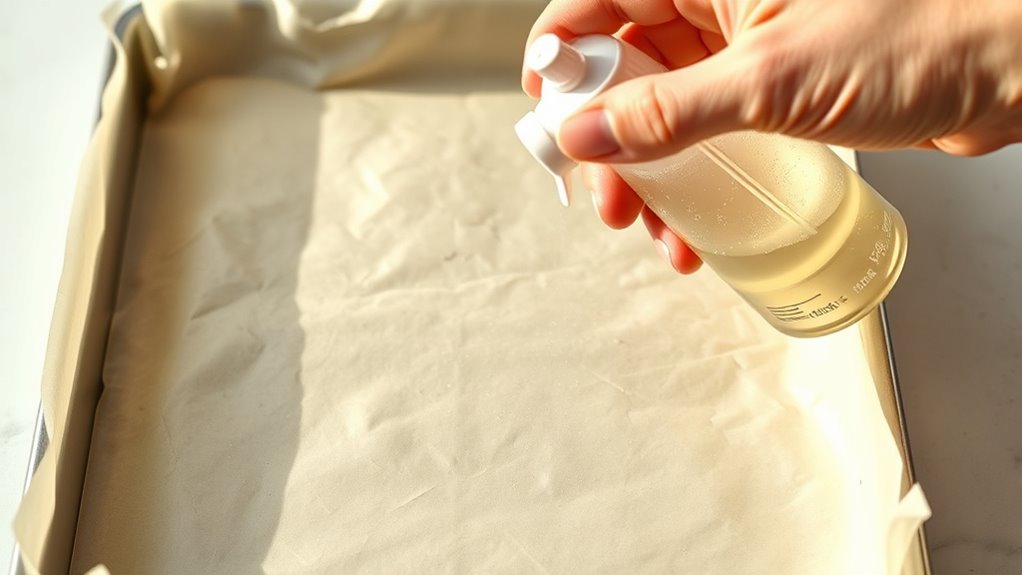
You don’t usually need to spray parchment paper because it’s already non-stick, helping your baked goods release easily and making cleanup simple. This handy kitchen tool saves you time and frustration by preventing sticking without extra effort.
Spraying might cause sogginess or uneven baking unless your recipe involves sticky or sugary ingredients like caramel or dense doughs. In those few cases, a light spray can help prevent sticking and keep your treats looking perfect.
If you want to avoid common mistakes and learn how to use parchment paper for the best results, keep exploring these helpful tips. It’s all about working smarter, not harder, in the kitchen!
Understanding the Purpose of Parchment Paper
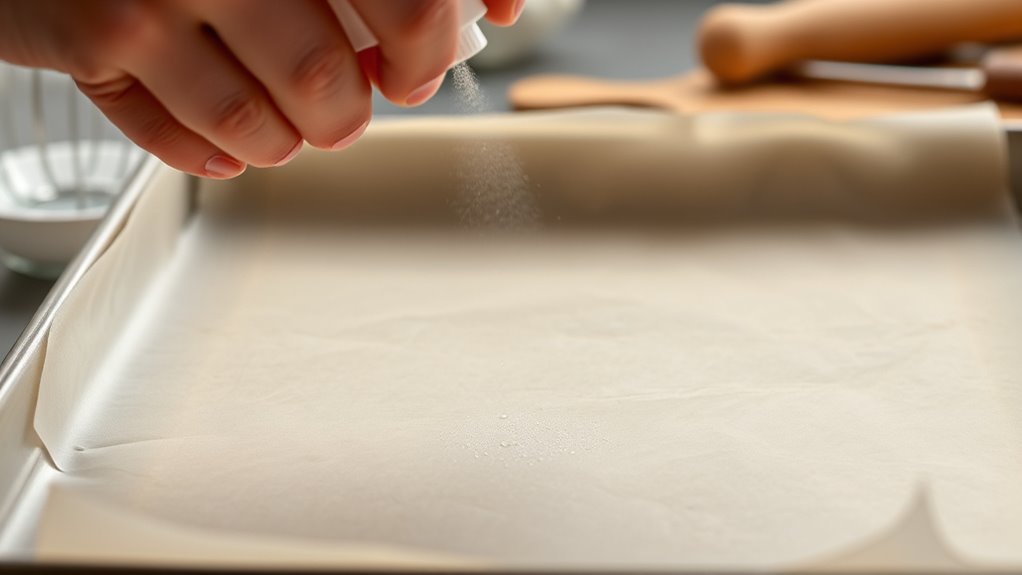
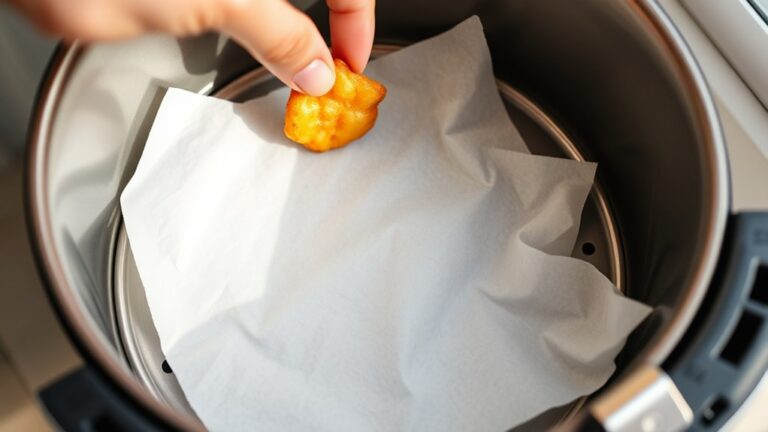
Why should you use parchment paper when cooking or baking? It acts as a non-stick barrier between your food and the pan, preventing sticking and making cleanup easier.
You’ll find that it handles heat well, resisting temperatures up to about 420°F (215°C) without burning or smoking. This means you can bake cookies, roast vegetables, or prepare delicate fish without worrying about food sticking or burning on the pan’s surface.
Parchment paper also promotes even cooking by allowing air to circulate, which helps food cook consistently. Plus, it’s disposable and eco-friendly when composted properly, saving you time scrubbing pans.
Understanding these benefits helps you appreciate why parchment paper is a kitchen essential that simplifies cooking and baking tasks efficiently.
When Spraying Parchment Paper Can Be Beneficial
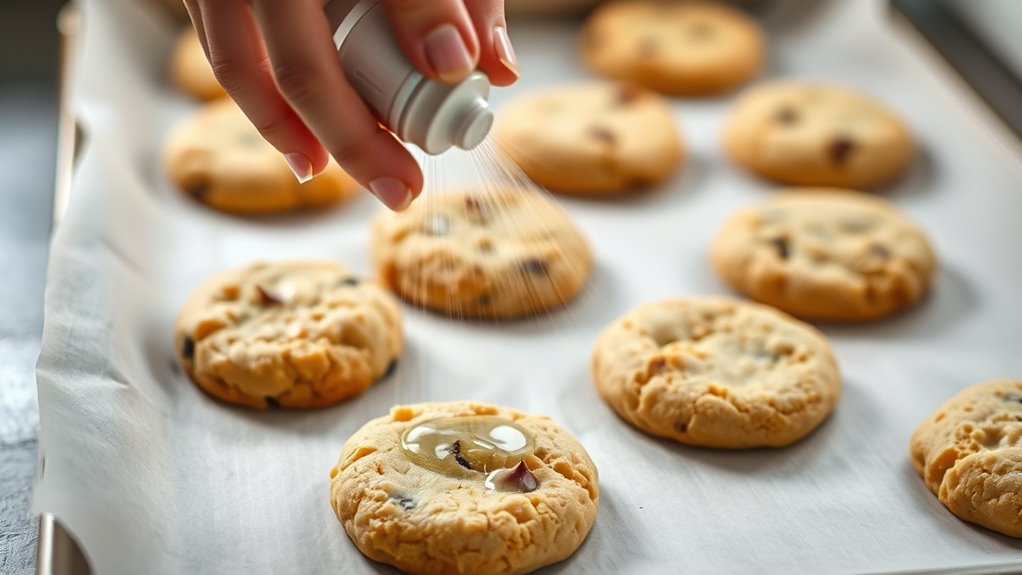
You’ll find spraying parchment paper helpful when you want to prevent sticky situations with gooey or sugary recipes. It creates an extra nonstick layer that makes releasing your baked goods much easier.
Let’s explore when adding this step can really make a difference. It’s a simple trick that can save you a lot of hassle in the kitchen!
Preventing Sticky Situations
Although parchment paper naturally resists sticking, spraying it with a light layer of oil can provide extra protection when handling particularly sticky or delicate foods. You’ll find this especially helpful when baking sugary treats like caramel-coated nuts or gooey brownies.
The added oil creates a subtle barrier that prevents batter or melted sugar from clinging stubbornly to the paper. This simple step saves you time and frustration during cleanup and helps keep your baked goods intact when you lift them off the sheet.
Just a quick spritz ensures your creations slide off smoothly without tearing or sticking, making your baking experience more enjoyable and efficient. So, while it’s not always necessary, a light spray can be a smart move to prevent those sticky situations.
Enhancing Easy Release
When you want to guarantee your baked goods release effortlessly, spraying parchment paper can make a noticeable difference. While parchment paper is naturally non-stick, adding a light spray of cooking oil helps create an extra-slick surface.
This is especially handy with sticky batters, gooey cookies, or delicate pastries that tend to cling. You don’t need much—just a quick mist will do.
Spraying also helps when you’re working with recipes high in sugar or syrup, which can caramelize and stick even on parchment. By giving the paper a light coating, you ensure your treats lift cleanly without tearing or crumbling.
Types of Recipes That Might Require Extra Greasing
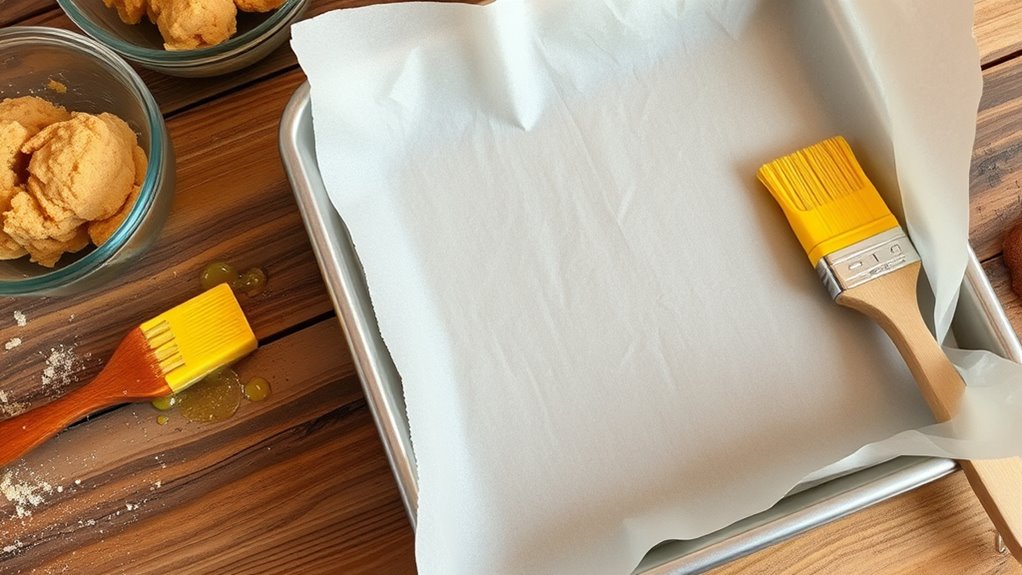
When you’re working with sticky ingredients or batter, extra greasing can prevent stubborn messes. High-sugar or caramel recipes often need that added layer to stop burning or sticking.
You’ll also want to grease delicate pastries and doughs carefully to keep them intact and easy to remove. It really makes a difference when you don’t want your baked goods to tear or stick to the pan.
Sticky Ingredients and Batter
Since sticky ingredients tend to cling stubbornly to surfaces, you’ll want to apply extra greasing when working with batters like caramel, honey-based mixes, or dense fruit fillings.
Parchment paper alone might not prevent sticking in these cases, so a light coat of spray or butter helps ensure easy release.
| Ingredient Type | Common Uses | Greasing Needed? |
|---|---|---|
| Caramel | Tarts, bars | Yes |
| Honey-based | Granola bars, cakes | Yes |
| Dense fruit | Fruit cakes, muffins | Yes |
| Nut pastes | Pastries, cookies | Sometimes |
| Thick batters | Brownies, blondies | Yes |
High-Sugar or Caramel Recipes
Sticky ingredients like caramel and honey-based mixtures demand extra attention to greasing, especially in recipes with high sugar content. The sugar can harden and stick firmly to parchment paper, making it tricky to remove and risking damage to your baked goods.
To prevent this, lightly spray or brush the parchment with oil or butter before adding your batter or mixture. This little extra step ensures a smooth release and keeps your treats intact.
Think about recipes like gooey caramel brownies, honey-glazed cookies, sticky toffee pudding, molasses-rich gingerbread, or candied nuts and brittle. They all benefit from this simple tip!
Delicate Pastries and Doughs
Delicate pastries and doughs often need extra greasing to prevent tearing or sticking during baking. When you work with items like puff pastry, phyllo dough, or soft cookies, the risk of sticking increases because their structure is fragile.
Even though parchment paper is non-stick, spraying it lightly with cooking spray adds an extra layer of protection. This helps your pastries slide off easily without damage.
If you skip this step, you might struggle to remove them, causing tears or misshaping. Greasing also assists in even browning and prevents the dough from drying out where it contacts the paper.
Alternatives to Cooking Spray on Parchment Paper
When you don’t have cooking spray on hand, there are several effective alternatives you can use to prevent food from sticking to parchment paper. These options can help you achieve the same nonstick results without relying on aerosol sprays.
Brush a thin layer of melted butter or oil over the parchment paper for a natural, flavorful coating. Or, rub a small amount of vegetable shortening evenly across the surface to create a slick barrier.
Brush melted butter or oil, or rub vegetable shortening on parchment for a natural, nonstick surface.
You can also lightly dust the parchment with flour or cornmeal, which is especially useful for doughs and pastries. Another good option is coconut oil, which melts quickly and adds a subtle aroma to baked goods.
If you’re making something savory, try applying a thin coat of olive oil with a pastry brush for a nonstick surface. These alternatives keep your food from sticking while enhancing flavor or texture.
Tips for Using Parchment Paper Effectively
Although parchment paper is incredibly versatile, you’ll get the best results by using it properly. Always cut the paper slightly larger than your pan to ensure full coverage and prevent spills.
Place the paper shiny side up—the non-stick side faces up, which helps food release easily. If you’re baking cookies or roasting vegetables, smooth the paper flat to avoid uneven cooking.
For extra stability, lightly grease the paper, especially with sticky or delicate foods, but it’s often unnecessary. Avoid folding parchment paper with sharp creases; gentle folds prevent tearing during baking.
Finally, if your recipe calls for high heat, check that your parchment paper is rated for that temperature to avoid burning or smoke. Following these tips helps you maximize parchment paper’s non-stick, easy-clean benefits.
Common Mistakes to Avoid With Parchment Paper
Even the best parchment paper won’t deliver great results if you misuse it. To get the most from it, you’ll want to avoid common mistakes that can ruin your baking or cooking experience.
Don’t assume you always need to spray parchment paper; it’s naturally non-stick, but spraying can help with sticky batters. Avoid tearing it when placing it on your pan—smooth it out carefully.
Don’t reuse parchment paper in ways that risk contamination or burning. Avoid exposing it to direct flames or broilers, as it can ignite.
Finally, don’t cut corners by using wax paper as a substitute; it’s not heat-resistant.
Here are five common mistakes to avoid:
- Spraying unnecessarily, causing sogginess
- Wrinkling or folding instead of flattening
- Reusing burnt or soiled sheets
- Using parchment under a broiler or direct flame
- Confusing wax paper for parchment paper
Conclusion
Think of parchment paper as your trusty umbrella in the kitchen—it’s designed to shield your food from sticking, just like the umbrella keeps you dry in the rain. Usually, you won’t need to spray it.
But sometimes a little extra greasing acts like a gentle breeze, ensuring everything slips off smoothly. By understanding when to add that touch, you’ll master the art of effortless cooking.
Using parchment paper correctly means less mess and easier cleanup. So, do you need to spray parchment paper when using it? Most of the time, no. However, if you’re baking something particularly sticky or delicate, a light spray or brush of oil can help.
In the end, knowing when to spray parchment paper helps you cook smarter and enjoy better results every time.