
How to Manage Normal Spotting After a Pap Smear
After a Pap smear, it’s quite common to experience some normal spotting. This light bleeding happens because the cervix can get a bit irritated during the procedure. Usually, the spotting lasts just 1-2 days and you might notice it appearing pink or brownish.
To manage this normal spotting, it’s best to take it easy and get plenty of rest. Use sanitary pads instead of tampons to keep things comfortable and clean.
Also, try to avoid heavy lifting or having sex for about 24-48 hours to give your body time to heal.
If you find the bleeding gets heavier or continues for more than a week, make sure to reach out to your healthcare provider.
Following these simple care steps can really help your body recover smoothly and get you ready for your next check-up.
Understanding Why Spotting Occurs After a Pap Smear
Although a Pap smear is a routine procedure, it can cause slight irritation to the cervix, which often leads to spotting afterward. When your healthcare provider gently scrapes cells from your cervix, it can cause tiny abrasions or mild trauma to the delicate tissue.
A Pap smear may cause mild cervical irritation, often resulting in light spotting due to tiny abrasions.
This minor injury triggers a small amount of bleeding, which you’ll notice as spotting. Your cervix is rich in blood vessels, so even a slight disturbance can cause some blood to leak.
Also, if you’re on hormonal birth control or your cervix is particularly sensitive, you might be more prone to spotting. Remember, this bleeding is usually minimal and harmless.
It just means your body is responding to the procedure—it’s not a sign of anything serious.
Typical Duration and Appearance of Spotting
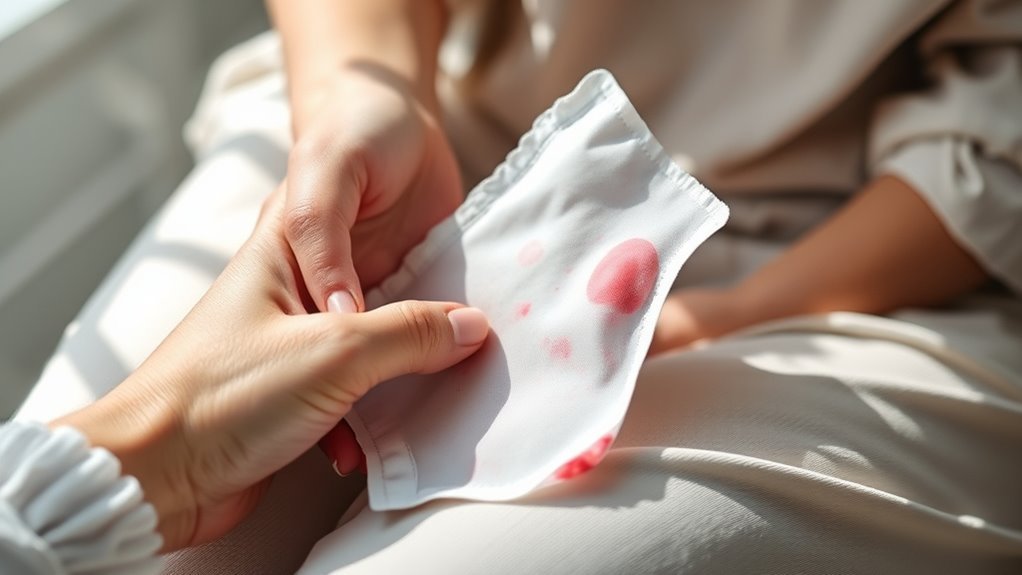
When you experience spotting after a Pap smear, it usually lasts for a day or two and appears as light pink or brownish discharge. This spotting is typically minimal and doesn’t require any special treatment.
The color can vary depending on how long the blood has been exposed to air—fresh blood looks pink or red, while older blood turns brown. You might notice spotting when wiping or as a light stain on your underwear.
It’s normal for the bleeding to be intermittent, meaning it can come and go before stopping completely. Keep in mind that heavy bleeding or bright red flow isn’t typical for post-Pap spotting.
Monitoring the duration and appearance helps you understand what’s normal as your body heals from the procedure. So, if you see something unusual, it’s always a good idea to check in with your healthcare provider.
When to Contact Your Healthcare Provider
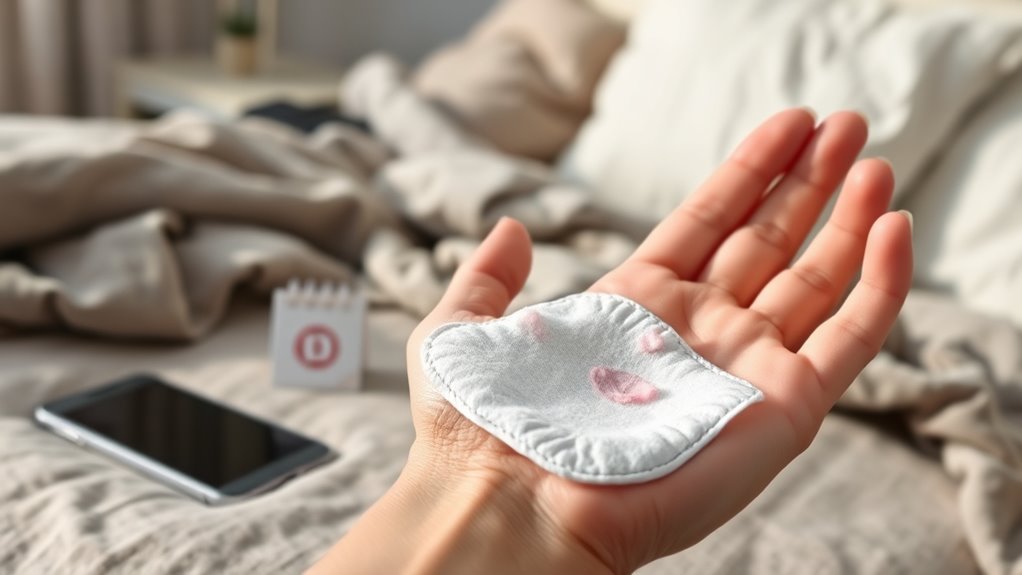
Spotting after a Pap smear is usually mild and short-lived, but certain signs mean you should contact your healthcare provider. Contact them if bleeding becomes heavy, soaking through a pad in an hour, or if the spotting lasts more than a week.
Also, reach out if you experience severe cramping, fever, chills, or unusual discharge with a foul odor, as these could indicate infection.
If you notice bright red bleeding instead of light spotting, or if you have any concerns about your symptoms, don’t hesitate to get in touch. Prompt communication helps ensure any complications are addressed early, keeping you safe and comfortable during your recovery.
Always trust your instincts and seek medical advice when something feels off.
Tips for Managing Spotting at Home
If you notice spotting after your Pap smear, there are simple home remedies you can try to ease discomfort and manage the bleeding. It’s important to rest and avoid heavy activity to help your body heal.
But remember, if the spotting worsens or lasts beyond a few days, don’t hesitate to seek medical care. Taking care of yourself is key, so listen to your body and reach out if something feels off.
Home Remedies for Spotting
Although mild spotting after a Pap smear is common, you can take simple steps at home to ease any discomfort and manage the bleeding effectively. Start by resting and avoiding heavy lifting or strenuous activities for a day or two.
Use a sanitary pad instead of tampons to prevent irritation and keep an eye on the bleeding. Applying a warm compress to your lower abdomen can help soothe cramps, but make sure not to put heat directly on your pelvic area.
Stay hydrated and eat a balanced diet to support your body’s healing process. Wearing loose, breathable clothing also helps reduce irritation and keeps you comfortable.
If you feel any discomfort, over-the-counter pain relievers like ibuprofen can be a good option. These home remedies should make you feel more comfortable while your body recovers naturally from the Pap smear.
When to Seek Care
While mild spotting after a Pap smear usually resolves on its own, you should seek medical care if the bleeding worsens or lasts more than a few days. Also, reach out if you experience heavy bleeding that soaks through a pad in an hour or severe pain, fever, or foul-smelling discharge.
These signs might indicate infection or complications needing prompt attention. If spotting comes with dizziness or weakness, don’t delay in getting checked.
Even if the bleeding is light but you’re concerned or unsure, it’s better to consult your healthcare provider. Always listen to your body and trust your instincts.
Seeking care early helps rule out serious issues and provides peace of mind as you recover from the Pap smear.
Activities to Avoid After a Pap Smear
Because your cervix may be sensitive after a Pap smear, you should avoid activities that could irritate the area or increase bleeding. Steer clear of sexual intercourse for at least 24 to 48 hours to prevent irritation or infection.
Also, avoid using tampons; instead, opt for pads if you need menstrual protection. Refrain from douching or inserting any objects into your vagina, as this can disrupt healing and increase infection risk.
Try to skip strenuous exercise or heavy lifting, since that might worsen spotting or cause discomfort. Taking these precautions helps your cervix heal properly and minimizes bleeding.
If you notice increased bleeding, severe pain, or unusual discharge, be sure to contact your healthcare provider promptly. Following these guidelines will support a smooth recovery after your Pap smear.
Preparing for Your Next Pap Smear Appointment
To make your next Pap smear appointment go smoothly, you should plan ahead by scheduling it at a time when you’re not menstruating. Avoid using vaginal products like creams or douches for at least 48 hours beforehand. This helps guarantee accurate results and reduces irritation.
Also, try to avoid sexual intercourse 24 hours before your test. Wearing comfortable clothing can make the exam easier. Plus, arriving with a list of any symptoms or questions can make your visit more efficient.
| Preparation Tip | Why It Matters |
|---|---|
| Avoid menstruation | Prevents inaccurate results |
| No vaginal products | Ensures clear sample collection |
| Skip intercourse 24 hrs | Reduces cervical irritation |
| Wear comfortable clothes | Makes the exam easier |
| List symptoms/questions | Helps you communicate effectively |
Conclusion
So, you’ve survived the thrilling world of Pap smears and now face the epic saga of spotting—how exciting! While a little spotting is totally normal, don’t let it turn your day upside down. Keep an eye on the duration and color, manage it gently at home, and avoid going full marathon runner right after.
If things get weird, call your doctor. Who knew a tiny test could cause such a dramatic aftermath? You’ve got this! Managing normal spotting after a Pap smear is all about understanding what’s typical and when to seek help. Remember, light spotting or bleeding for a day or two is common, but if it lasts longer or is heavy, that’s your cue to check in with your healthcare provider. Stay calm, be gentle with yourself, and know that a bit of spotting is just part of the process.